SAEDNEWS: Karijini National Park in Australia is famous for its stunning red rock gorges, crystal-clear blue pools, rocky landscapes, and beautiful waterfalls, creating breathtaking views of nature’s wonders.
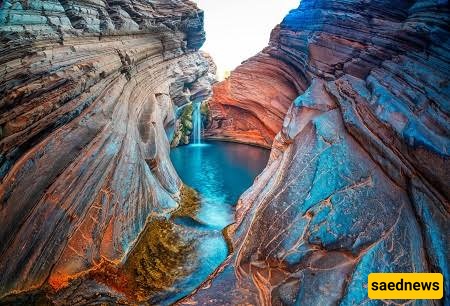
According to Saednews, Karijini National Park in Western Australia is considered one of the largest national parks in the country. In terms of size, it ranked as the second-largest national park in Australia in 2023, covering an area of approximately 627,422 hectares. The park is located in the Hamersley Range of the Pilbara region, in the northwestern part of Western Australia.
The park is physically divided into northern and southern sections by a corridor that includes the Hamersley and Robe River railway line as well as the Marandoo iron ore mine. Despite this division, Karijini remains famous for its spectacular natural scenery, including dramatic gorges, waterfalls, swimming pools, unique geological formations, and diverse wildlife and plant species.
Visitors to Karijini National Park should not miss these unforgettable experiences:
Swimming in the spring-fed pools beneath Fortescue Falls
Enjoying breathtaking views of the meeting point of four major gorges at Oxer Lookout
Staying in environmentally friendly accommodations surrounded by the park’s natural landscapes
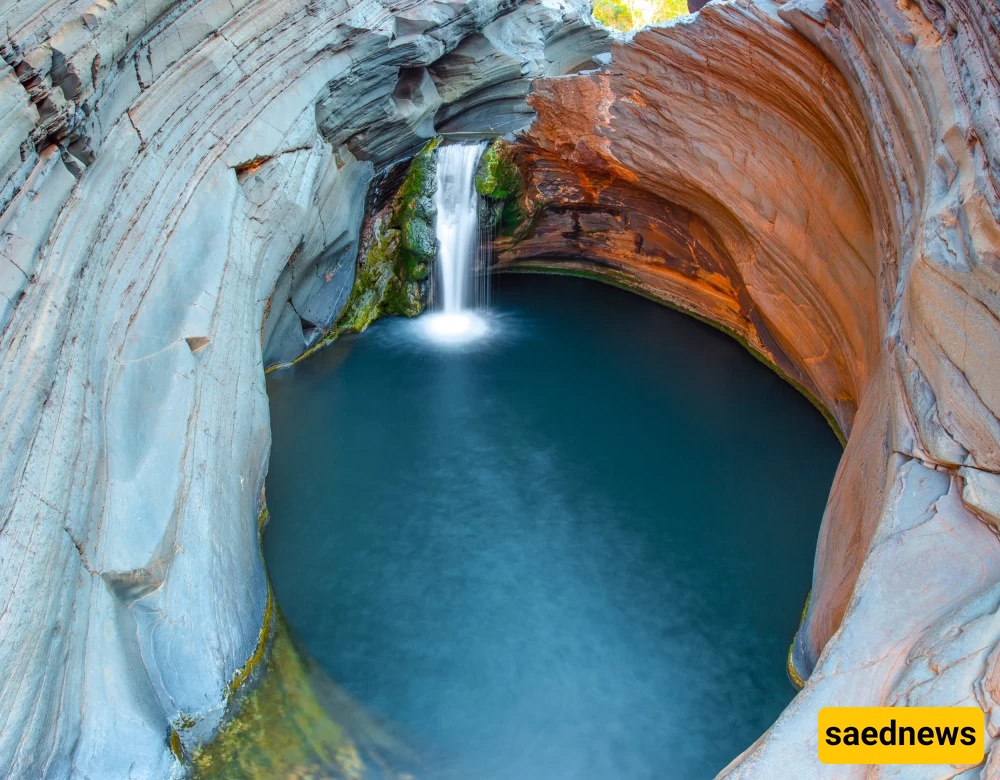
Known internationally as Karijini National Park, this vast protected area lies north of the Tropic of Capricorn within the Hamersley Range. With its enormous size of more than 627,000 hectares, it is widely recognized as Australia’s second-largest national park.
The park experiences a semi-arid tropical climate, creating a unique environment for exploration. During summer, thunderstorms and tropical cyclones are common, bringing annual rainfall of around 250 to 350 millimetres.
One of the fascinating features of Karijini’s climate is its extreme temperature variation. Summer daytime temperatures often rise above 40°C, while winter nights can become cold enough for temperatures to approach freezing.
The remarkable landscapes of Karijini National Park were shaped over more than two billion years of geological history. The park’s deep gorges and rocky formations reveal layers of ancient Earth and provide visitors with a glimpse into the planet’s distant past.
Several spectacular gorges extend through the northern areas of the park, including:
Dales Gorge
Kalamina Gorge
Wittenoom Gorge
Joffre Gorge
These locations showcase impressive geological formations such as:
Banded Iron Formations (BIF)
Dolomite
Shale rock layers
These ancient structures are among the main reasons Karijini is considered one of Australia’s most fascinating natural destinations.
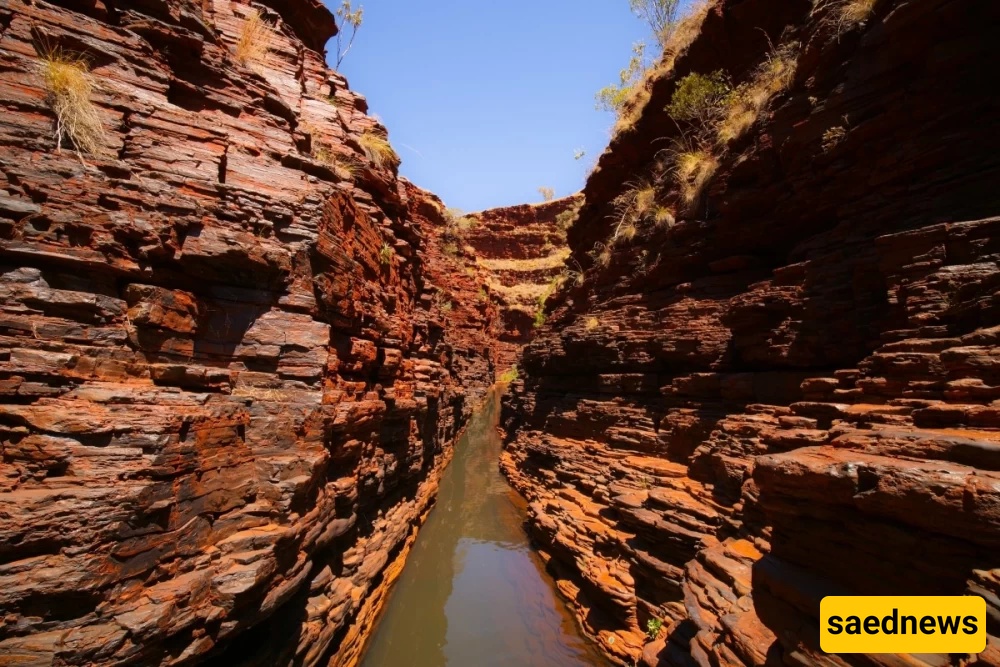
The beauty of Karijini is not limited to its geological formations. The park also offers a wide range of natural attractions, including freshwater springs, waterfalls, narrow gorges, rivers, and open plains covered with colourful wildflowers.
The region is also home to a rich variety of native plants and animals. Visitors may encounter unique Australian wildlife while exploring the walking trails and remote landscapes of the park.
One of the most popular activities in Karijini is swimming in its natural pools. In the eastern section of the park, Dales Gorge offers visitors the opportunity to enjoy the beautiful pools beneath Fortescue Falls.
Reaching the waterfall requires a walk of about an hour from the parking area, but the journey through the gorge is part of the adventure. Visitors can also swim in Fern Pool, a peaceful natural swimming area fed by a freshwater spring.
Located near the centre of Karijini National Park, Karijini Eco Retreat provides visitors with a unique way to experience the wilderness. The retreat is operated in partnership with the local Indigenous community and offers a variety of accommodation options.
Guests can choose from traditional camping areas to comfortable deluxe eco tents equipped with modern facilities. The open-air restaurant at the retreat serves warm meals with flavours inspired by local traditions.
Oxer Lookout is one of the most spectacular viewpoints in the park. A short walk leads visitors to a breathtaking location where four major gorges meet:
Weano Gorge
Red Gorge
Hancock Gorge
Joffre Gorge
The viewpoint can be reached through an approximately 800-metre walk from the Weano Gorge day-use parking area and offers one of the most memorable panoramic views in Karijini.
Due to Western Australia’s hot and semi-dry climate, choosing the right time to visit Karijini is important.
The best seasons to explore the park are:
Late autumn
Winter
Early spring
During these months, daytime temperatures are comfortable while nights remain cool. Between April and September, the water in many swimming pools can become very cold, so visitors should bring suitable clothing and travel equipment.
Karijini National Park is a destination where ancient landscapes, dramatic canyons, clear waterfalls, Aboriginal heritage, and Australian wilderness come together. From exploring deep gorges and swimming in natural pools to enjoying unforgettable views across the Hamersley Range, Karijini offers one of the most remarkable nature experiences in Western Australia.