SAEDNEWS: This article aims to introduce you to a part of the ancient history of the Republic of Azerbaijan.
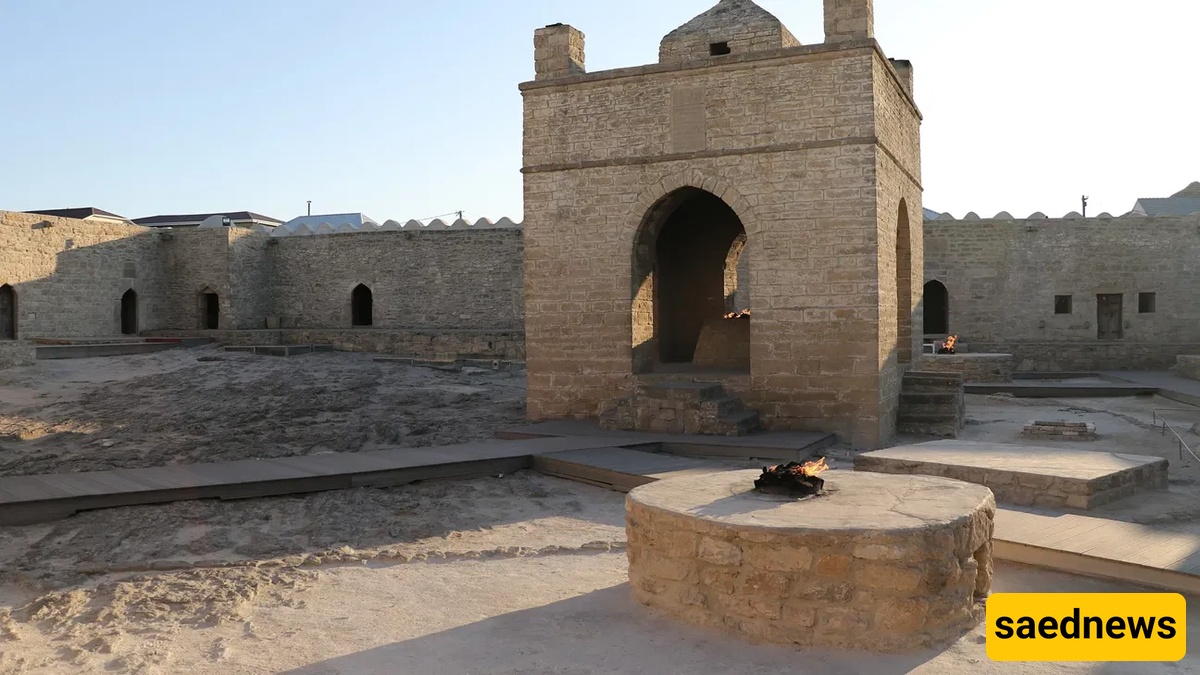
According to Saednews, Fire Temple of Baku: One of the most beautiful and important historical monuments in the Republic of Azerbaijan, the Fire Temple of Baku attracts many visitors from near and far every year. Due to its long history, this monument has drawn the attention of history enthusiasts and those interested in Azerbaijan’s past.
Baku, the capital of the Republic of Azerbaijan, has many historical and cultural attractions to offer tourists. One of the sights that has made the city a major destination for visitors from around the world is the Fire Temple of Baku, considered one of the oldest temples of Zoroastrian worship.
This historical, religious, and cultural monument is located in an area called Surakhani, on the outskirts of Baku, about 30 kilometers from the city center. Despite the rise and fall of rulers, this structure still stands firm and serves as evidence of Azerbaijan’s long history.
The historical Fire Temple complex of Baku consists of a pentagonal structure that once served as a place of worship for Zoroastrianism and Hinduism. Historians date its construction to the 17th and 18th centuries. However, with the establishment of natural gas facilities near the temple in the early 19th century, the site gradually fell into decline and was eventually abandoned. In 1975, it was converted into a museum and once again attracted many visitors.
What makes this site famous today is not only its architecture and age but also the presence of seven eternal flames that were used as a place of worship by Indian Zoroastrians. The importance and mysteries of this site are such that its image has been featured on Azerbaijani stamps and currency.
The best way to visit the Fire Temple is by joining city tours in Baku. Although it is possible to use the metro and buses, which may be more economical, organized tours offer greater safety and convenience for first-time visitors.
An entrance ticket is required to visit the site and can be purchased at the ticket office at the entrance. It is advisable to carry some cash. Students in Azerbaijan can benefit from a 50% discount upon presenting a valid student ID. The visit is suitable for all ages, although walking around the site is required; it is not particularly tiring for children or elderly visitors.
The temple can be visited at any time of the year. Each season has its own historical charm. However, due to its location and the cold, harsh winters of Azerbaijan, spring is recommended as the best time to visit.
Visiting hours are from 9:00 AM to 6:00 PM, and a visit typically takes 1 to 2 hours.
A trip to the Absheron region, where the Fire Temple is located, is not limited to visiting this monument alone. The region is also known for natural gas phenomena that create eternal flames, which are fascinating for tourists. However, beyond these attractions, the area itself does not offer many other tourist activities. Therefore, it is recommended to dedicate part of the day to this site and spend the rest exploring Baku’s cultural and historical attractions, such as museums, churches, and mosques, as well as enjoying traditional restaurants.
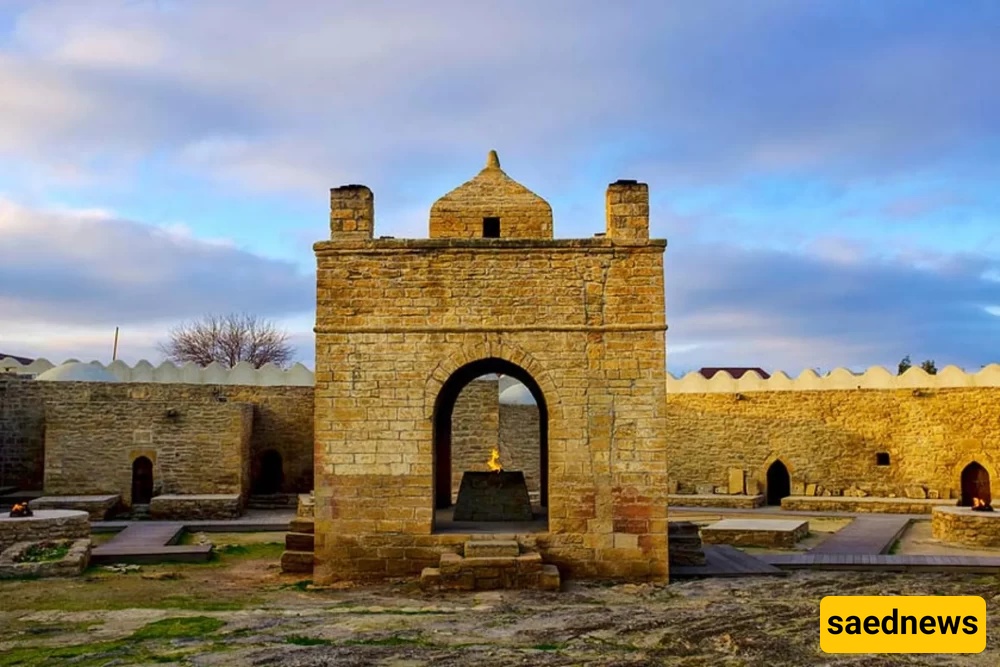
Taking photos at historical sites can be one of the most exciting parts of your trip, especially if you plan to share them on social media. The Fire Temple offers many stunning angles for photography. The glowing orange flames create a beautiful contrast in pictures.
Photos taken before sunset are especially impressive, as the red flames blend beautifully with the colorful sky. Winter photography also offers a unique experience, with snow falling gently around the temple and warm flames melting the snow in a striking contrast. Spring, summer, and autumn each offer their own distinct visual appeal.