SAEDNEWS: Shavaz Village is one of the historical attractions of Yazd Province, known for its ancient heritage dating back several thousand years. Its long-standing history continues to astonish both tourists and archaeologists, making it a remarkable destination for those interested in Iran’s cultural and historical landscapes.
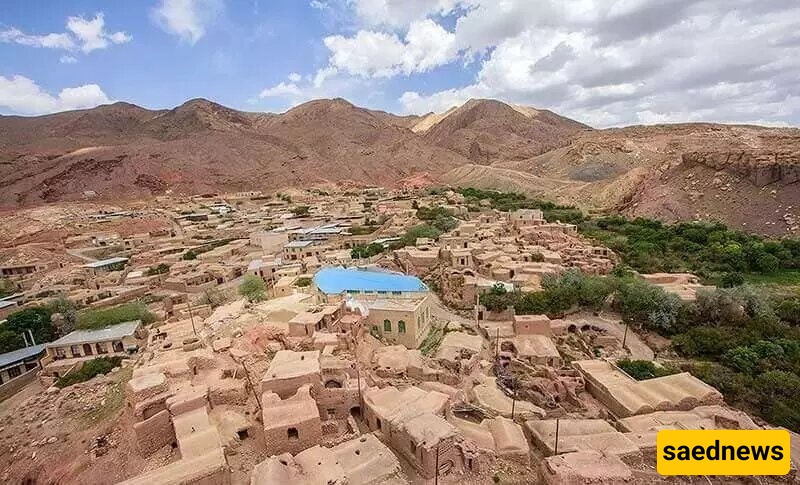
According to a report by the Saed News analytical website, citing Hamshahri, during the Nowruz holiday season one of the cities that hosts a large number of travelers is Yazd. However, it is worth noting that within the historic city of Yazd there are villages that are very pristine and beautiful, making them excellent destinations for holiday tourism. One of these is the village of Shavaz, located in the southeastern part of Yazd Province, gradually extending away from the Shirkuh mountains. This village is surrounded by a calm, untouched natural landscape: mountains lie behind it, while a vast plain stretches out in front. To learn more about Shavaz, one of the beautiful and ancient attractions of Yazd Province, stay with us.
Shavaz is one of the ancient villages whose origins go back to very distant times. Its age and historical background can be understood through its ancient cemeteries, such as the Shavaz and Old Shavaz graveyards, as well as its large and strong fortress. These clearly demonstrate the deep historical roots of the region.
In addition, numerous rock carvings have been discovered here, which show similarities to the petroglyphs of the Kuh-e Ernan region (dating back 7,000 to 12,000 years). However, archaeological research has not yet fully examined these findings in detail.
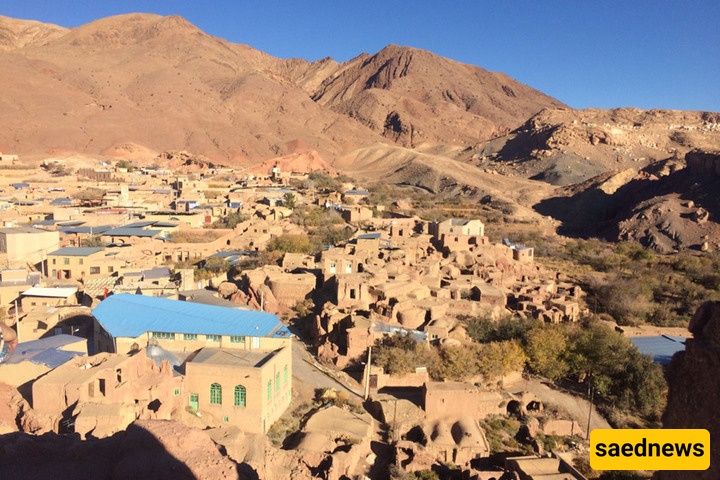
The geographical position and topographic characteristics of Shavaz are notably similar to the village of Turan Poshteh in Nir. This village occupies a large portion of the Taqestan plain and has left a legendary impression on people’s minds due to its powerful natural setting.
This geography has enabled the village to resist threats, attacks, and raids from enemies and invaders, often coming from the plains and the Fars region. This defensive advantage has contributed to its reputation and allowed it to remain relatively distant from major cities and urban centers.
Shavaz Fortress is a powerful symbol of the village and, in addition to its strategic location, its elevated position in front of the village has effectively doubled its defensive strength.
It is one of the most important mountain fortresses in Yazd Province. Architecturally impressive, it is built on a solid rock formation approximately 100 meters high. It is surrounded by steep cliffs and rugged terrain, enhancing its natural defense.
The fortress covers an area of approximately 5,000 square meters and was used as a place of settlement in the past.
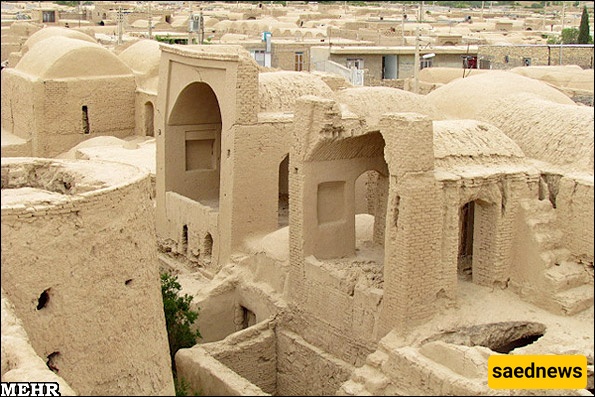
The outer walls are made of stone, while the interior structures are built from mud bricks. Roofs and supporting columns are also mostly constructed from adobe, with brick used in some arches. The entrance gate is built with brick. On the eastern side of the fortress, there is a high brick staircase that was used for water drainage.
The stone used is sedimentary rock, and the base of the fortress is also stone-built. After restoration work by the Cultural Heritage Organization, the original door was moved inside and replaced with a wooden one. One of the rooms has a ceiling supported by beams made from jujube wood.
The fortress also contains watchtowers built for surveillance and defense. Some sections combine stone and adobe construction. Notably, after building the adobe towers, their exterior was reinforced with stone to increase resistance against attacks.
Construction materials include stone, adobe, and clay. Mortar was made of clay, sometimes reinforced with straw and gravel. The walls are entirely adobe, and at least three different types of bricks can be identified in the structure.
The Shavaz stone fortress reflects architectural traditions inspired by the Sassanian era. One of its notable features is the presence of arches belonging to pre-Islamic periods. These include circular Parthian arches, Sassanian arches, and post-Islamic pointed arches, similar to those seen in fire temple architectural remains such as the Atashkadeh of Azargashasp.
In essence, Shavaz Fortress is the most important mountain fortress in Yazd Province. It is strong, large, and visually striking.
On one of the interior stone walls, an inscription dating back to the 6th century AH has been discovered, which has not been mentioned in any previous sources. This inscription is poorly executed and located in a non-prominent area, carved in a primitive and irregular style.
Based on regional studies of Islamic inscriptions in the province, no other 6th-century inscriptions have been found in typical buildings such as fortresses, mosques, or schools. Most known inscriptions from that period are found on gravestones and prayer niches, examples of which exist in the Shavaz cemetery. Therefore, this inscription inside the fortress is unique and important for dating the structure.
It appears that Sassanian-style defensive towers were later reinforced with stone cladding to enhance durability. The fortress itself also follows Sassanian architectural principles. In addition, several fragments of gray pottery discovered inside the fortress—some decorated with incised patterns—likely belong to the historical gray pottery tradition. The presence of rock-cut rooms inside the fortress further highlights its antiquity and archaeological significance.
The Shavaz cemetery in Yazd Province is unique. At the top and bottom of graves, two rough, wide stone slabs are placed in the ground, rising about half a meter above the surface, with no inscriptions on them.
The overall appearance of the cemetery, the arrangement and coloration of the stones, and their dark patina all indicate great antiquity. This older section predates gravestones from the 6th to 8th centuries AH and includes inscribed gravestones with irregular Naskh script and naturally dark stone.
Additionally, several marble gravestones dating to the 10th and 11th centuries AH have also been found.