SAEDNEWS: Kohgiluyeh and Boyer-Ahmad is a province in southwestern Iran, known for its pristine and breathtaking natural landscapes, abundant rivers, and hospitable people. In this article, we aim to introduce you to the customs and traditions of this province.
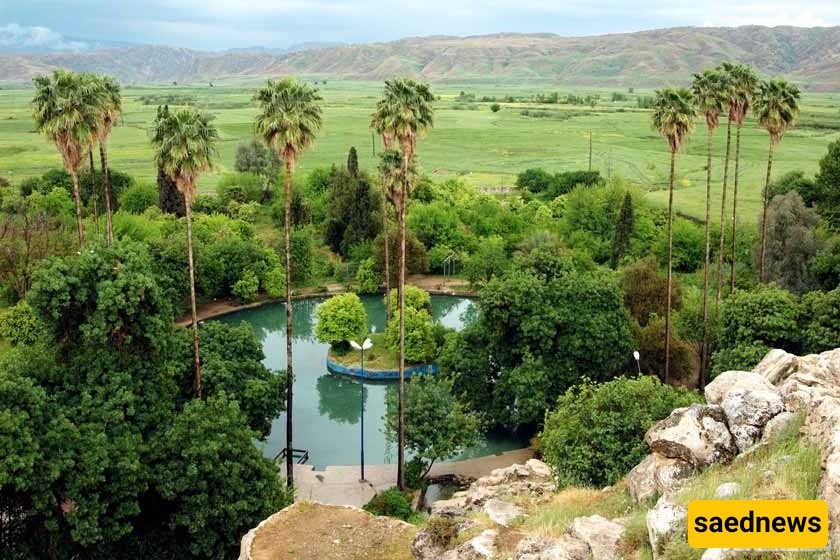
According to Saednews, Kohgiluyeh and Boyer-Ahmad Province is bordered to the north by Chaharmahal and Bakhtiari Province, to the south by Fars and Bushehr Provinces, to the east by Isfahan and Fars Provinces, and to the west by Khuzestan Province.
This province has a mountainous and high-altitude climate. The Zagros Mountains, with parallel ranges, extend across its north and east, while the Khayiz, Nil, Siyah, and Sefid mountains surround its southeastern parts. Mount Dena, one of the highest peaks of the southern Zagros, is located in this province. The Marun, Behesht (Bishar), Zohreh, Khersan, and Nazmakan rivers flow through the region.
The people of Kohgiluyeh and Boyer-Ahmad celebrate Nowruz (the Persian New Year) in great detail and with elaborate customs. A few nights before the New Year, during a ceremony called Kheyrat-e Nim-e Barat, a type of halva made from milk, rice, and black seeds is prepared and distributed among neighbors.
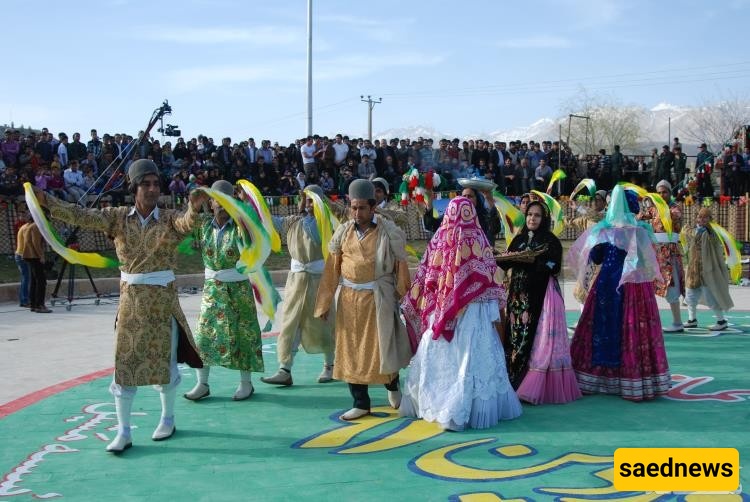
Alongside special customs for engagement and weddings, mourning ceremonies and religious rituals are also performed with distinct traditions. Weddings are full of handkerchief dances and stick games, turning celebrations into vibrant festivals of joy and color. Mourning ceremonies, on the other hand, are filled with grief, lamentation, and symbolic rituals reflecting the sorrow of the bereaved.
Among the diverse traditions of the province is Chaleh Garm Konun, a practice of preparing and eating a special local dish one day before the end of the year. It symbolizes warming the “hearth of life” and welcoming blessings and prosperity in the new year.
Nowruz is considered, according to local beliefs, the beginning of a time for removing resentment and moving toward peace and reconciliation. In the past, tribal elders would visit leaders and village headmen with gifts such as local products. Today, people still visit each other, exchange gifts, and hold celebrations and hospitality gatherings.
A tradition that still continues is visiting bereaved families during Nowruz. People try to replace mourning clothes with white or colorful garments to bring them out of grief. This practice is locally known as Pand Shekani.
This is a tradition in which, regardless of wealth, families cook a warm and delicious local meal one day before Nowruz to “warm the household hearth” and ensure blessings and stability for the coming year.
Respecting tribal covenants is essential among all clans. Breaking a pact is socially condemned and leads to loss of credibility. Historically, during conflicts and local wars, honoring agreements was strictly necessary.
Due to the Shiite faith of the people, strong devotion is shown toward religious holidays and mourning ceremonies of Imam Hussein (peace be upon him). Mourning begins in the month of Muharram and reaches its peak on the nights of Tasu’a and Ashura.
Until recent years, mourners would gather from night until morning, engaging in chest-beating and lamentation. The ceremonies were simple, supported by charitable people, and included tea, local rice dishes, and roasted wheat. In modern times, however, these simple traditions have gradually been replaced with more elaborate and formal ceremonies.
A wedding ceremony typically has several stages. The first is the proposal, locally called Gap Zanon. In this stage, the groom’s family sends a trusted person to discreetly propose the marriage to the bride’s father, who consults his family and responds after a few days.
If accepted, the groom’s father and elders visit the bride’s house with sugar and sometimes gifts such as a sheep or lamb. The sugar is symbolically broken in a ritual known as Ghand Shekan (sugar-breaking ceremony).
Music holds a special place in daily life. It is used in both joy and sorrow, as well as during livestock migration. The reed flute (ney), in small and seven-joint forms, is especially important. Shepherds play it in the fields, while professional musicians perform at gatherings.
Other instruments include drums, kettledrums, trumpets, and violins, used to perform various traditional melodies. Some tunes, such as Bareh Vari (“Let the lamb stand up”), are played while gathering sheep. Morsiyeh-khani (lamentation music) is another traditional form performed on the ney, deeply moving listeners emotionally.
In weddings, dances such as handkerchief dance, two-step, three-step, Turkish dance, single-step, Babakaram, stick dance, and horseback dance are performed.
Due to its natural beauty and four-season climate, the province is also known for its traditional women’s clothing. Women still preserve their local attire, especially during festivals and weddings. These clothes are considered one of the cultural attractions of the region.
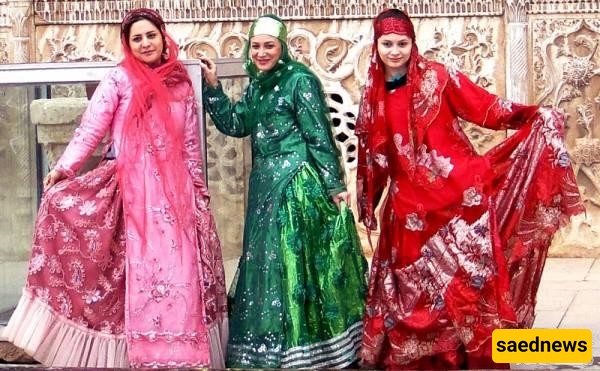
Traditionally, men wore garments such as jabeh, dalg, shawls, loose-collared shirts, underpants, giveh (traditional footwear), and hats. The hats were typically woolen, bowl-shaped, and sturdy, usually gray or black. A softer wool hat known as shab-kolah (night cap) was also used.
Shepherds in winter wore a sleeveless felt coat called kordak, which was rain-resistant and extended to the knees.
There are more than 60 known individual and group games in the province. These games are played by both men and women. Examples include:
Alkhtar: A group game involving pushing opponents while maintaining balance; losing balance means defeat.
Khena-thik: A form of hide-and-seek played between two teams.
Chugo: Similar to ancient polo, played with sticks and a ball in two teams.
Helping others is a valued tradition, especially during disasters such as fires or raids. Families assist affected households with items such as carpets, blankets, felt coverings, and household goods.
In cases of theft or livestock loss, known locally as Mard-e Mal, the community replaces stolen property or livestock with equivalent items such as cows or sheep. These contributions are voluntary, free, and based on tribal solidarity and kinship obligations.