SAEDNEWS: Hezar Darb Castle dates back to the Sassanid era and continued to be used in historical periods after Islam. It is located in Abdanan, and this site was registered as one of Iran’s national heritage sites on July 13, 2000, under registration number 2744.
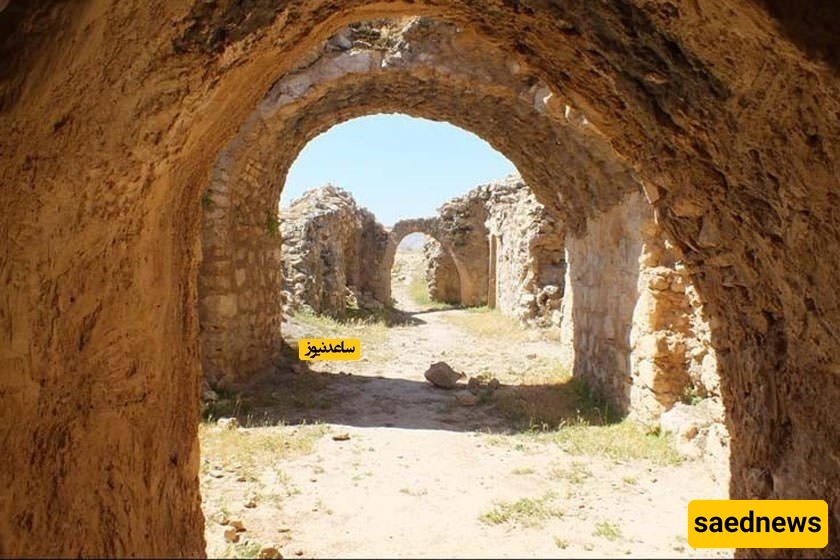
According to the Family Magazine of Saed News, castles are among the most significant historical and architectural monuments of Iran. In Iran, castles were built for various purposes. Some served military functions, while others acted as residences for the governor of a city or province. Some were centers for city administration. The location of a castle often indicates its purpose. Castles built outside cities or villages, especially in mountainous areas, generally had defensive and military roles, designed to protect the local population from enemies. Hezar Dar Castle is one such fortress with a military function and is now considered one of the must-see attractions in Ilam.
This castle is undoubtedly one of the most remarkable and fascinating architectural works in Iranian history and a highlight of Abdanan’s attractions. It features distinctive architecture with elegant arched vaults and dates back to the Sassanid era. Hezar Dar Castle is located in Abdanan, next to Shariati High School. On July 13, 2000 (22 Tir 1379 in the Iranian calendar), it was registered as a national historical monument of Iran under registration number 2744.
The main facade of the castle features arched vaults, reflecting its original function. Architectural studies suggest that Hezar Dar Castle was likely a military fortress or garrison. Its main layout is rectangular, constructed from dressed stones and cobblestones bound with gypsum mortar. Long corridors extend in four directions, connecting to interior rooms through gateways. The castle comprises a basement, a ground floor, and an upper floor, with light and ventilation supplied through one-meter-wide openings in the ceilings, corridors, and rooms.
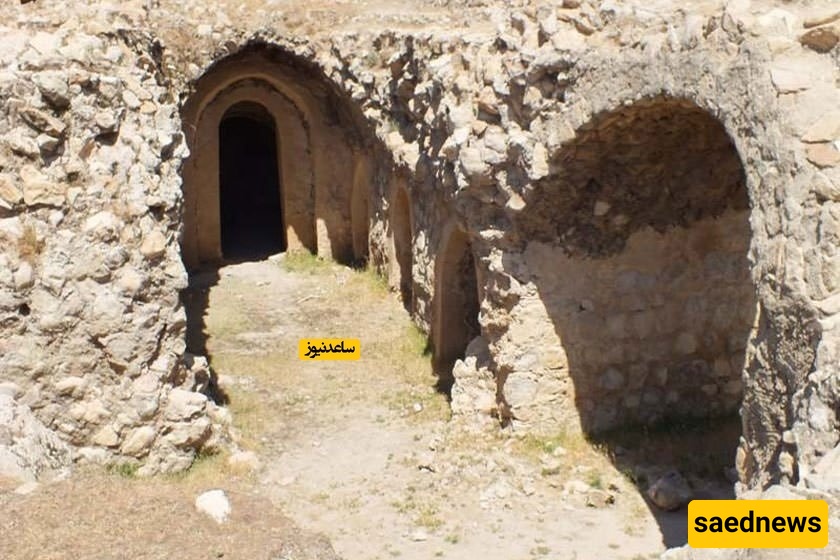
The castle’s foundation surrounds the structure on all four sides, forming a protective wall approximately 5.5 meters thick. The northern wall overlooks a cliff and is built about four meters below the main wall. Evidence of a structure on the steep northern slope exists, though its purpose remains unclear. Most pottery found at the site is beige, well-fired, and decorated with relief, rope-like patterns, or carved designs. The region’s characteristic pottery, Nishgooni ware, belongs to the Sassanid period. The style and materials confirm that the castle originates from the Sassanid era.
Remnants indicate that watchtowers once stood throughout the castle, confirming its defensive role. The use of gypsum mortar and carefully shaped cobblestones, along with remaining features such as watchtowers, royal halls, and residential rooms, supports the conclusion that the castle had a military function.
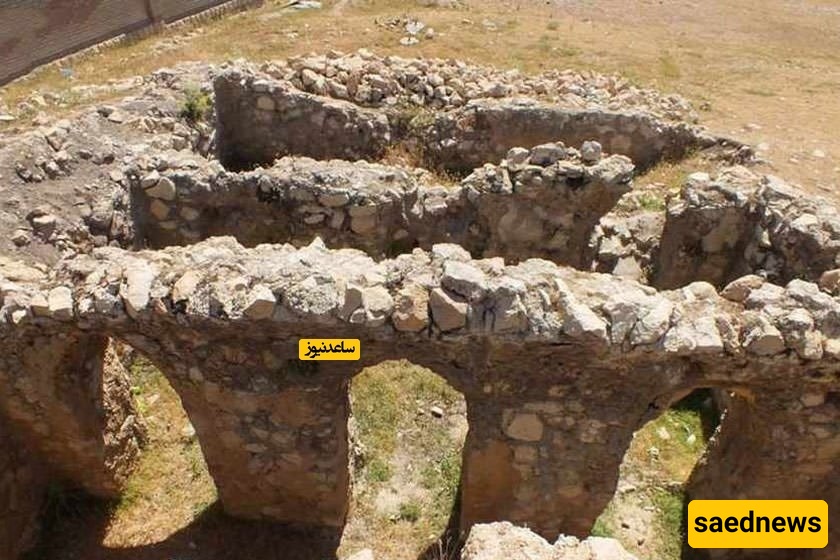
Visitors to Hezar Dar Castle encounter a maze of arched vaults arranged within the rectangular layout. Long corridors extend in four directions, linking various parts of the castle to interior rooms through multiple gateways. The multi-level structure—with its basement, ground floor, and upper floor—is still visible today. Most pottery recovered from the site is beige, featuring relief, rope, and carved decorations.
Ilam is a semi-arid, mountainous province in western Iran, known for its forests, pristine nature, and rich historical and natural heritage. Hezar Dar Castle is located in Abdanan County in the southern part of Ilam Province, bordering Darreh Shahr County to the northeast. On July 13, 2000, Hezar Dar Castle was officially registered as a national historical monument. Historical records indicate that the castle dates back to the Sassanid era and originally served a military purpose. The castle’s name—“Hezar Dar,” meaning “Thousand Doors”—derives from its countless arched vaults that form a labyrinthine interior.