SAEDNEWS: Thick clothes can stay damp deep inside even when the outer surface feels dry. Proper drying helps prevent unpleasant odors, stiffness, and moisture buildup.

According to SAEDNEWS, thick clothes such as sweaters, heavy cotton garments, and layered fabrics need more attention during drying because moisture can remain trapped inside their dense fibers. Simply hanging them in the same way as lightweight clothes may leave the inner parts damp for much longer than expected.
The outside of a thick garment can feel completely dry while the areas around seams, cuffs, collars, and folded sections are still moist. If the garment is put away too soon, trapped moisture can contribute to a musty smell and make the fabric feel less fresh.
For this reason, the most useful rule is simple: do not judge dryness only by the surface. Check thicker areas and turn the garment when necessary so that air can reach different parts.
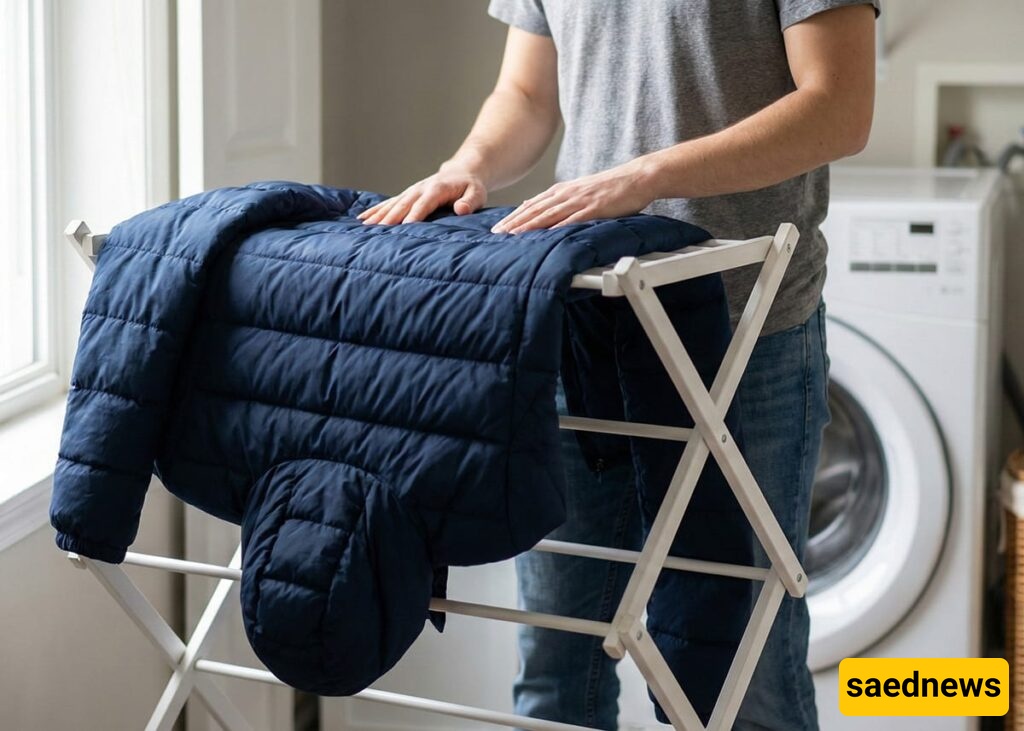
When several heavy garments are placed too close together, air cannot circulate properly. This slows evaporation and can leave damp patches between layers of fabric.
For better drying:
Leave space between garments.
Spread thick areas rather than keeping them folded.
Turn the garment periodically.
Make sure both sides are exposed to moving air.
Avoid putting a still-damp garment directly into a crowded wardrobe.
High heat may seem like the fastest solution, but it is not always the best choice for thick fabrics. Excessive heat can affect some materials, cause shrinkage, or make certain garments lose their original shape.
A gentler approach is usually safer: remove as much excess water as practical during washing, then allow the garment to dry with good ventilation. Always follow the garment's care label, especially for delicate or structured fabrics.
Before storing a heavy garment, pay particular attention to places where fabric overlaps or where water tends to remain longer. Press the material gently between your fingers and check areas such as the cuffs, collar, waistband, seams, and pockets.
If any part still feels noticeably cool or damp, give the garment additional drying time. A few extra hours of airflow can be far better than storing it while moisture is still trapped inside.