SAEDNEWS: A kitchen drawer that keeps turning into a jumble usually needs more than a quick tidy-up. The most effective approach is to empty it, remove what does not belong, group items by function and daily use, then create simple zones that make putting everything back almost automatic.
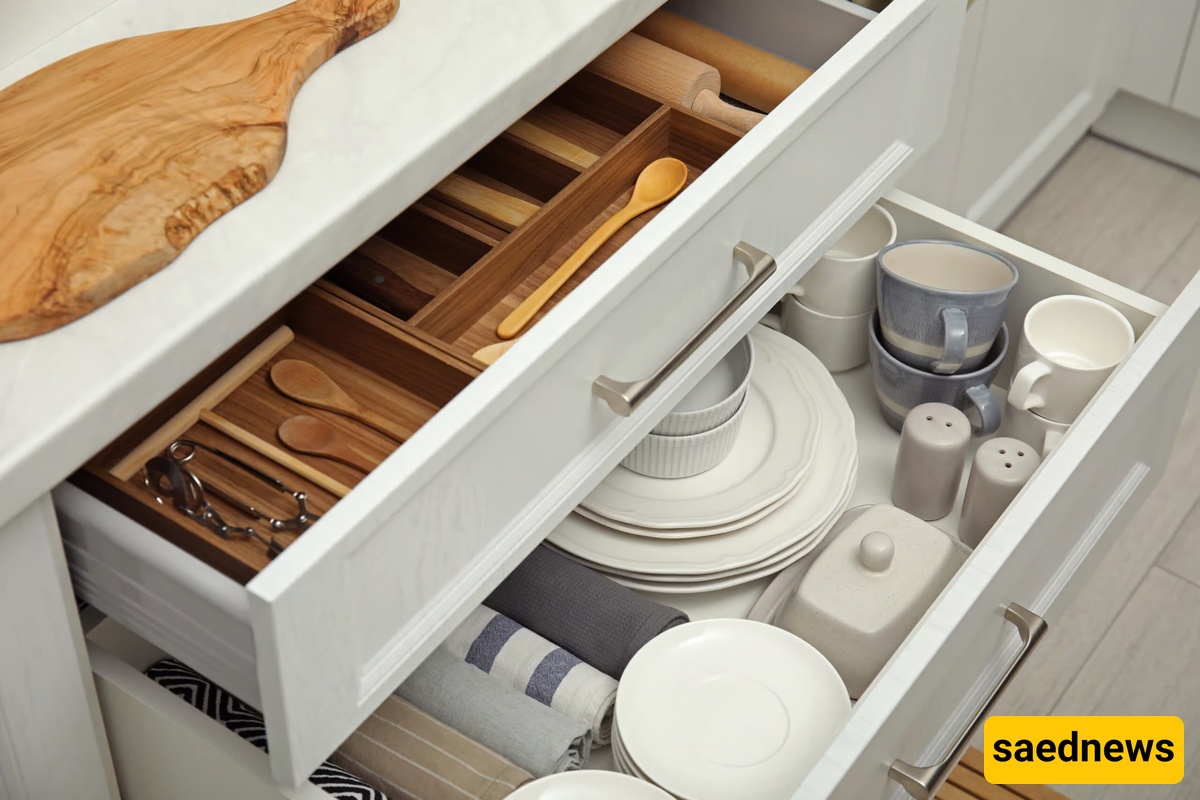
According to SaedNews, the best way to organize a kitchen drawer that constantly gets messy is not to keep rearranging the same pile. The real solution is to create a system that matches the way you actually use the kitchen.
A drawer can look perfectly organized on a Sunday afternoon and still be chaotic again by Wednesday. That usually happens because organization was treated as a visual project rather than a storage system. If several unrelated tools share the same open space, they will naturally slide together, overlap and become difficult to find.
Professional organizing advice consistently points to the same starting point: empty the drawer completely before deciding how to organize it. This makes it possible to see duplicates, broken tools, misplaced objects and items that simply do not deserve prime drawer space.
It is tempting to buy a tray or set of dividers first. That can be a mistake.
Take everything out and place it on the counter or another clear surface. Wipe the drawer while it is empty, then sort the contents.
A useful first sort is:
Keep: items you actually use.
Move: things that belong somewhere else.
Remove: broken, duplicated or rarely used items.
This matters because an organizer cannot solve an overcrowded drawer. If too many objects are competing for the same space, even a well-designed tray will eventually become another container for clutter.
Once the drawer is empty, resist the urge to organize everything according to what looks attractive.
Instead, ask a more useful question:
Where do I reach for this item, and how often do I use it?
For example, frequently used cooking utensils can make sense near the stove, while preparation tools may be more convenient near the main cutting or preparation area. Good Housekeeping similarly recommends grouping items by type or placing frequently used tools close to the area where they are used.
This creates a kitchen based on workflow rather than appearance.
A drawer beside the stove might hold spatulas, wooden spoons, tongs and a whisk. A drawer closer to the preparation area might contain peelers, measuring tools and other small preparation equipment.
The exact arrangement depends on the kitchen. The important principle is that the location should make sense when you are actually cooking.
The next step is to prevent different categories from becoming one sliding pile.
That is where dividers, trays or small containers become useful.
Flatware generally works well in a compartmentalized tray because forks, spoons and knives have predictable shapes. Cooking tools, however, can vary considerably in length and size, so adjustable dividers can provide more flexibility. Good Housekeeping notes that customized systems can be particularly useful for oddly shaped drawers or specialized kitchen tools.
You do not necessarily need an expensive organizer.
A simple system might divide one drawer into three or four broad areas:
Cooking tools | Measuring tools | Small accessories | Frequently used extras
The goal is not to create dozens of tiny compartments. It is to create boundaries that stop objects from migrating into one another's space.
One of the easiest ways to make drawer organization harder is to buy an organizer that does not fit.
Measure the inside of the drawer rather than relying on the outside dimensions of the cabinet. Check its width, front-to-back depth and available height.
Then consider the objects that will actually go inside.
A fixed tray can be efficient when the contents are uniform. Adjustable dividers are more useful when the drawer contains tools of different shapes and sizes. Current organizing guides also emphasize matching the organizer to the drawer and its contents rather than buying a one-size-fits-all solution.
A small amount of planning here can prevent the frustrating cycle of buying organizers, discovering that they do not fit, and leaving them unused.
Not everything in a kitchen drawer deserves equal access.
The tools you use every day should be the easiest to grab. Less frequently used equipment can go farther back or into a lower drawer.
This simple principle reduces the amount of movement inside the drawer. If you have to dig through five tools to reach the one you use every morning, the system is working against you.
Think of drawer space as prime real estate. Give the most convenient positions to the objects that earn their place through frequent use.
A miscellaneous drawer can be useful, but a drawer becomes a problem when "miscellaneous" means "anything that has nowhere else to go."
Even an everything drawer works better when it has boundaries. Homes & Gardens recommends using dividers and clearly defined sections for categories such as small household items rather than allowing the drawer to become a dumping ground.
If you have a drawer that serves several purposes, use small compartments for genuinely different categories. The moment every object is allowed to occupy every part of the drawer, the organization begins to disappear.
This may be the most important step.
A good organization system should not require a special effort every time someone puts something away.
If a spatula has one obvious home, it takes almost no thought to return it there. If you have to decide which of six empty spaces it belongs in, clutter will gradually return.
This is why simple zones often work better than perfect-looking arrangements.
Leave enough room for the items to be returned without forcing them into place. Avoid packing compartments so tightly that taking one utensil out disturbs several others.
The best drawer is not necessarily the one that looks most impressive when photographed. It is the one that remains functional on an ordinary, busy evening.
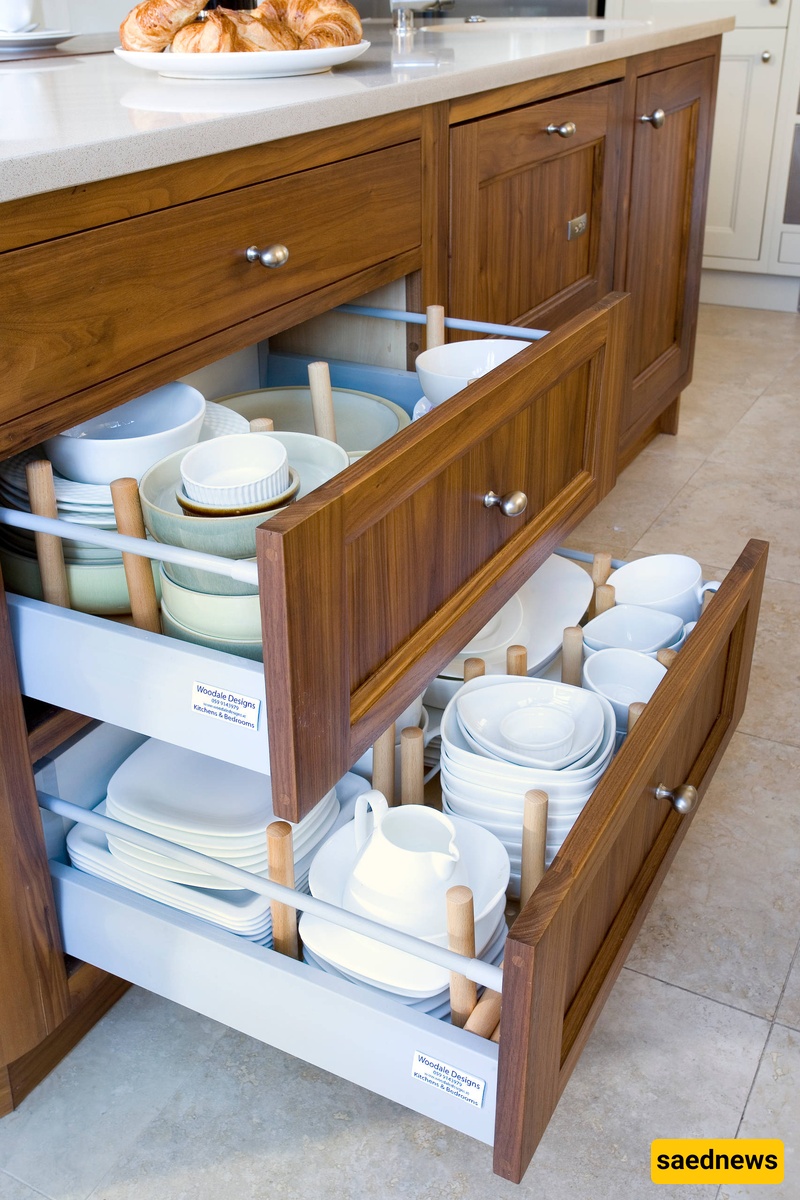
Deep drawers create a different problem: objects can stack on top of one another, making the bottom layer difficult to reach.
For these drawers, dividers or tiered systems can help separate items and make the contents more visible. Some organizing systems use adjustable dividers or peg-style inserts to keep larger items from shifting.
But there is an important distinction between a deep drawer and a deep container.
If you cannot see or reach the things underneath, simply adding more storage does not necessarily improve the situation. In some cases, reducing the number of items is the better solution.
Once the drawer is organized, maintenance should be almost invisible.
Every so often, open it and remove anything that has migrated into the wrong section. Return misplaced tools, remove newly accumulated clutter and check whether the categories still match the way you use the kitchen.
You do not need to reorganize the entire drawer every week.
The aim is to catch small problems before they become a new pile.
The most important lesson is easy to miss.
The drawer does not stay organized because it contains a clever tray. It stays organized because every item has a logical home and the system reflects real behavior.
Empty first. Remove what does not belong. Group by function and frequency of use. Measure the space. Add only the dividers you actually need. Then make returning an item easier than leaving it loose.
Once that system is in place, opening the drawer should no longer feel like searching through a pile.
It should feel almost automatic.