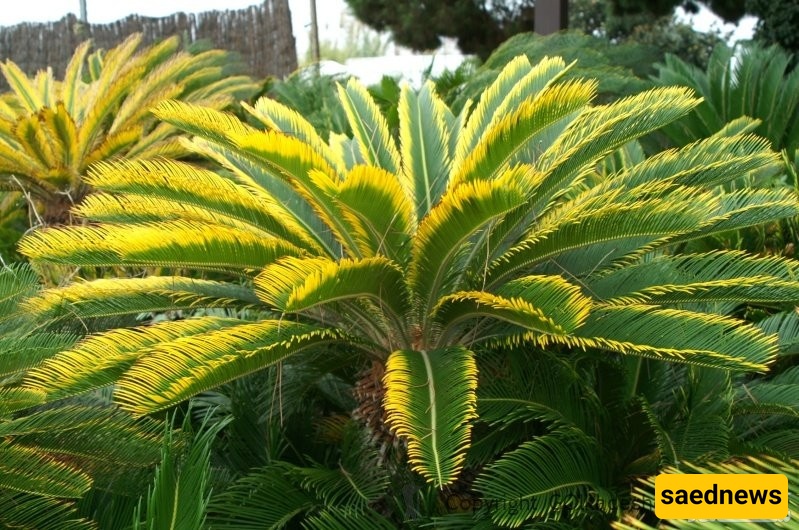
SAEDNEWS: Cycas are low-growing, dioecious plants. They belong to a single family with several genera and numerous species that have remained virtually unchanged through evolution since the Triassic period (geological era about 200 million years ago, the age of dinosaurs) to the present day.
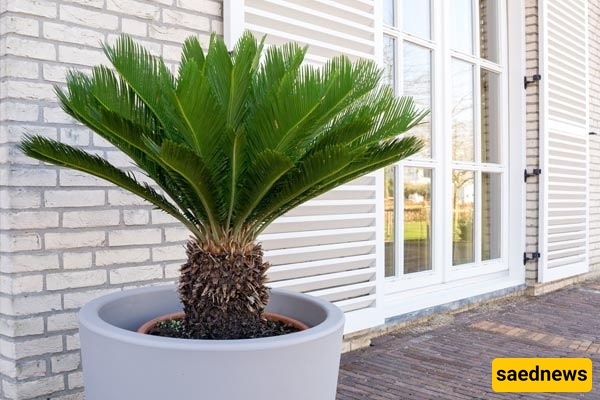
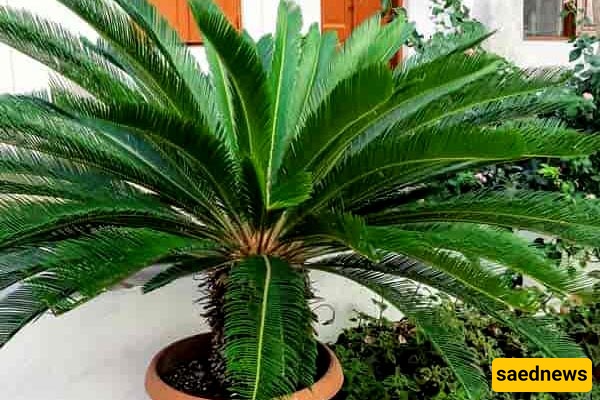
According to Saednews, Cycas is a hardy plant that can be kept both indoors and in home environments. Due to its slow growth, it is relatively expensive and is considered a luxurious and ornamental plant in terms of beauty and appearance. It is also used in landscaping and enhancing garden green spaces.
Persian name: Ornamental Palm
Origin: Southern Japan
English name: Sago palm
Scientific name: Cycas revoluta
Family: Cycadaceae
Other names: Sago palm, ornamental palm, cycad, miniature cycas
Cycas revoluta is native to Japan and is commonly used as decoration in large halls, offices, commercial spaces, and homes. The “revoluta” species is the most common, popular, and well-known type in Iran. One of the largest specimens of this species is kept at the Kew Botanical Gardens in England.
Cycas leaves are widely used around the world for decorating flower bouquets, wreaths, and Easter arrangements. Because each plant produces only about 20 to 40 leaves per growth cycle per year, the leaves are relatively valuable. The plant has extremely slow growth and a long lifespan.
In Iran, especially in the northern regions, the Cycas revoluta type is commonly cultivated. It has dark green leaves that usually emerge all at once in a circular pattern in May. If conditions of humidity and temperature are favorable, it may produce another flush of leaves in September. The fruit color changes from gray to orange as it matures.
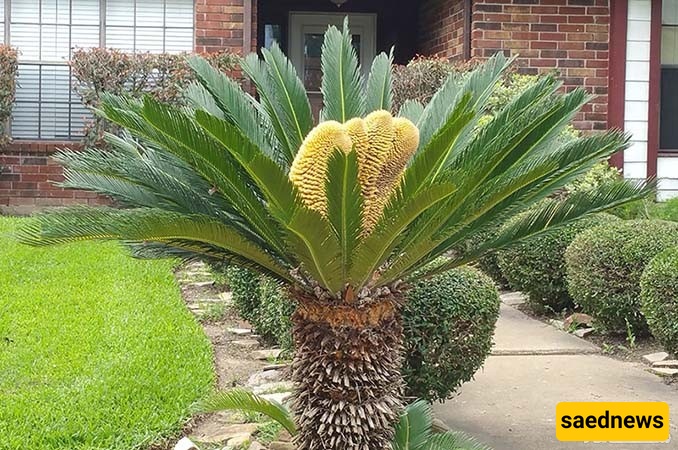
Cycas is a dioecious plant, meaning it has separate male and female individuals.
The male plant has pollen sacs on the underside of its leaves, which release large amounts of pollen through a longitudinal opening.
The female plant has ovules and is covered with brownish hairs. Its upper surface has finger-like or serrated structures.
Male leaves are generally shorter, thicker, and broader, while female structures are more textured and specialized for seed production.
Cycas is one of the most resistant and slowest-growing houseplants. In this guide, we will review its care requirements including watering, light, temperature, and propagation.
It is commonly seen in offices and commercial spaces, but it can also be successfully grown at home. Its slow growth makes it relatively expensive, and many people face difficulties in maintaining it properly.
Cycas requires strong light and several hours of direct sunlight. Its leaves are heliotropic, meaning they grow toward light sources, so the plant should be rotated about 90 degrees weekly to prevent bending.
Low light → elongated leaves
Excessive light → shorter leaves
Important note: Young and tender leaves are very sensitive for about two weeks after emergence. They can be easily damaged by physical contact or insect activity. Strong direct sunlight during this period may shorten leaf growth.
Cycas prefers a temperature range of 16°C to 24°C.
If temperatures remain below 0°C for several days, the plant is likely to die. In cold seasons, it should be moved indoors or protected with full covering.
If frost damage occurs:
A firm trunk may still indicate survival
A soft trunk usually means irreversible damage
Allow the soil to dry between watering sessions. Cycas does not tolerate constantly wet soil.
In pots: water only when the soil is dry
In gardens: in summer, watering twice a week may be sufficient
Important: Never spray water directly on the leaves, as this may cause rot.
Nutrient needs depend on light exposure. Plants grown in brighter conditions require more feeding.
From spring to late summer:
Feed once per month
Use half-strength balanced fertilizer
Always dilute fertilizer to prevent root burn caused by high osmotic pressure.
Cycas can grow in various soil types, but the best option is:
Cactus soil rich in organic matter
Or a mix of equal parts peat moss and coarse perlite
The plant’s crown (base) should always remain above soil level.
Indoor humidity is generally sufficient. Cycas is not very sensitive to humidity levels, but about 50% humidity supports healthier growth.
A water tray placed under the pot can help increase moisture levels.
Cycas is propagated mainly by seeds. It can also be propagated using basal offsets in early spring or autumn.
Seed propagation requires:
Pollination (by wind, insects, or manually—advanced and difficult)
Seeds mature in autumn
Soaking seeds in water for 24 hours before planting
Removing the red outer layer improves germination
Germination takes 3 to 9 months, and about 3 years are needed for the bulb to reach a diameter of 3 cm.