SAEDNEWS: Damghan Mani Polo is a traditional, festive, and flavorful Persian rice dish from Damghan, prepared with Iranian rice, split peas, Persian noodles, chicken, raisins, and barberries.
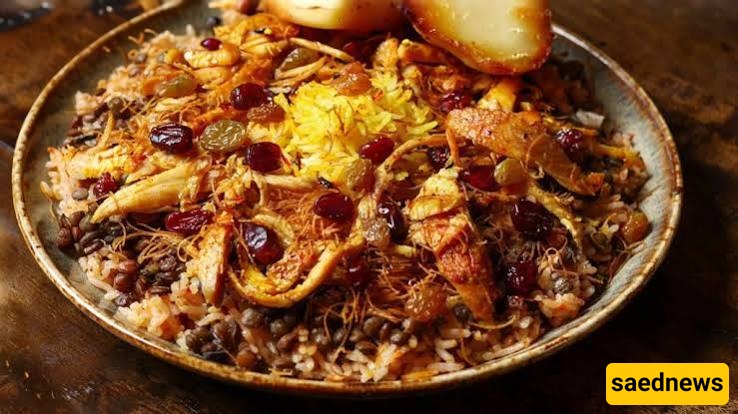
According to Saednews, Mani Polo is a traditional local dish from Damghan in Semnan Province and is considered one of Iran’s authentic rice dishes. Its defining characteristic is the harmonious combination of sweet, sour, and aromatic flavors, which sets it apart from many other Persian rice dishes.
Damghani Mani Polo can be prepared with either meat or chicken, but the chicken version is much more common today. Chicken breast is particularly suitable because it can easily be shredded after cooking and layered throughout the rice. This dish is especially popular during the colder months and on special occasions, holding a cherished place on the tables of Damghan families.
This recipe makes approximately 5 servings:
4 cups Persian rice
About 600 g chicken breast or chicken fillets
1 cup split peas
1½ cups Persian rice noodles
1 cup raisins
½ cup barberries
1 large onion
3–4 tablespoons brewed saffron
Oil, as needed
Salt, as needed
Black pepper, as needed
About 1 teaspoon turmeric
1–2 potatoes for the tahdig
½ teaspoon cumin seeds, optional
These quantities are suitable for a family meal or a small gathering. You can adjust the amount of raisins and barberries according to your taste. Cumin is optional in some versions of Mani Polo and adds a distinctive aroma.
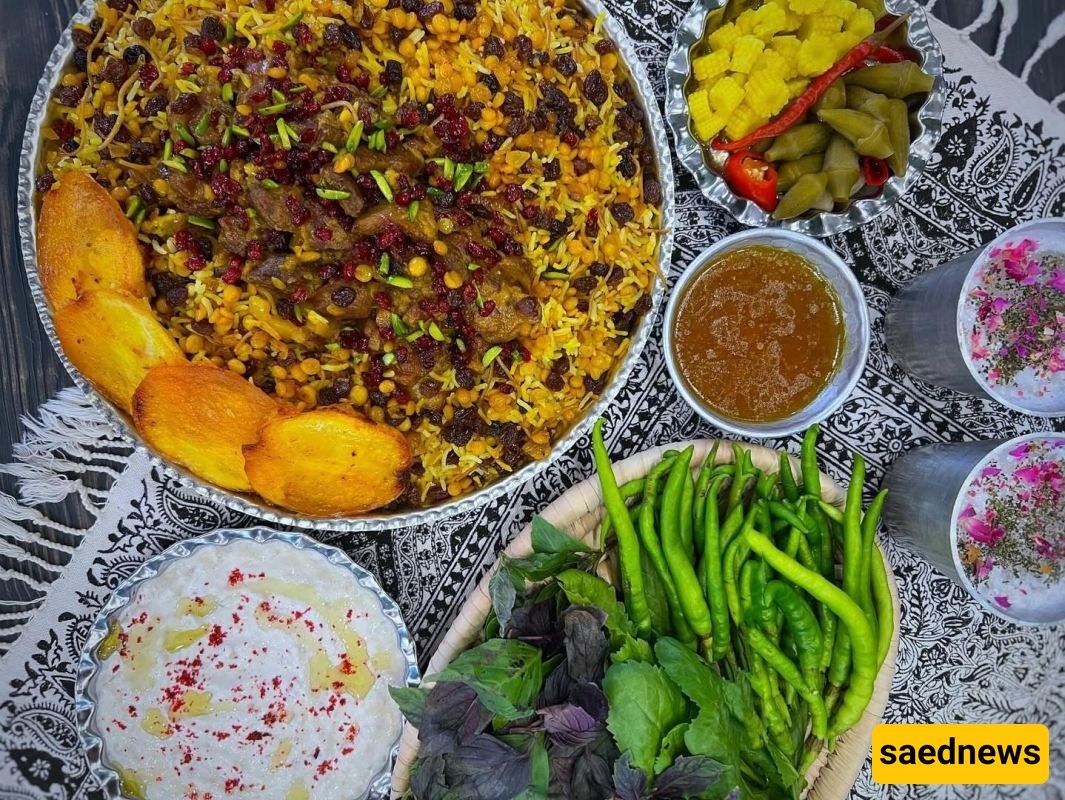
To make the cooking process easier, prepare the rice and split peas first. Soak the rice in water with some salt for several hours.
Soak the split peas in water for about 2–3 hours, changing the water once or twice during this time.
Drain the split peas, place them in a pot, and cover them with fresh water. Cook over medium heat until tender, but do not overcook them to the point where they lose their shape. Drain and set aside.
The split peas will cook again later with the rice and noodles, so they only need to be cooked until tender at this stage.
Peel the onion and cut it into several pieces. Place the chicken in a pot with the onion, some turmeric, black pepper, and salt.
Add about 2–3 cups of water and cook the chicken over low heat. Avoid adding too much water, as you do not want a large amount of chicken broth left at the end.
Once the chicken is fully cooked, remove it from the pot. Allow it to cool slightly, then shred it by hand or with two forks.
Heat some oil in a pan and lightly sauté the shredded chicken. Add about 2 tablespoons of brewed saffron and sauté for a few minutes, just until the chicken develops a beautiful color and absorbs the saffron aroma.
If desired, reserve some of the saffron chicken for the final garnish.
Clean and wash the raisins. If they are particularly dry, soak them in lukewarm water for about 15–20 minutes, then drain thoroughly.
Heat a little oil in a pan and gently sauté the raisins over low heat. Raisins cook quickly, so there is no need to fry them for a long time.
Wash the barberries and soak them in water for a few minutes. Drain them, then briefly sauté them in a small amount of oil over low heat.
Barberries can develop an unpleasant flavor if they remain over the heat for too long, so a short sauté is sufficient.
Keep the raisins and barberries separate so that their individual colors and appearance are better preserved when the dish is assembled and served.
Fill a large pot with water and bring it to a boil over high heat.
Drain the soaked rice and add it to the boiling water. After a few minutes, add the cooked split peas.
The exact cooking time depends on the type of rice, but the grains should be soft on the outside while remaining slightly firm in the center. The rice will continue cooking while it steams, so do not overcook it at this stage.
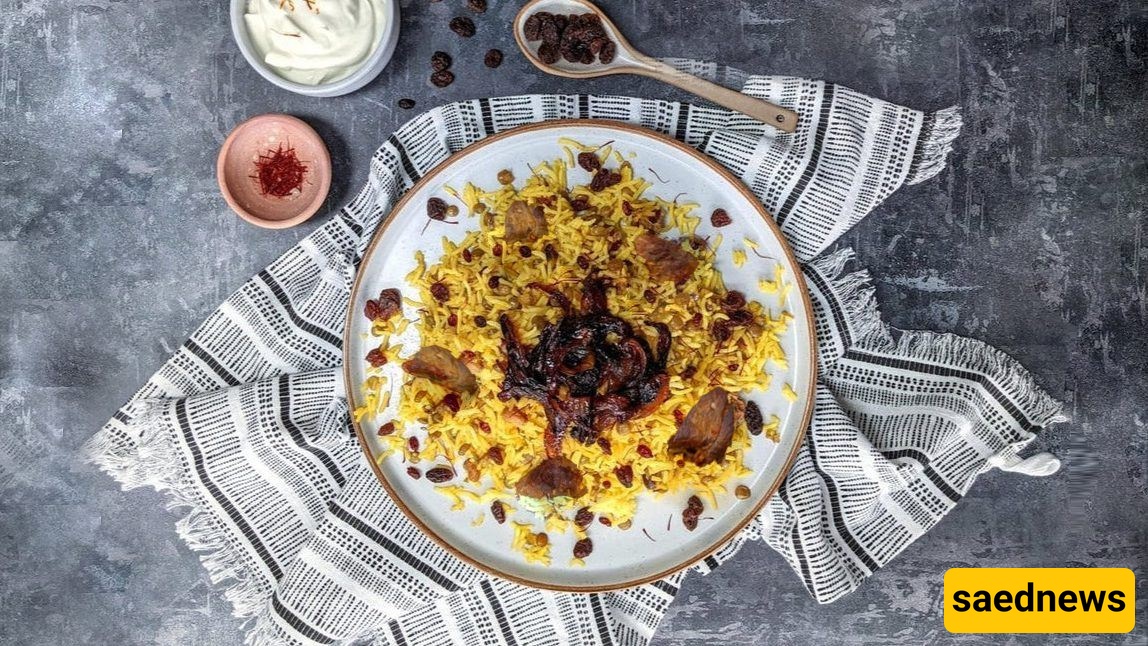
When the rice is nearly ready to be drained, add the broken Persian rice noodles.
The noodles require very little cooking time, so add them toward the end of the boiling process and let them cook with the rice for a few minutes.
Then drain the rice, split peas, and noodles together.
Adding the noodles at the end prevents them from becoming overly soft and helps them retain their texture in the finished Mani Polo.
Place the pot over the heat and add a little oil to the bottom.
For the tahdig, you can use potato slices. Peel the potatoes and cut them into relatively thin slices, then arrange them across the bottom of the pot.
Add some of the rice, split pea, and noodle mixture over the potatoes. Spread some saffron chicken over the rice, then add another layer of the rice mixture.
Continue layering until all the ingredients have been used. You do not need to use all the chicken between the layers; reserve some for the final presentation.
Finally, drizzle several tablespoons of brewed saffron over the surface of the rice.
If you enjoy the aroma of cumin, sprinkle a small amount of cumin seeds over the rice. Cumin is optional and is used in some versions of Mani Polo.
Cover the pot with a lid wrapped in a kitchen towel or pot cover designed for steaming.
Increase the heat slightly for the first few minutes to generate steam inside the pot. Then reduce the heat to low and allow the Mani Polo to steam for approximately 35–45 minutes.
Once the rice has completely steamed, remove the pot from the heat and let it rest for a few minutes.
Remove some of the saffron-colored rice and, if desired, mix it with a little barberry and raisins.
Transfer the Mani Polo to a serving platter. Finish by arranging the saffron chicken, barberries, raisins, and saffron rice over the top.
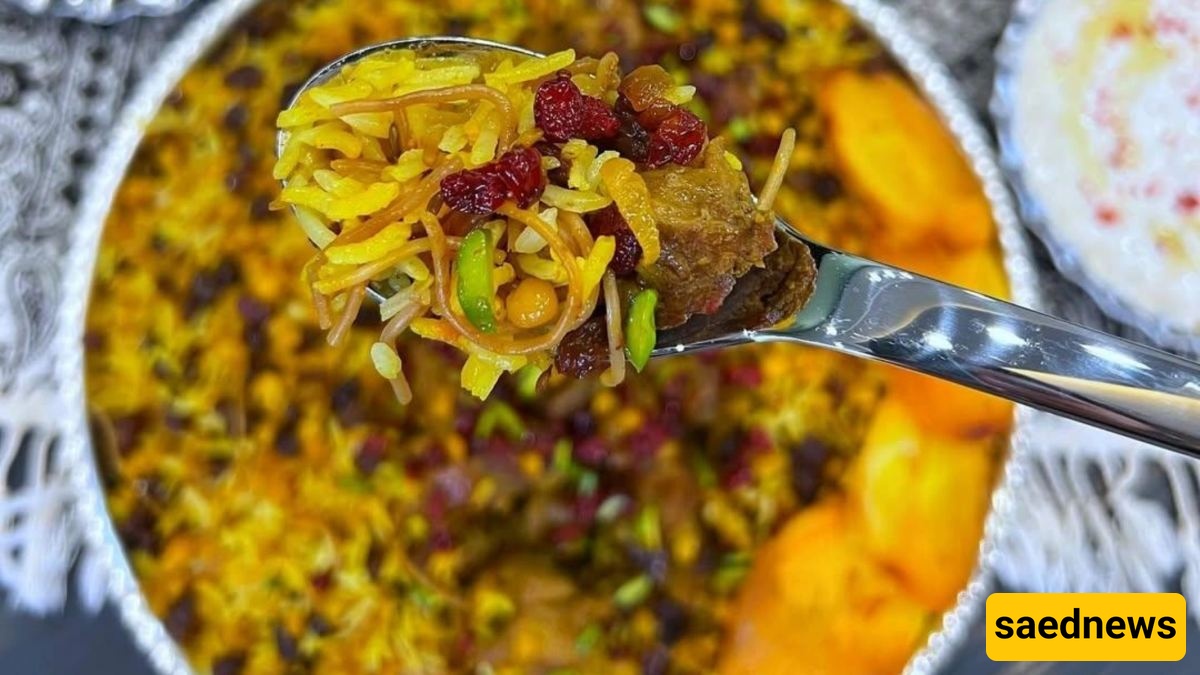
If the rice noodles remain in boiling water for too long, they are more likely to become soft and mushy.
Briefly sautéing the cooked chicken with saffron enhances both its color and aroma.
Medium-low heat is sufficient for sautéing the raisins.
Barberries are best sautéed briefly.
For the best results, use good-quality Persian rice. Drain the rice while it is still slightly firm because both the rice and noodles continue cooking during the steaming process. Overcooking them can make the Mani Polo mushy.
Using potato slices for the tahdig makes the finished potatoes easier to remove from the bottom of the pot.
Reserve some of the saffron for the chicken and some for the rice so its aroma and flavor are distributed throughout the dish.
Chicken breast is the ideal cut for this recipe because it can be easily shredded and layered throughout the rice.