SAEDNEWS: Pineapple is one of those fruits that can be difficult to peel. Its tough, woody core and thorny, rough skin are among the defining features of this delicious fruit.
According to Saednews, Pineapple is one of those fruits that can be difficult to peel. Its tough, woody core and spiky skin make it a little challenging to prepare. Everyone has their own method for removing the edible flesh, but one of the easiest and most effective ways is explained below. After learning this method, you won't have to be afraid of buying a whole pineapple again.
If you are using a plastic cutting board, place a kitchen towel underneath it to minimize the risk of slipping while cutting.
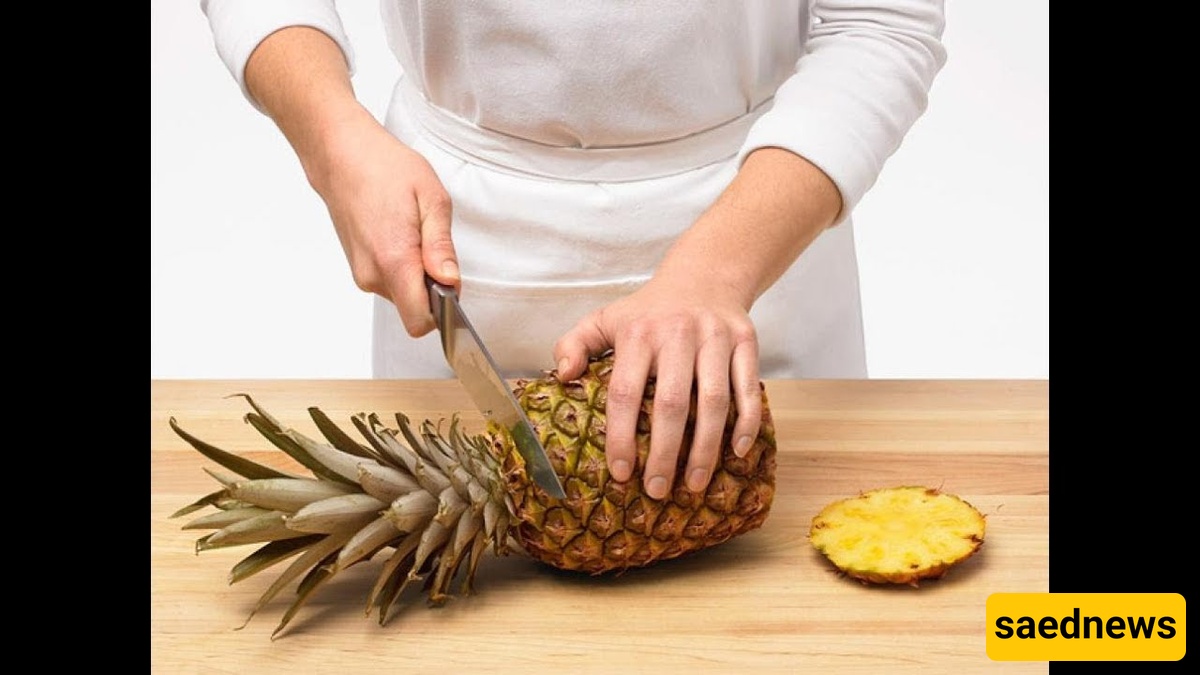
Place the pineapple on its side and cut about 1/3 inch (0.8 cm) below the leaves.
Hold the pineapple firmly on the cutting board and keep your fingers safely away from the blade. Using a large knife, cut off the top of the fruit along with the leaves. The leaves are called the crown.
Use a chef's knife or a serrated bread knife for this step.
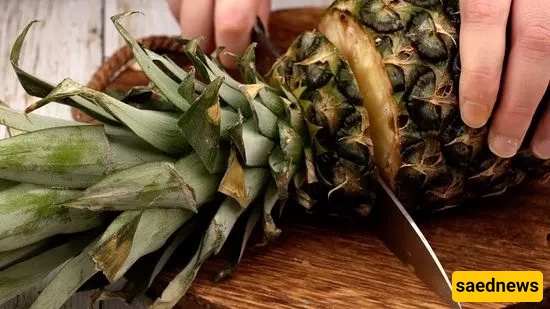
Tip: If you want to decorate a fruit platter, save the crown. You can place it in the center of a large platter and arrange the sliced pineapple and other fruits around it.
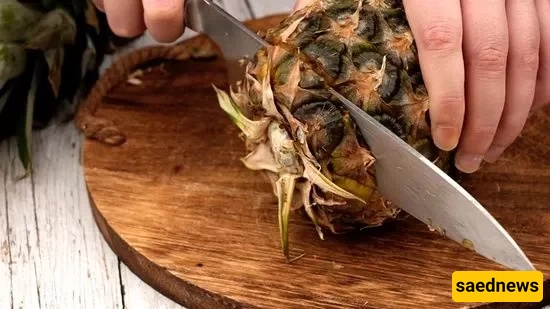
Cut off the bottom of the pineapple as well so that the fruit can stand flat on the cutting board.
Turn the pineapple 180 degrees, hold it firmly, and cut about 1/3 inch (0.8 cm) from the bottom, just as you did with the top.
The pineapple can now stand upright on the cutting board, making it much easier to peel and cut.
Stand the pineapple upright and place a knife near the top edge.
Position the pineapple vertically on the cutting board and hold it firmly. Place a large knife near the top, where the flat edge meets the skin.
It does not matter which end of the pineapple is facing upward.
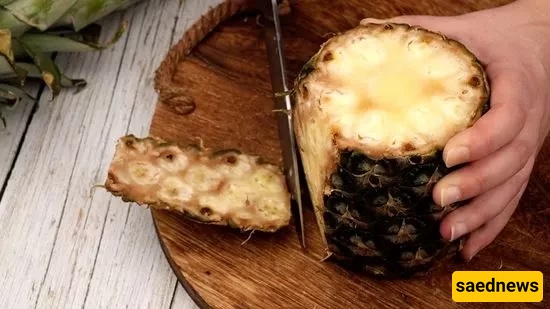
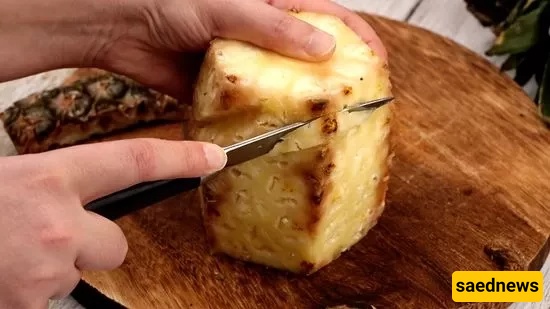
Move the knife gently back and forth from top to bottom, removing a strip of skin at a time. Try to remove the skin without cutting away too much of the edible flesh.
To minimize waste, peel about 1/4 inch (0.6 cm) into the fruit around the outside.
Tip: Since the pineapple curves near both ends, follow the natural curve of the fruit as you cut.
Continue turning the pineapple and removing strips of skin until the entire fruit has been peeled.
You will now have a peeled pineapple, although you may still see rough brown circles on the surface. These are known as the pineapple's "eyes." Discard the skin or add it to your compost.
Stand the pineapple upright on the cutting board and carefully examine the surface. You will notice that the eyes form diagonal rows, which makes them easier to remove.
Although you can leave the eyes on the fruit, their rough texture makes them unpleasant to eat.
Take a small knife and make a diagonal cut at about a 45-degree angle alongside a row of two or three eyes. Make one long diagonal cut above or below the row.
Move the knife to the other side of the eyes and make another 45-degree cut. This creates a V-shaped groove with the eyes in the center.
Tip: If you do not want diagonal cuts across the pineapple, you can use a small knife to remove each eye individually. This preserves more of the fruit but takes considerably longer.
When the two diagonal cuts meet, the V-shaped section containing the eyes can easily be removed. Use your fingers to lift it out and discard it.
You can cut and eat the edible sections between the eyes or discard the entire strip.
Continue cutting along the rows of eyes around the pineapple. Remove one row at a time, then turn the pineapple and remove the eyes from the other side.
The diagonal cuts will give the pineapple an attractive spiral pattern.
Place the pineapple on its side and cut it into rings of your desired thickness. Use a small round cutter to remove the tough central core from each slice.
If you prefer triangular pieces, cut the pineapple lengthwise into four sections. Then cut away the hard central core from each quarter in a triangular shape.
To make larger chunks, take one of the pineapple quarters and cut it crosswise into pieces of your preferred width.
Your pineapple is now ready to serve, enjoy, or use in your favorite recipes.