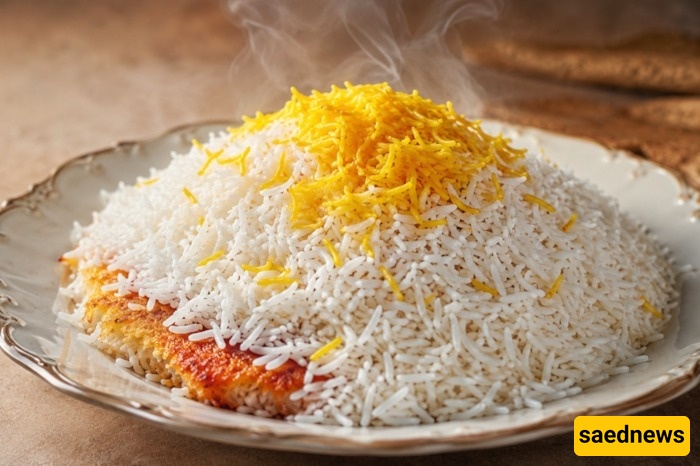
SAEDNEWS: Learn how to prepare perfectly steamed Persian rice with long, fluffy, separate grains and a wonderful aroma. This guide covers the essential steps for parboiling, draining, and steaming the rice, along with practical tips to prevent it from becoming sticky or mushy.
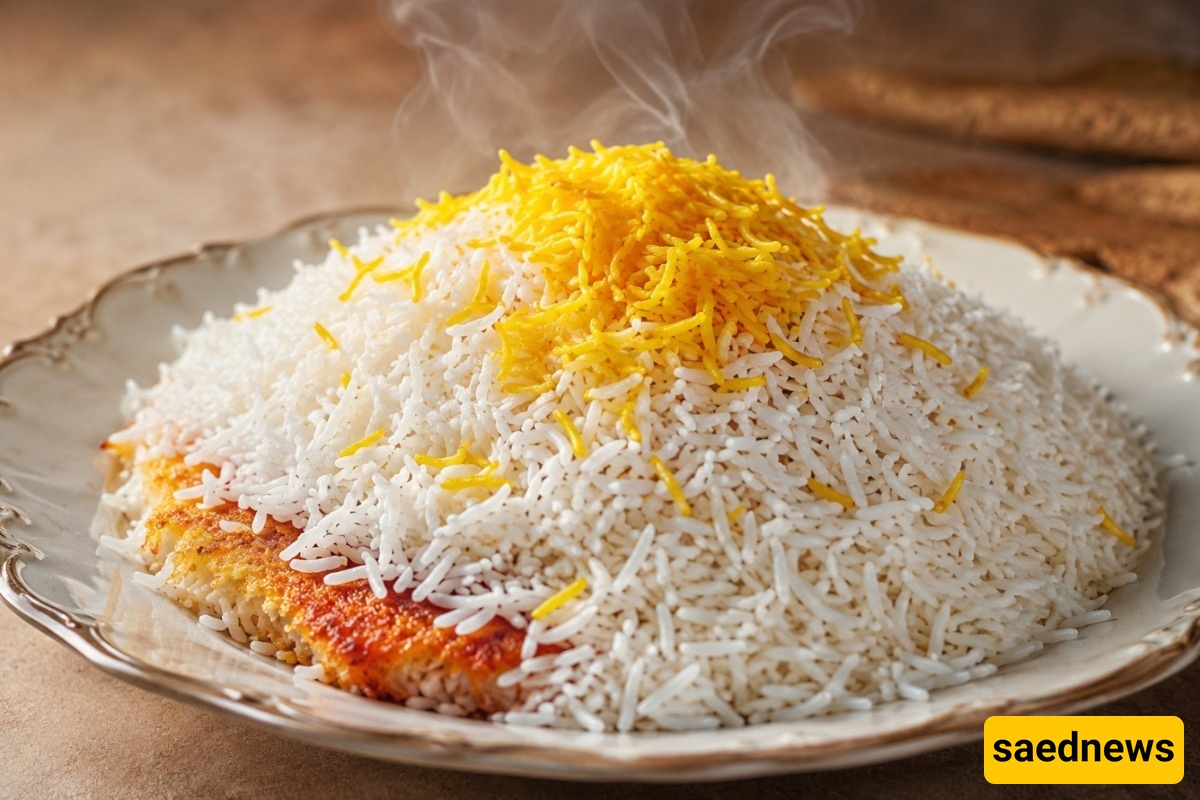
According to Saednews, Making perfectly cooked Persian rice with long, fluffy, separate grains and an inviting aroma is less about complicated cooking skills and more about following a few simple steps during soaking, boiling, draining, and steaming. In this guide, we’ll explain how to make traditional Persian abkesh rice step by step, along with practical tips to prevent the rice from becoming mushy and give it a beautiful, restaurant-style appearance.
Ingredient | Amount |
|---|---|
Iranian rice | 3 cups |
Water | Enough for boiling |
Salt | 3–4 tablespoons for soaking and boiling |
Oil or butter | 3–4 tablespoons |
Brewed saffron (optional) | 2–3 tablespoons |
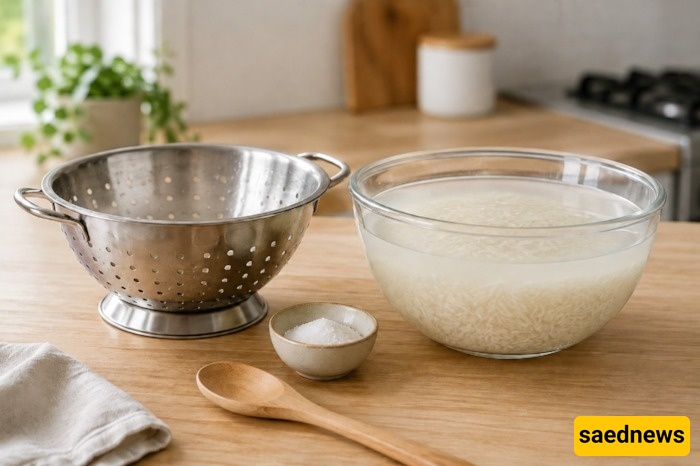
For fluffy, separate, long-grain rice, simply knowing the basic cooking steps is not enough. The timing of draining the rice, how you transfer it to the pot, and the steaming process all have a major effect on the final result. Here is the complete method, including the most important tips.
First, rinse the rice several times with cold water until the water becomes relatively clear. Transfer the rice to a bowl and add enough water along with some salt.
For Iranian rice, soaking it for about 2 to 3 hours is usually ideal. Soaking helps the grains open up during cooking and gives the finished rice a longer, more elegant appearance after steaming.
Fill a suitable large pot with water. There should be enough water for the rice to move freely while boiling. As a general guideline, about 6 to 8 cups of water are needed for 3 cups of rice.
Once the water reaches a full boil, add about 1 tablespoon of salt. Drain the soaking water from the rice, then add the soaked rice to the boiling water.
Stir the rice gently several times to prevent the grains from sticking to the bottom of the pot.
Keep checking the rice as it cooks. The ideal time to drain it is when the outside of each grain has become soft while the center is still slightly firm.
To check, take one grain of rice and press it gently between your fingers. If the outside is soft but the center still offers a little resistance, the rice is ready to be drained.
Pour the rice into a colander and quickly rinse it once with cold water. This stops the cooking process and prevents the grains from becoming too soft.
Then gently lift and shake the colander two or three times. This separates grains that may have settled on top of one another and allows excess heat to escape, helping prevent the rice from becoming sticky.
Add some oil to the bottom of the pot and, if desired, prepare your favorite tahdig, the crispy layer that forms at the bottom of Persian rice.
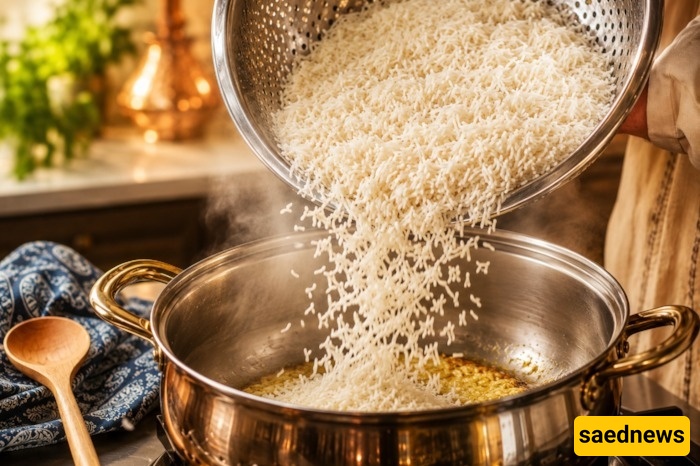
Transfer the drained rice into the pot gently, one scoop at a time. Avoid dumping all the rice into the pot at once, as this can compress the grains and cause them to stick together.
Use the handle of a spoon or spatula to make several holes in the surface of the rice. These openings allow steam to circulate more effectively between the grains.
Finally, drizzle about 2 to 3 tablespoons of oil or melted butter over the rice. This helps keep the finished rice tender and flavorful.
Another option is to wait until the rice has completely steamed, heat some oil separately, and drizzle it over the rice just before serving. This method helps preserve the aroma of the oil and gives the rice a shinier, more elegant appearance when served on a platter.
Place the pot over medium-high heat for about 5 to 10 minutes, just until steam begins to build up.
Then reduce the heat to low, cover the pot with a clean kitchen towel or pot lid cover, and allow the rice to steam gently for approximately 40 to 60 minutes.
Once the rice is ready, turn off the heat. Gently loosen the rice around the edges of the pot with a spoon.
If you want molded rice, place your serving platter over the pot and carefully turn the pot upside down in one motion so the rice comes out in a neat shape.
Otherwise, gently transfer the rice to a serving platter and serve.
Brewed saffron can be used in several ways to give Persian rice a beautiful golden color and wonderful aroma.
Take a portion of the steamed rice and mix it with a few tablespoons of brewed saffron. Spoon the saffron rice over the white rice when serving.
This is the most common presentation for festive Persian rice.
After transferring the rice to the pot, drizzle some brewed saffron over different areas of the rice. As the rice steams, the saffron aroma and color will spread through the grains.
Mix a little melted oil or butter with brewed saffron and add it to the rice or the bottom of the pot. This can create a more even saffron color in the tahdig while adding extra aroma and visual appeal.
If you prefer simple white Persian rice, you can simply leave out the saffron.
Abkesh rice is an excellent choice when you want separate, fluffy grains and an elegant presentation. However, if you prefer a simpler cooking method with less preparation, you can also try Persian kateh rice, which is cooked with a different technique and produces flavorful, aromatic rice.
Even when you follow the basic draining method correctly, a few small details can make a significant difference to the rice's texture, aroma, and appearance. These tips can help your rice stay attractive and delicious when it is time to serve.
If you prepare the rice some time before serving, avoid stirring or turning it over too much after it has finished steaming. Repeatedly releasing the steam can cause the top layer of rice to become dry.
If you are transferring the rice to a serving platter, do not remove everything from the pot at once. Instead, gently transfer it in batches and lightly mix the grains. This allows the softer, more moist grains from the bottom to mix with the grains from the top.
When serving rice at a gathering, there may be a delay before everyone sits down to eat. In this situation, keep the heat underneath the pot very low or use a heat diffuser.
Excessive heat can cause the rice at the bottom of the pot to dry out or burn while the upper layers are still in good condition.
If you notice that the rice is too salty before steaming, rinse it once with lukewarm water to remove some of the excess salt.
If you only realize that the rice is too salty after it has finished steaming, the best solution is to mix it with some plain, unsalted rice. This helps balance the flavor.
For mild excess saltiness, placing a few pieces of bread or a small amount of raw potato in the rice while reheating may also help absorb some of the salt.
It is better not to immediately transfer the rice to a platter as soon as you turn off the heat. Wait a few minutes to allow excess steam to escape and give the grains time to firm up slightly.
This helps prevent the grains from breaking during serving and keeps the rice looking neat and well separated.
The secret to beautiful Persian abkesh rice is largely in the timing. Do not overcook the rice before draining it, handle the grains gently, and allow enough time for slow steaming. With these simple techniques, you can achieve fluffy, long, separate grains with the classic texture and appearance of Persian-style rice.