SAEDNEWS: Falafel is a popular street food in Iran made from a mixture of chickpeas and flavorful spices. In this article, we will teach you how to prepare homemade falafel.
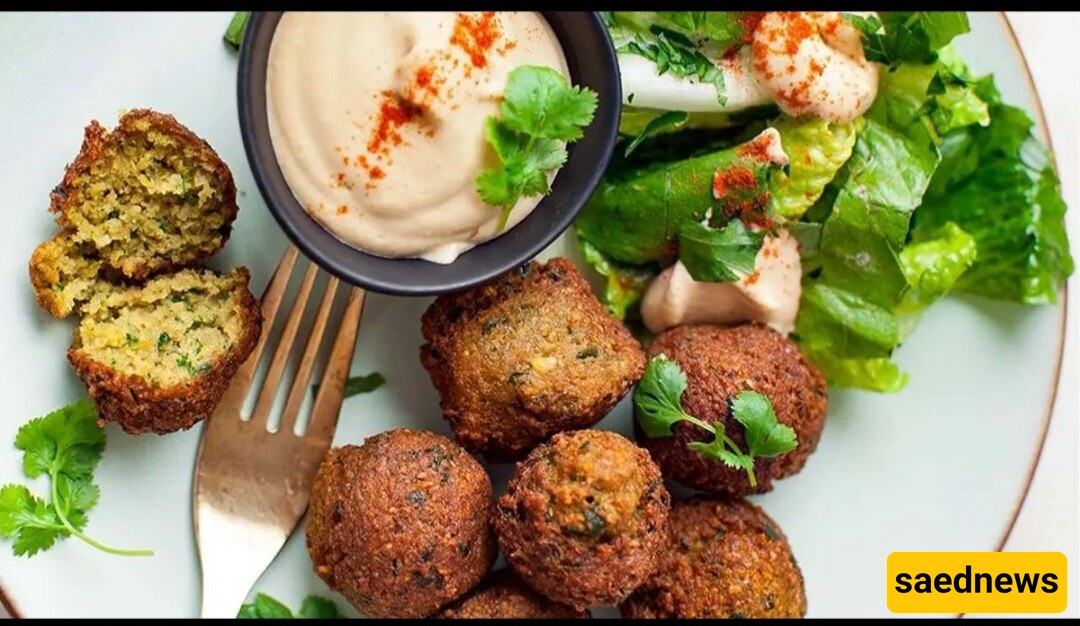
According to Saed News Cooking Service, falafel is one of the delicious Arab dishes that is recognized worldwide as an international food. This tasty dish is popular in the Middle East for several reasons, including its quick preparation time, very low cost, and vegetarian nature.
Due to its popularity, many variations of falafel have been created. For example, those who want a lower-calorie version can bake falafel in the oven instead of deep-frying it in oil. Below you can follow a complete step-by-step cooking guide for making falafel.
To prepare delicious falafel, chickpeas are soaked for several hours and then ground together with parsley, onion, garlic, and spices. After adding lemon juice, salt, and pepper, the mixture is rested and then deep-fried. The fried falafels can be served with baguette bread and fresh vegetables.
Chickpeas: 300 g
Onions: 2 medium
Coriander seeds: 1 teaspoon
Ground cumin (green or black): 1 teaspoon
Garlic: 3 cloves
Parsley: 50 g
Potato: 1 small
Lemon: 1 medium
Turmeric and oil: as needed
Salt and black pepper: as needed
Falafel spice mix: 1 teaspoon

The first and most important step is soaking the chickpeas. The longer they are soaked, the better the final texture will be. The minimum soaking time is 6 hours, but in street-style falafel shops, chickpeas are usually soaked for 24 to 72 hours until fully softened.
Soaking not only softens chickpeas but also reduces their bloating effect. Preparing the falafel mixture is simple once the chickpeas are properly soaked.
Grind the soaked chickpeas together with parsley, garlic, onion, coriander powder, potato, and cumin using a grinder or meat mincer until smooth and uniform.
Parsley is optional, but it improves flavor and appearance. Professionals recommend using a meat grinder instead of a blender, because blenders can over-purée the mixture.
Add lemon juice (strained), salt, black pepper, falafel spice mix, and turmeric to the mixture. Then grind or mix again until fully combined.

Knead the mixture by hand for about 5 minutes until it becomes cohesive and uniform. The falafel mixture should be slightly soft, not too firm.
If you have extra mixture, you can freeze it for later use. Otherwise, refrigerate it for 1 to 2 hours so it becomes more compact and better for shaping.
Heat a deep pot with oil over low heat. The oil should be enough to fully submerge the falafels while frying.
Fill a falafel mold with the mixture and press it firmly to prevent it from breaking apart during frying. Fry in batches without overcrowding the pot.
Maintain low to medium heat. High heat will burn the outside while leaving the inside raw. Do not rush the frying process.
After frying, place falafels on a wire rack or paper towels to remove excess oil.
Serve falafel with baguette bread, tomatoes, pickles, and lettuce. It can also be enjoyed with mango sauce or ketchup.
To achieve restaurant-style falafel, use more onion and a small amount of potato, along with spices such as cumin and coriander.
Street vendors often grind the mixture twice: once coarse and once finer, to achieve the ideal texture without over-puréing.
Falafel recipes vary widely, but a common mix includes black pepper, dried mint, dried basil, savory herbs, and rose powder.
Some vendors add baking powder to make falafel puffier. However, baking soda is not recommended due to health concerns. A small amount of baking powder can be used instead.
To make sesame-coated falafel, either mix sesame seeds into the batter or roll the shaped falafel in sesame seeds before frying.
If you prefer a meat version, add 100–200 g of minced meat to the mixture. The preparation steps remain the same, but frying time may be slightly longer to ensure the meat is fully cooked.