SAEDNEWS: Agerdak bread, also known as Nan Agerdeh, Ardeh, or Roghan Jooshi, is a traditional Iranian local bread. It is popular in cities such as Hamedan, Qazvin, Zanjan, Najafabad, and Kermanshah. This bread is made in a pan without an oven and can be prepared with or without eggs using similar metho
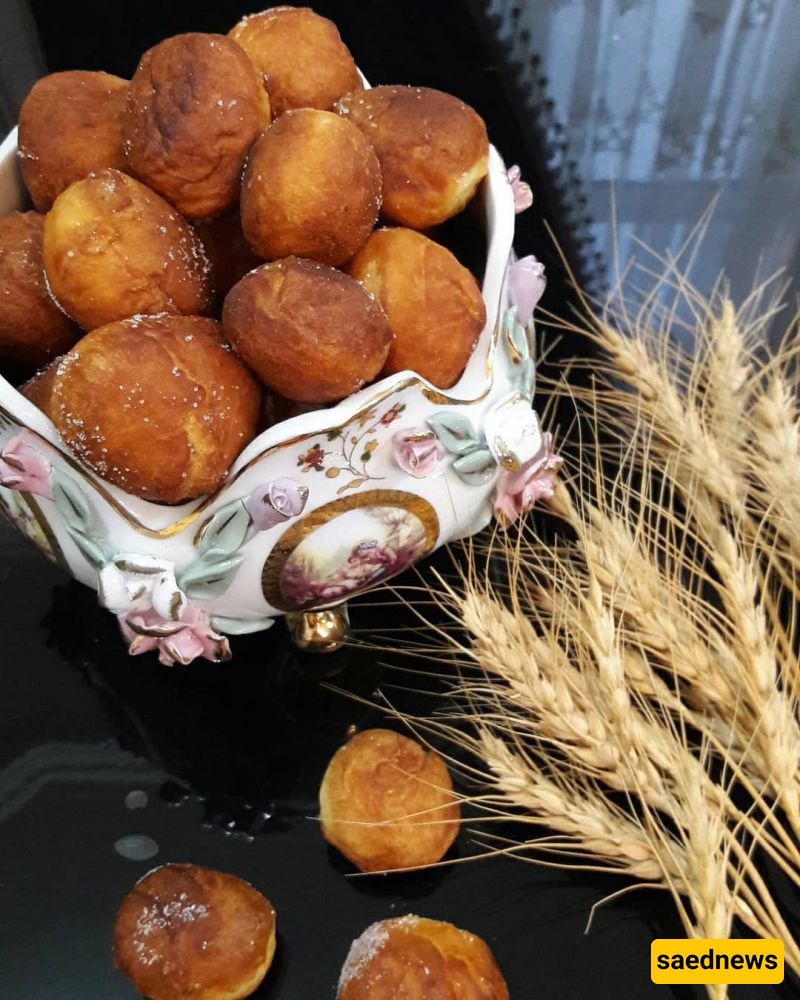
According to Saed News Cooking Service, Agardak is a very delicious type of bread that is traditionally prepared in some provinces of Iran. This sweet bread has a soft and delicate texture and is typically made without an oven or traditional clay oven. Its preparation method is very similar to doughnuts, as it is deep-fried in plenty of oil. Today we will teach you how to make traditional Qazvin-style Agardak using yeast and baking powder.
Flour: 4 cups
Dry yeast: 1 tablespoon
Sugar: 1/2 cup
Milk: 2 cups
Eggs: 3
Oil: 1/4 cup
Brewed saffron: 2 tablespoons
Cinnamon and cardamom: 1 teaspoon
Salt: a pinch
Baking powder: 1 tablespoon
Lukewarm water: 1/2 cup + 1 tablespoon sugar (to activate yeast)
Oil: as needed for frying
Turmeric: as needed
Powdered sugar: for decoration
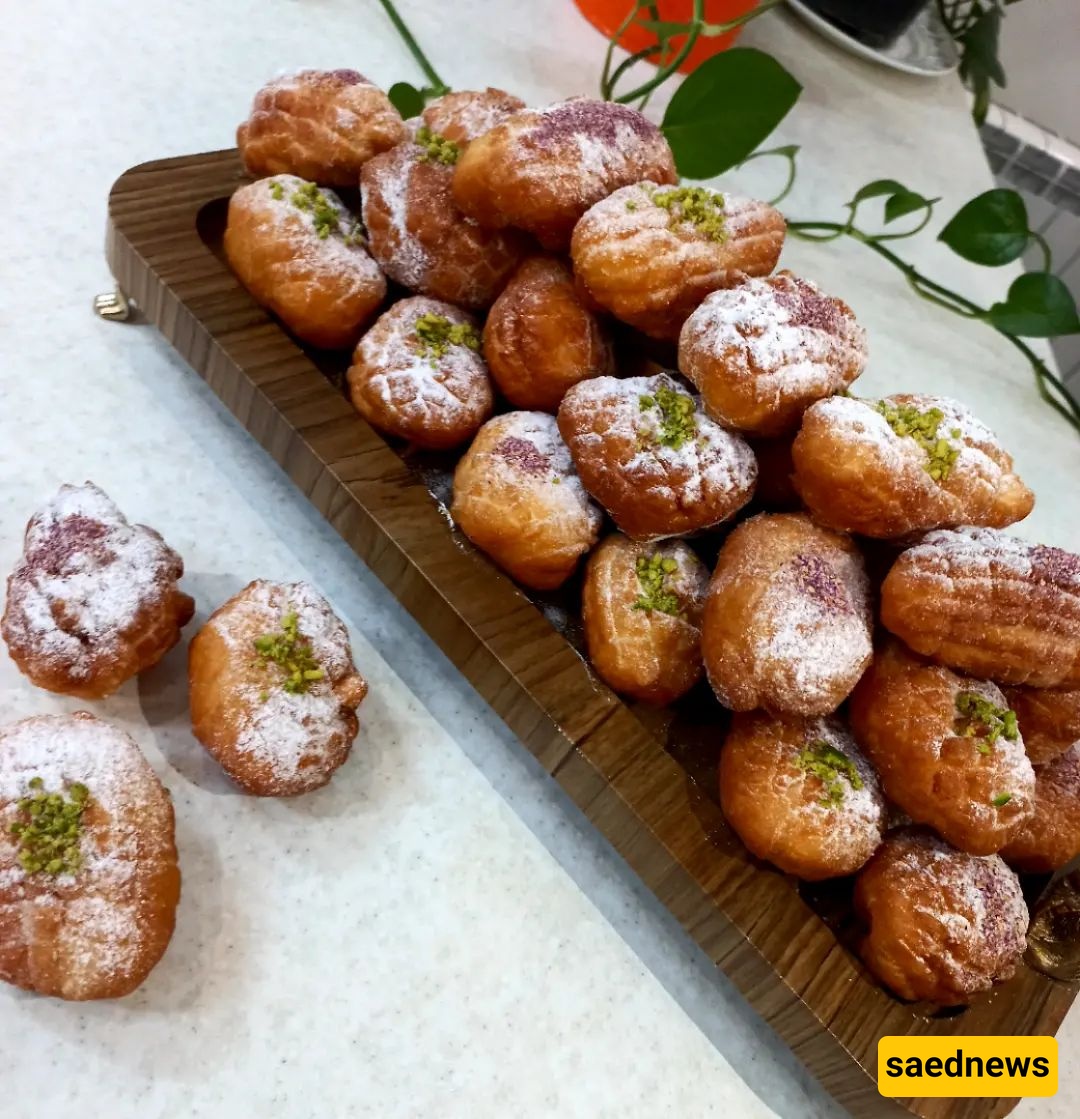
Ground pistachio and rose petals: for decoration
Pour lukewarm water into a suitable bowl and add one tablespoon of sugar. Then add the yeast, cover the bowl, and wait until the yeast becomes active and foamy.
Sift flour, salt, cinnamon, and cardamom into a bowl. In a separate bowl, beat the eggs and mix in baking powder. Once the eggs are smooth, add sugar and oil. Then add the activated yeast mixture and stir well.
Gradually add the flour mixture to the egg mixture. Add saffron and turmeric as well. Knead well until a soft dough forms. If the dough is too soft, add a little flour; if it is too firm, adjust with milk.
Cover the dough with a clean cloth and let it rest for about one hour. To test readiness, press your finger into the dough—if the indentation remains, the dough is ready.
Sprinkle flour on your work surface and place the dough on it. Knead lightly and divide into walnut-sized pieces. Shape them as desired. Alternatively, roll out the dough and cut it with a cutter. You can also decorate the surface with a knife or sieve pattern.
Heat oil in a deep pot. Once hot, fry the Agardak pieces. They should be fully submerged in oil to cook evenly. Turn them during frying until both sides are golden brown.
Remove the fried pieces and place them on absorbent paper to drain excess oil.
Your traditional Agardak is ready. Arrange them on a serving plate and sprinkle powdered sugar on top if desired. Enjoy!
Saffron enhances both flavor and color, but turmeric can be used as a substitute.
Butter can replace 1/4 cup of oil.
Sugar quantity can be adjusted based on taste.
Adding turmeric to frying oil helps achieve a golden color.
Honey can be used instead of sugar for a different sweetness profile.