SAEDNEWS: Fuel is a substance that produces useful energy through chemical or nuclear reactions. This article provides a comprehensive overview of different types of fuel, including solid, liquid, gaseous, nuclear, and biofuels, along with their applications.

According to Saednews, Fuel is a substance that produces useful energy through changes, usually chemical reactions. This energy can subsequently be converted into mechanical energy. These changes generally involve combustion, which is the reaction of a substance with oxygen. The processes used to convert fuel into energy include various exothermic chemical reactions and nuclear reactions, such as nuclear fission and nuclear fusion.
Chemical fuels are substances that release energy through reactions with their surroundings, most importantly through oxidation.
Biofuels are liquid, solid, or gaseous fuels made from or derived from biomass. Biomass can also be used for heating or electricity generation. Biofuels can be produced from renewable carbon sources, such as plants that can be replenished relatively quickly. Many different plants and plant-derived materials are used to produce biofuels.
Fossil fuels include hydrocarbons, primarily coal and petroleum, including crude oil and natural gas. They are formed over millions of years from the fossilized remains of plants and animals exposed to high temperatures and pressures in the Earth's crust in the absence of oxygen.
Nuclear fuel is any material extracted or processed for use in generating nuclear energy.
The most common type of nuclear fuel used by humans consists of heavy fissile elements that can generate energy through a chain reaction of nuclear fission in a nuclear reactor. The most commonly used fissile nuclear fuels are uranium-235 (\(^{235}U\)) and plutonium-239 (\(^{239}Pu\)).
The extraction, processing, use, and management of these elements are part of the nuclear fuel cycle. Nuclear fuel can ultimately be used to generate nuclear energy or produce nuclear weapons. The nuclear fuel cycle is associated with both nuclear power generation and nuclear weapons.
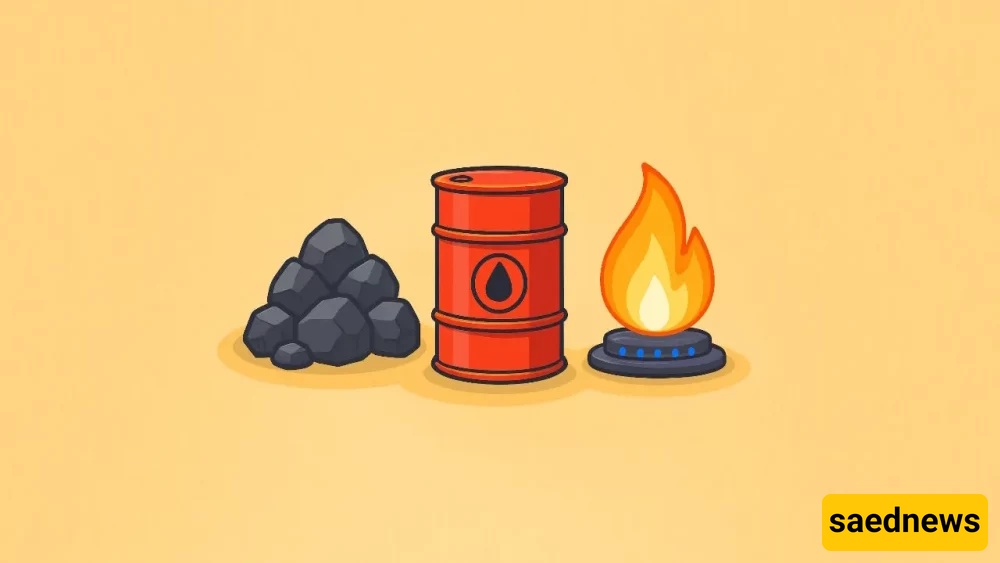
Fuels come in various forms and can generally be classified into three main categories: solid, liquid, and gaseous fuels.
Solid fuels include materials such as wood, coal, and coke. Humans have used wood as a fuel for thousands of years, making it one of the earliest fuels used by humans. Paraffin wax and animal fat (tallow) are two other types of solid fuels commonly used to make candles.
Among solid fuels, coal remains one of the most widely used and abundant fuels in the world. Its primary use is in electricity generation.
Most liquid fuels are derived from crude oil. Gasoline, kerosene, and diesel fuel are all obtained from crude oil. In some countries, alcohol is also used as a fuel. Vegetable oils and animal fats are other examples of liquid fuels.
Natural gas, coal gas, and water gas are among the most important types of gaseous fuels.
Natural Gas: Natural gas is primarily used for cooking and heating. It is found deep underground, often near petroleum deposits.
Coal Gas: Coal gas is a mixture of hydrogen, methane, other hydrocarbons, carbon monoxide, and small amounts of nitrogen, oxygen, and carbon dioxide. It is produced during the conversion of coal into coke. Coal gas has been used to generate electricity and in metallurgical industries.
Water Gas: Water gas is a mixture of hydrogen and carbon monoxide. It is produced by passing steam over hot coke and is used in various industries.
Butane Gas: Butane is another important gaseous fuel widely used for heating, cooking, and other applications.