SAEDNEWS: From its mysterious far side and lack of atmosphere to its unique time system and memorial honoring astronauts, here are some fascinating facts about Earth’s only natural satellite.
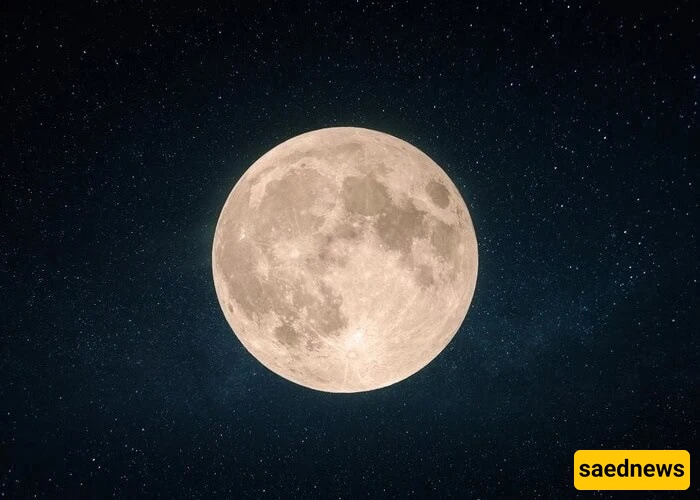
According to Saednews, The far side of the Moon is the hemisphere that permanently faces away from Earth. The side that faces Earth is known as the near side. But there is much more to the Moon than what we can see from our planet. Here are some fascinating facts about Earth's only natural satellite.
The Moon is Earth's only natural satellite. It reflects sunlight and provides a small amount of illumination during Earth's nights. With a diameter of approximately 3,476 kilometers, the Moon is the fifth-largest natural satellite in the Solar System.
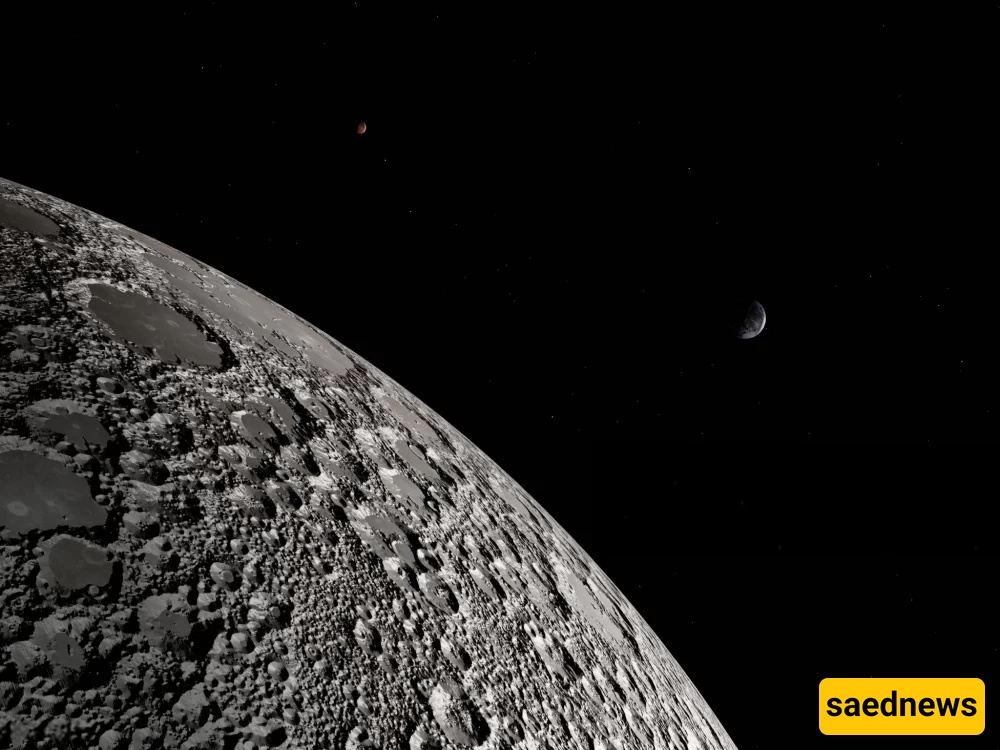
The Moon has virtually no atmosphere, and its surface is covered with impact craters created by collisions with asteroids and other space debris. Its surface area is approximately 37.93 million square kilometers, which is smaller than the area of Asia.
The Moon ranks fourteenth in the Solar System by mass and volume. Its diameter is about one-quarter that of Earth, while its density is roughly four-fifths that of Earth. No other planet in the Solar System has a natural satellite that is so large relative to the size of its planet.
Humans have observed and studied the Moon since ancient times. Its regular cycles were used for calendars and agricultural planning, while travelers and sailors relied on moonlight and the Moon's position for navigation.
The Moon has also played an important role in the mythology and traditions of many civilizations. Some ancient cultures even worshipped the Moon as a deity.
The Moon's gravity is responsible for much of Earth's ocean tides. It also helps stabilize Earth's rotational axis. Without the Moon, Earth's axial tilt would vary much more dramatically, potentially causing major changes in climate and seasons.
Unlike Earth, the Moon does not have a living ecosystem on its surface. There are no forests, oceans, animals, or agricultural environments that could support life as we know it.
The Moon is also much more exposed to cosmic radiation and solar storms because it lacks Earth's protective atmosphere and magnetic environment.
Although the Moon has virtually no atmosphere, scientists have discovered evidence of water ice, particularly in extremely cold, permanently shadowed regions near the lunar poles. Some of this water may have been delivered by comets and other celestial bodies over billions of years.
The Moon is gradually moving away from Earth at an average rate of about 4 centimeters per year. Over hundreds of millions of years, this gradual change will significantly increase the distance between Earth and the Moon.
Many reference books state that we can see only half of the Moon from Earth. However, because the Moon's orbit and rotation allow a phenomenon known as libration, observers on Earth can actually see about 59% of the lunar surface over time.
The remaining portion of the Moon can never be seen directly from Earth. A person standing on the far side of the Moon would also not be able to see Earth directly from the surface.
For many decades, scientists believed that the Moon was completely dry. More recent research has shown that water molecules and water ice are present on the Moon.
Scientists believe that lunar water could potentially become an important resource for future exploration. Water could be used not only for drinking but also for producing oxygen and hydrogen-based rocket fuel.
Another possible source of lunar water is the solar wind. Protons carried by the solar wind interact with materials on the lunar surface and can contribute to the formation of hydrogen-containing compounds and water molecules.
Astronauts who visited the Moon noticed that their shadows appeared much darker than shadows on Earth.
On Earth, our atmosphere scatters sunlight, creating areas of indirect illumination inside shadows. The Moon has no substantial atmosphere to scatter light in the same way.
As a result, although sunlight and Earthshine can illuminate the lunar surface, shadows remain extremely dark and sharply defined.
The Moon takes about 27.3 Earth days to complete one rotation relative to the distant stars and approximately the same amount of time to orbit Earth. This synchronized rotation is why the same general side of the Moon always faces Earth.
However, the time between two successive full moons—or two successive new moons—is about 29.53 days. This period is known as a synodic month, or lunar month.
The Moon does not have an atmosphere comparable to Earth's. Instead, it has an extremely thin exosphere, which is so tenuous that it cannot support breathing, weather, or sound transmission like Earth's atmosphere.
Because there is no substantial atmosphere to scatter sunlight, the lunar sky appears black even when the Sun is shining.
The lack of an atmosphere also means that the lunar surface receives much greater exposure to radiation and extreme temperature changes than Earth's surface.
The concept of lunar time is more complicated than Earth's standard time zones. Various space agencies and researchers have discussed systems for establishing a standardized time reference for the Moon as lunar exploration becomes more frequent.
Unlike Earth, the Moon does not currently have a universally adopted civil time zone used by its inhabitants, because there is no permanent human population there.
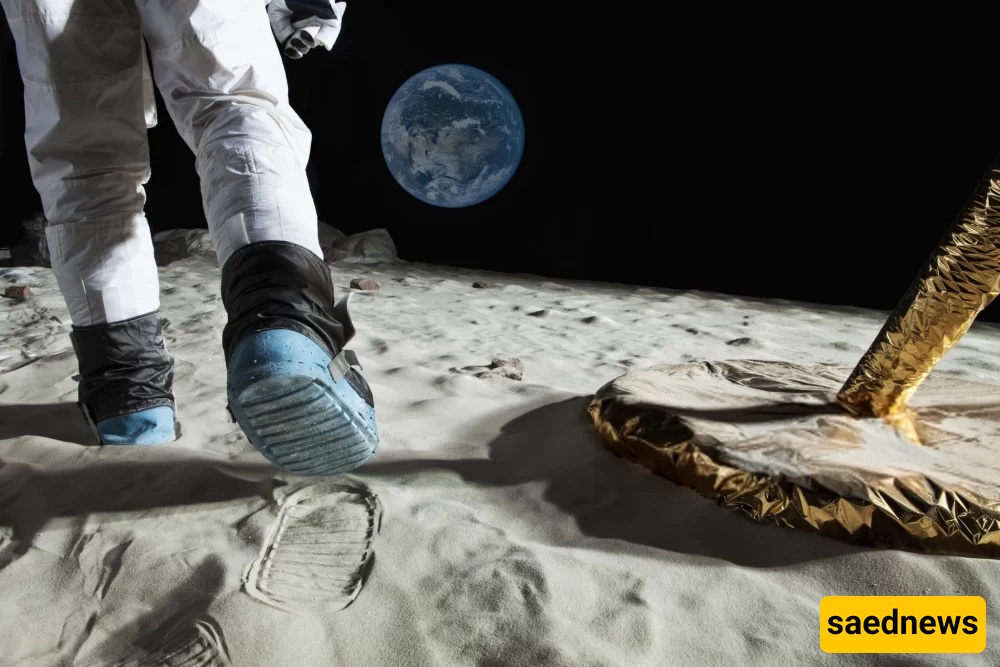
One of the most unusual objects left on the Moon is the Fallen Astronaut, a small aluminum sculpture placed on the lunar surface by the crew of Apollo 15.
The sculpture serves as a memorial to astronauts and other individuals who died while contributing to space exploration. The memorial also included a plaque bearing the names of people who had lost their lives in space exploration up to that time.
Among those remembered were members of the Apollo 1 crew, who died during a ground test, as well as Soviet cosmonauts including the crew of Soyuz 11, Yuri Gagarin, and Vladimir Komarov.
The Moon may look familiar from Earth, but it remains a remarkable world with many mysteries. From its constantly changing phases and ancient impact craters to its hidden water ice and extreme environment, the Moon continues to be an important target for scientific research and future space exploration.
As humanity prepares for more ambitious missions beyond Earth, the Moon could become a crucial stepping stone toward deeper exploration of the Solar System.