SAEDNEWS: Gravity keeps us on Earth and influences everything from bone development and weather patterns to the water cycle and planetary motion. This article explores the fundamental force of gravity and its key roles in science and technology.

According to Saednews, Gravity is one of the fundamental forces of nature, influencing almost every aspect of life around us. It keeps us connected to Earth, governs the movement of planets and moons, influences stars, and even plays a major role in shaping galaxies.
Gravity is the natural attraction between objects with mass. Its strength depends on the masses of the objects and the distance between them. Although Sir Isaac Newton first described gravity mathematically, our understanding of this force has evolved significantly, particularly through Albert Einstein’s theory of general relativity.
According to general relativity, gravity is not simply a conventional force. Instead, massive objects curve the fabric of space and time, and other objects move through this curved spacetime.
Earth has a substantial mass, producing a gravitational field that keeps people, trees, oceans, and everything else anchored to its surface. Newton’s law of universal gravitation describes this attraction with the following equation:
F = G × (m₁ × m₂) / r²
Here, F represents gravitational force, G is the universal gravitational constant, m₁ and m₂ are the masses of the two objects, and r is the distance between their centers of mass.
The equation shows that greater masses produce stronger gravitational attraction, while increasing the distance between objects weakens that attraction.

Gravity has a direct influence on the human body. It determines our weight and allows us to remain on the ground and move around Earth normally. It also interacts with biological systems throughout our lives. During development, for example, gravity contributes to the way bones and muscles develop and adapt.
Gravity is essential to Earth’s water cycle. It pulls water toward the planet’s surface, allowing rain to fall and rivers, lakes, and oceans to remain on Earth.
Without gravity, water would not remain concentrated around the planet in the same way. Instead, much of it would eventually escape into space, making Earth’s current environment and ecosystems impossible.
Earth’s gravity strongly influences the Moon’s orbit and contributes to phenomena such as ocean tides. Gravity also controls the paths of planets around the Sun and helps maintain the organized structure of our solar system.
Gravity is a major consideration in space travel. To escape Earth’s gravitational influence, a spacecraft must reach an escape velocity of approximately 11.2 kilometers per second near Earth’s surface.
Reaching this speed allows an object to move away from Earth without needing continuous propulsion to remain on an escape trajectory. Understanding gravity is therefore essential for missions involving Earth orbit, the Moon, and other destinations in space.
Gravity is also central to modern physics and astronomy. Scientists study the movements of planets, stars, galaxies, and other celestial objects to understand how gravity operates on enormous scales.
These observations help researchers investigate fundamental questions about the universe, including its structure, evolution, and the behavior of matter and energy across vast distances.
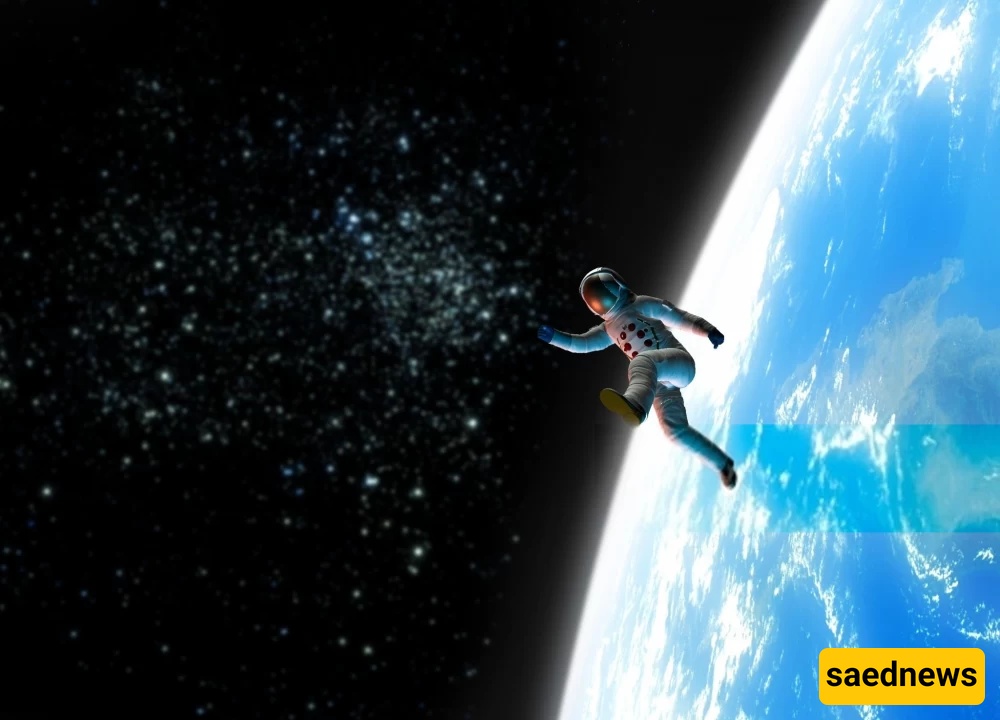
A thorough understanding of gravity is important in many areas of engineering and transportation. Engineers must account for gravitational forces when designing aircraft, spacecraft, high-speed transportation systems, buildings, and other structures.
By understanding how objects respond to gravity and motion, scientists and engineers can develop technologies that are more efficient, reliable, and safe.
Scientists can also investigate gravitational effects through laboratory experiments and environments with reduced gravity. Such research allows them to examine how materials, fluids, biological systems, and other substances behave under different gravitational conditions.
These experiments contribute to advances in space technology, materials science, medicine, and other fields.
Gravity may seem ordinary because we experience it every moment, but it is one of the most important forces governing our environment and the universe. It keeps Earth’s atmosphere and oceans associated with the planet, influences biological processes, controls celestial orbits, and makes space exploration possible.
From the movement of a falling object to the motion of entire galaxies, gravity operates across an extraordinary range of scales. Studying it not only helps us understand life on Earth but also provides a deeper view of how the universe works.
Gravity is far more than the force that keeps our feet on the ground. It shapes our daily lives, influences Earth’s climate and water systems, controls the motion of celestial bodies, and plays a fundamental role in space exploration and modern science.
As our understanding of gravity continues to develop, it may help answer some of the most important questions about the universe. This invisible force remains one of nature’s most fascinating phenomena—and one of the key principles connecting Earth to the wider cosmos.