SAEDNEWS: The main difference between blood serum and plasma is that, unlike plasma, serum does not contain clotting proteins such as fibrinogen. In this article, we will take a closer look at the differences between serum and plasma and explain what sets them apart.
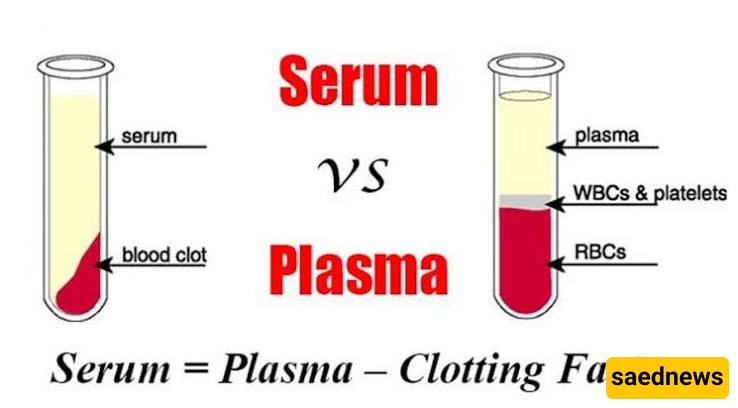
According to Saednews, Serum is the liquid portion of blood that remains after the blood has clotted. The main difference between serum and plasma is that, unlike plasma, serum does not contain clotting proteins such as fibrinogen. However, other blood proteins, antigens, antibodies, enzymes, and electrolytes are present in serum.
To obtain serum, blood is first collected and transferred into a test tube. The sample is then left undisturbed for several minutes so that the blood can clot.
After clot formation, the sample may be gently mixed using an intact glass stirring rod and then centrifuged. Following centrifugation, the clear liquid layer obtained above the clot is the serum. Because the blood was allowed to clot, fibrinogen was converted into fibrin, which remained within the blood clot and was separated from the liquid portion. Therefore, serum is essentially blood fluid without fibrinogen.
Plasma is prepared differently because the blood is prevented from clotting after collection. Anticoagulants such as heparin, citrate, or EDTA may be used to inhibit the clotting process. After centrifugation, the liquid layer above the blood cells is collected as plasma.
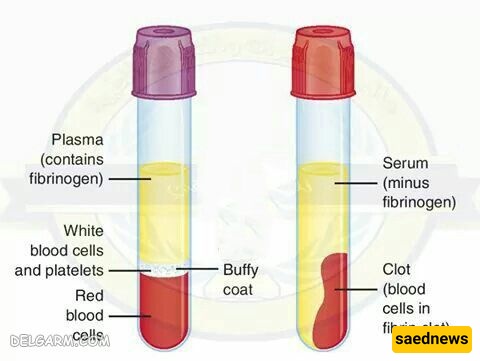
Therefore, plasma is the liquid portion of blood that still contains fibrinogen and other clotting factors.
What Is the Difference Between Serum and Plasma?
Serum and plasma are both derived from blood. Plasma is the liquid component in which blood cells and various dissolved substances are suspended, whereas serum is the liquid that remains after blood has clotted and therefore lacks most clotting factors.
There are several other differences between these two blood components. Both are usually clear and have a pale straw or light-yellow appearance, although their color can change under certain conditions.
For example, hemolysis—the rupture of red blood cells—can cause serum or plasma to appear pink or red. Improper handling of a blood sample, bacterial contamination, infection, or certain diseases may also alter its appearance.
In people with jaundice, serum or plasma may appear darker or more intensely yellow. A cloudy or turbid appearance may indicate the presence of excess lipids or bacterial contamination.
Serum is commonly used for a variety of diagnostic blood tests, including assays used to measure nutrients, hormones, proteins, and other substances. Plasma, on the other hand, has important clinical applications, including transfusion and the preparation of certain blood products.
Blood is a specialized body fluid that circulates through arteries and veins. It supplies tissues with oxygen and nutrients and carries carbon dioxide and other waste products away from them.
Blood also transports hormones and other signaling molecules to cells and plays an essential role in the immune system.
Whole blood consists of red blood cells, white blood cells, and platelets suspended in a straw-colored liquid called plasma. Serum is the liquid portion that remains after blood has undergone clotting.
A blood donation or blood sample can be separated into several components, including plasma, red blood cells, white blood cells, platelets, clotting factors, and various proteins. Each component can be used for specific medical or laboratory purposes.
Plasma and serum can both be obtained by centrifuging a blood sample, but the timing is different. Plasma is separated from blood before clotting occurs, whereas serum is obtained after the blood has completely clotted.
An anticoagulant such as EDTA, citrate, or oxalate may be added to a blood sample when plasma is required.
Plasma is the liquid component of blood. It contains water, proteins, nutrients, hormones, enzymes, electrolytes, waste products, gases, and clotting factors. Blood cells are suspended within this fluid.
Serum is the liquid component of blood that remains after clot formation. It contains many of the substances found in plasma but lacks fibrinogen and most of the other clotting factors consumed during coagulation.
Plasma contains:
Water
Albumin
Globulins
Amino acids
Hormones and enzymes
Nitrogenous waste products
Nutrients
Dissolved gases
Fibrinogen and other clotting factors
Serum contains many of the same substances as plasma, including:
Water
Albumin
Globulins
Amino acids
Hormones and enzymes
Nitrogenous waste products
Nutrients
Dissolved gases
The major distinction is that serum does not contain fibrinogen and lacks most of the clotting factors that are present in plasma.
Plasma is obtained by rapidly centrifuging a blood sample containing an appropriate anticoagulant. The heavier blood cells settle toward the bottom of the tube, while the plasma forms the upper liquid layer. The plasma can then be carefully collected using a pipette.

To obtain serum, a blood sample is first allowed to clot completely. Once the clot has formed, the sample is centrifuged. The liquid above the clot is then collected as serum. Additional centrifugation may be performed when necessary to remove any remaining cells or small particles of the clot.
Plasma has several important medical applications. It may be transfused into patients with certain bleeding or clotting disorders, including some forms of hemophilia, as well as patients with severe plasma-protein deficiencies and other conditions requiring plasma replacement.
Plasma is also used to prepare various blood products and therapeutic components.
Serum is widely used in laboratory medicine and diagnostic testing. It can be used for blood-group-related testing and for measuring substances such as human chorionic gonadotropin (hCG), cholesterol, proteins, glucose, hormones, antibodies, enzymes, and other biomarkers.
Because serum does not contain most clotting factors, it is particularly useful for many biochemical and immunological assays.
Separating plasma allows it to be processed, stored, transported, and used for specific medical purposes. Properly frozen plasma can be stored for an extended period, making it an important component of blood banking.
Plasma volume in the body is also restored relatively quickly after donation, although the time required for complete recovery varies among individuals.
Serum is separated because the absence of clotting factors can make it more suitable for many laboratory tests. Anticoagulants used to prepare plasma can sometimes interfere with particular analytical methods or chemical reactions used to measure substances in blood.
Depending on the anticoagulant, the sample's chemical composition may also be affected, potentially influencing certain test results. For this reason, some laboratory tests specifically require serum, while others require plasma.
Although serum and plasma look similar and share many components, they differ mainly in their clotting-factor content and how they are prepared.
Feature | Plasma | Serum |
|---|---|---|
Obtained from | Blood prevented from clotting | Blood allowed to clot |
Fibrinogen | Present | Absent |
Most clotting factors | Present | Largely absent or reduced |
Anticoagulant | Usually required | Not required |
Separation | Before clotting | After clotting |
Common applications | Transfusion, blood products, coagulation-related testing | Biochemical, hormonal, immunological, and diagnostic testing |
In summary, plasma is the liquid portion of unclotted blood and contains fibrinogen and other clotting factors, whereas serum is the liquid remaining after blood has clotted and therefore lacks fibrinogen and most clotting factors. Although they are similar in appearance and composition, this difference makes each one more suitable for particular medical and laboratory applications.