SAEDNEWS: Why Uranium Enrichment Is Used for Nuclear Energy, the Enrichment Process, Isotopes, and Their Scientific Applications
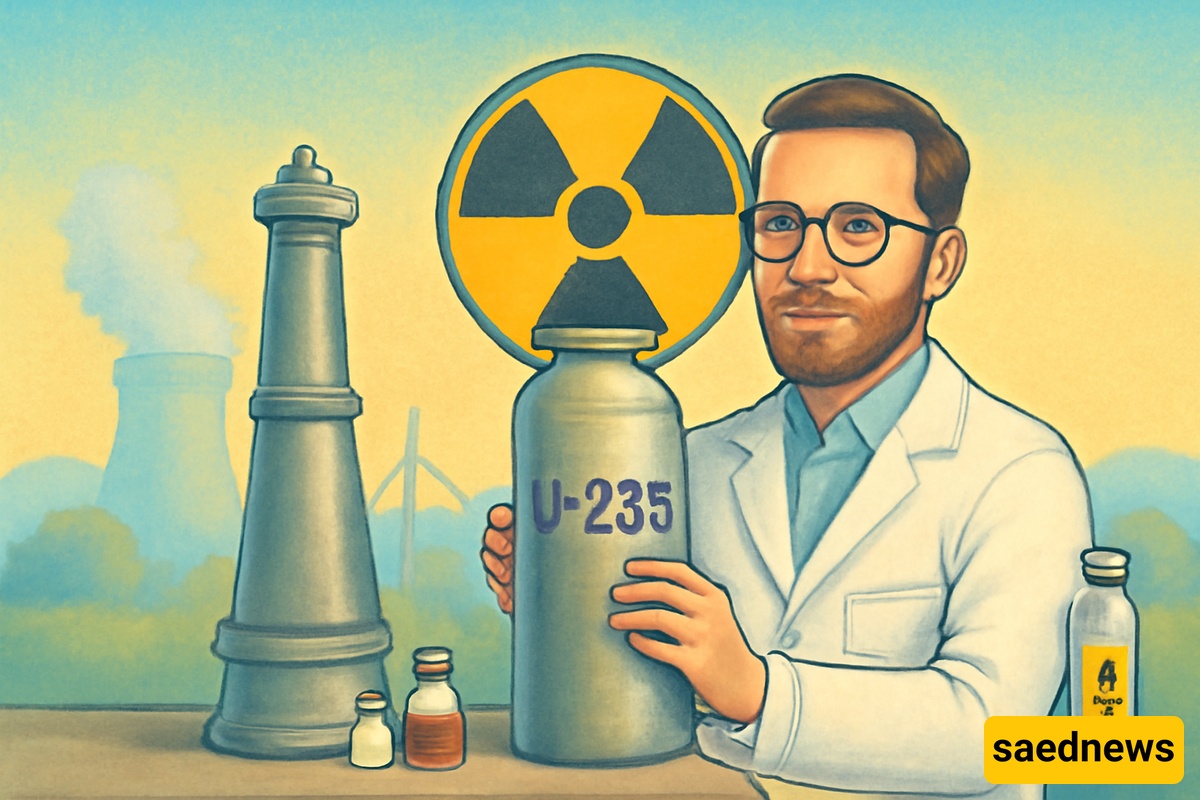
According to Saednews, Nuclear energy, as one of humanity’s key sources of electricity production, relies on specific raw materials such as enriched uranium. Alongside it, a concept known as heavy water also plays an important role in nuclear processes. In this article, we will explore these concepts and their functions in a simple yet technically accurate way.
Uranium is a naturally occurring element found in the Earth’s crust. It has three main isotopes: uranium-234, uranium-235, and uranium-238. Among these, only uranium-235 is fissile, meaning it can sustain nuclear chain reactions.
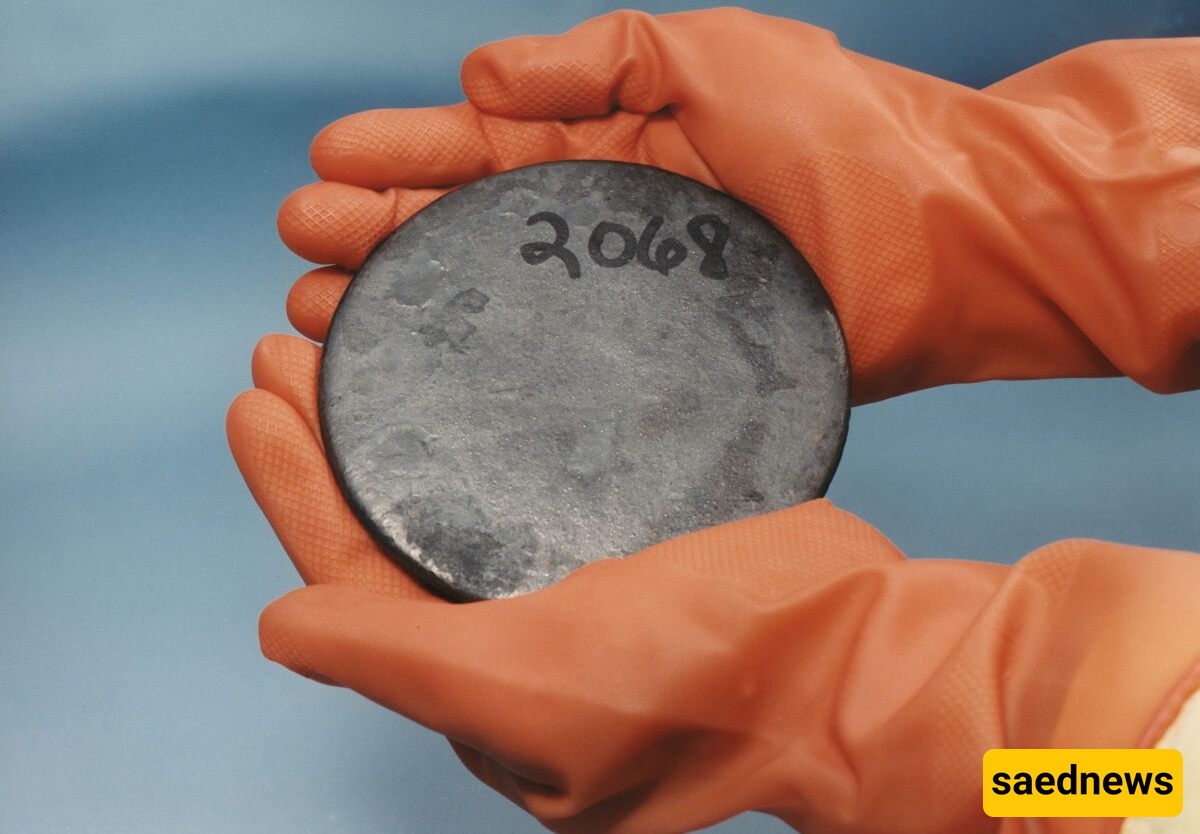
In natural uranium, the proportion of uranium-235 is about 0.71%. Before it can be used in reactors or other applications, this percentage must be increased. This process is called uranium enrichment.
Heavy water is similar to ordinary water, but instead of light hydrogen atoms, it contains an isotope called deuterium.
This difference allows heavy water to slow down neutrons without absorbing them. This property makes it useful in certain types of nuclear reactors.
Unlike light water reactors, heavy water reactors can use natural (unenriched) uranium because heavy water is a more effective neutron moderator.
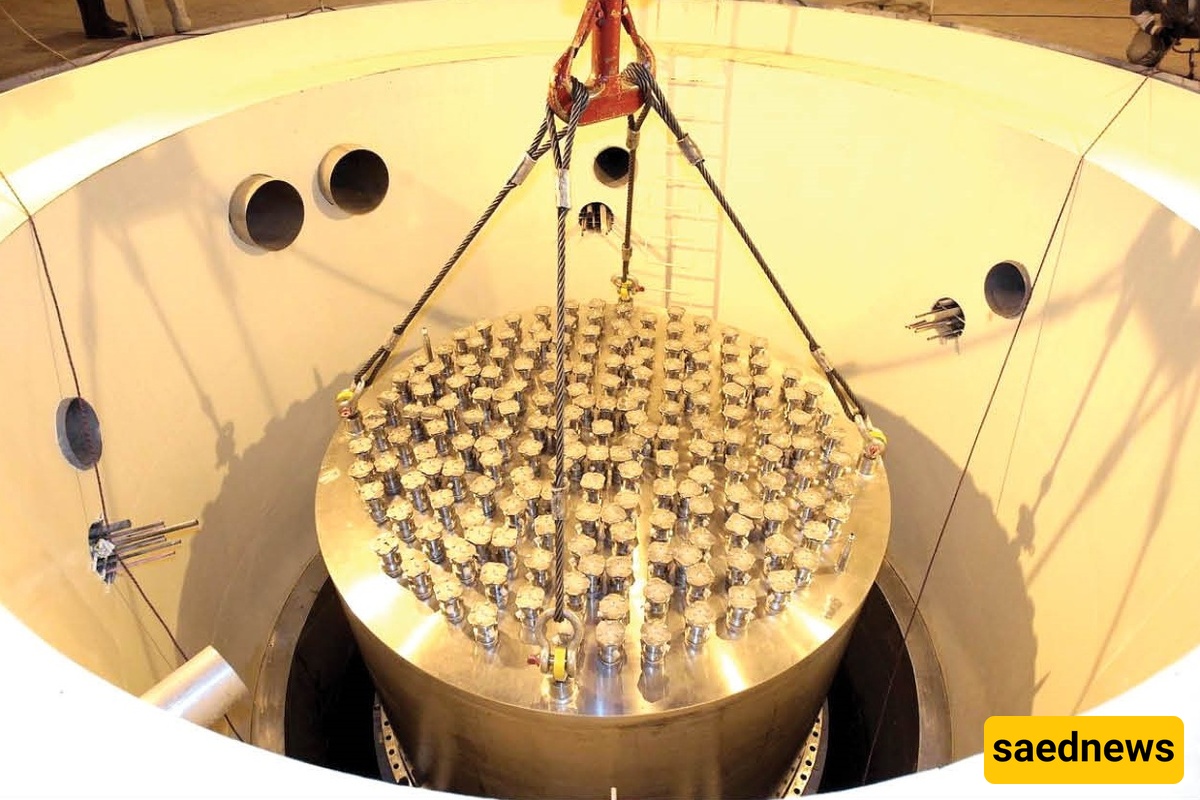
As a result, these reactors do not necessarily require enriched uranium and can be more economically efficient in certain conditions. However, heavy water is expensive to produce.
Spent fuel from these reactors often contains significant amounts of plutonium, which can potentially be reprocessed.
Uranium enrichment is an industrial process used to separate uranium isotopes and increase the concentration of uranium-235.
The goal is to produce fuel suitable for nuclear reactors or other applications. While commercial nuclear power plants typically require uranium enriched to about 2–5%, levels above 90% are associated with specialized applications.
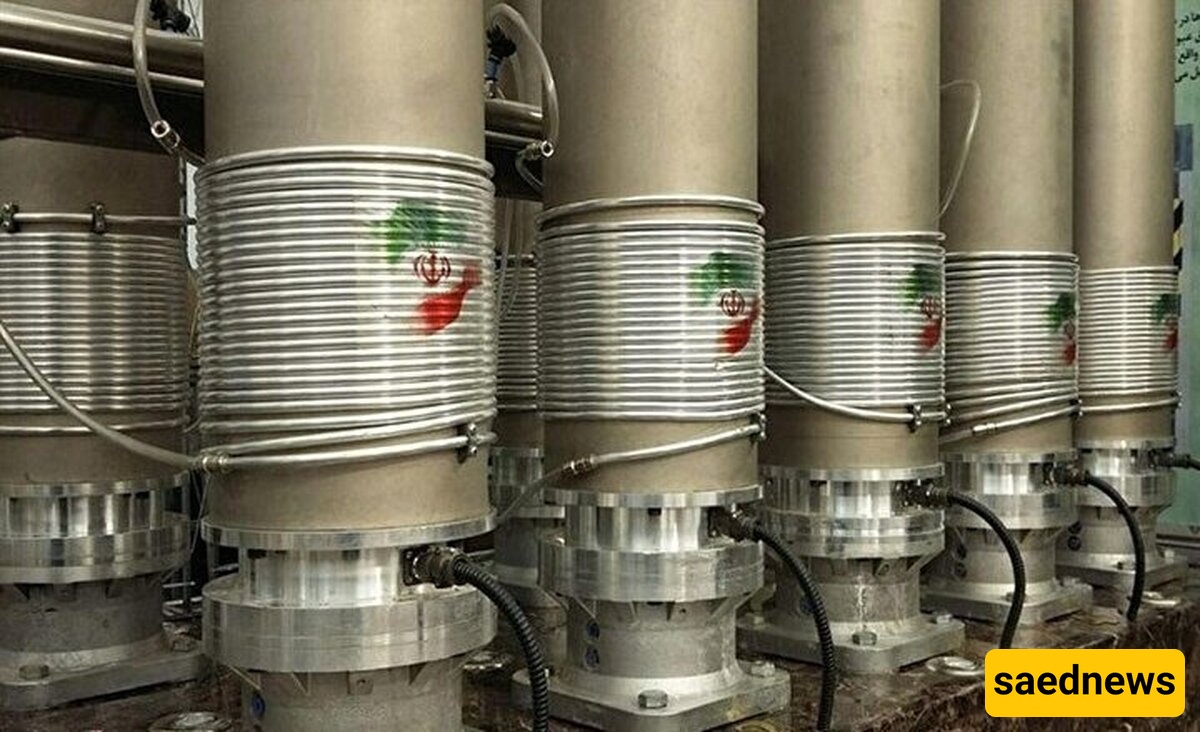
To begin enrichment, uranium must first be converted into a gas called uranium hexafluoride (UF₆). In this form, isotopes can be separated more easily.
The main tool used for this separation is the centrifuge. It spins at extremely high speeds, separating lighter isotopes from heavier ones.v
Centrifuges used in uranium enrichment are among the most precise industrial machines in the world, operating at speeds many times faster than the speed of sound. Compared to older methods such as gaseous diffusion, centrifuge technology consumes far less energy.
Each nuclear fission releases about 2.43 neutrons. For a sustained chain reaction, only one of these neutrons must trigger another fission event, while the rest must be controlled or absorbed.
The newly released neutrons are highly energetic, but uranium-235 is more likely to react with slower (thermal) neutrons.
Therefore, reactors use moderators such as ordinary water or heavy water to slow down neutrons.
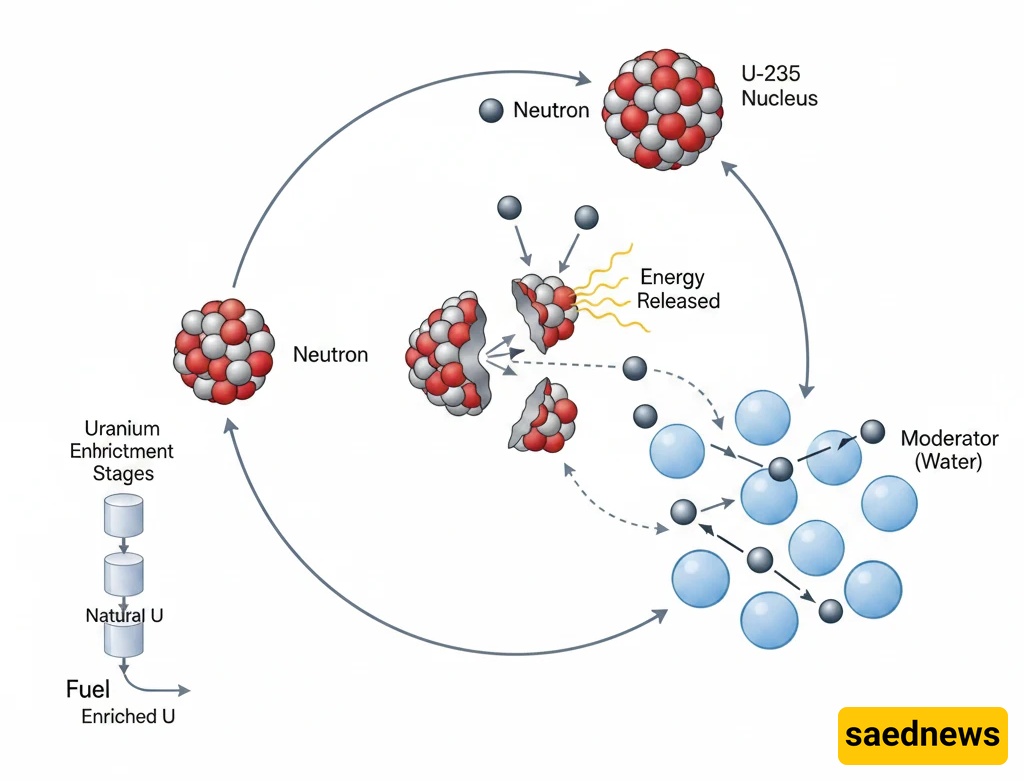
Uranium enrichment is performed in multiple stages. Each stage increases the concentration of uranium-235 slightly, so dozens or even hundreds of stages are connected in sequence. This structure is called a cascade.
In an ideal cascade system, material flows in opposite directions between stages to maximize efficiency. In practice, perfect separation is impossible, so cascade systems are designed to approximate this ideal behavior.
Enriched uranium is not only used in power plants. It is also used in research reactors, medical isotope production, and nuclear-powered submarines.
During World War II, high-level enrichment technology was first developed. Uranium enriched above 90% can sustain extremely rapid chain reactions in compact systems, which is why it has been associated with nuclear weapons.
Uranium enriched to around 60% is used in certain specialized reactors and high-performance systems such as nuclear submarines. This level is considered technically and politically sensitive due to its proximity to weapons-grade material.
Due to security concerns, countries with enrichment programs often face international restrictions. These sanctions typically limit access to centrifuge technology, sensitive materials, and related equipment.
The purpose of these measures is to ensure that nuclear activities remain peaceful.
Iran’s uranium enrichment program has been under international attention since the early 2000s. According to International Atomic Energy Agency (IAEA) reports, Iran has enriched uranium at various levels, including around 3.67%, 20%, and up to 60%.
These levels change over time depending on production and consumption.
In simple terms, sustaining a nuclear chain reaction in a reactor requires either enriched uranium with a higher concentration of uranium-235 or the use of heavy water as a neutron moderator. The choice between these two approaches depends on reactor design, available technology, and economic considerations.