SAEDNEWS: In this article, you will briefly become familiar with the methods used by archaeologists to determine the age of ancient remains and artifacts. It also explains the various commonly used dating techniques in archaeology in simple and easy-to-understand language.

As reported by Saed News and Sina Press:
You have likely seen in newspapers, documentaries, or museum visits that information about ancient artifacts often includes their estimated age. Many people naturally wonder how archaeologists are able to determine the age of objects that can be thousands of years old. In general, the task of archaeologists is to identify and study past cultures through their surviving material remains by analyzing and interpreting these artifacts.
Relative dating is a method of estimating the age of objects based on archaeological knowledge, comparison, and interpretation. Unlike absolute dating methods, which rely on precise scientific tests, relative dating depends on previously acquired data and knowledge to infer the approximate age of artifacts.
Absolute dating is another method used in archaeology to determine the age of discovered objects and remains. In this approach, archaeologists use precise scientific tests to estimate a more exact age. One of the most well-known absolute dating techniques is radiocarbon dating (Carbon-14 dating).
It is important to note that knowing the age and historical context of artifacts plays a crucial role in their study and interpretation. In archaeology, there are two main types of dating methods: relative dating and absolute dating.
Absolute dating is used to determine the precise or near-precise age of archaeological materials through scientific analysis. One of the most famous methods in this category is Carbon-14 dating.
Carbon exists in different isotopic forms, one of which is Carbon-14. In the upper atmosphere (about 6 to 15 kilometers above Earth), cosmic radiation produces high-energy neutrons. When these neutrons collide with nitrogen atoms, Carbon-14 is formed.
All living organisms—plants, animals, and humans—contain carbon. While an organism is alive, the level of Carbon-14 in its body remains stable. After death, however, chemical changes begin, including changes in carbon isotopes.
Carbon-14 is an unstable isotope that decays into nitrogen-14 through beta decay:
¹⁴C → ¹⁴N + β⁻
After the death of an organism, Carbon-14 begins to decay at a known rate. The half-life of Carbon-14 is approximately 5,730 years (with a margin of error of about 40 years). This means that after 5,730 years, half of the original Carbon-14 in a sample has decayed.
By measuring the remaining amount of Carbon-14 in a sample and comparing it to the expected original level, scientists can estimate the age of the artifact.
Carbon-14 dating is only applicable to organic materials (those derived from living organisms) and cannot be used for inorganic objects.
Carbon-14 is only one of several absolute dating techniques. Other important methods include:
Archaeomagnetic dating: Used for fired clay and pottery by analyzing the alignment of magnetic particles at the time of firing.
Dendrochronology: Dating based on tree-ring patterns.
Amino acid dating: Based on changes in amino acid structures in organic remains over time.
Potassium-Argon and Argon-Argon dating: Radiometric methods used mainly for fossils and ancient human remains, based on the decay of potassium-40 into argon-40.
Lead dating methods: Based on oxidation and decay processes of lead isotopes.
Thermoluminescence dating: Measures light released when heated materials (like ceramics) release trapped electrons accumulated over time. This light is used to estimate age, although accuracy can be affected by environmental variation.
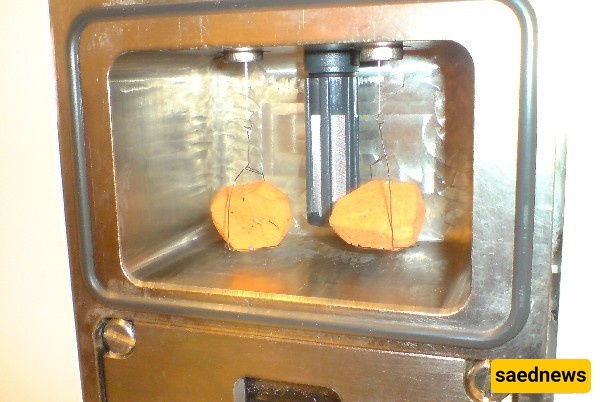
Relative dating estimates the age of artifacts by comparing them with known archaeological data rather than measuring them directly.
For example, when archaeologists discover an artifact, they can often infer its age based on manufacturing techniques, decoration styles, and material characteristics. If similar objects from known periods have already been studied, the new object can be compared and assigned an approximate date.
This method can also be applied to stone and metal tools. For example, stone tools from the Paleolithic, Mesolithic, and Neolithic periods differ significantly in design and technology. By identifying tool types, archaeologists can often determine the approximate period of a site.
Written records and inscriptions also help in relative dating. Coins, inscriptions, and texts may contain information such as the name of rulers, symbols, language style, or minting location, all of which assist in dating.
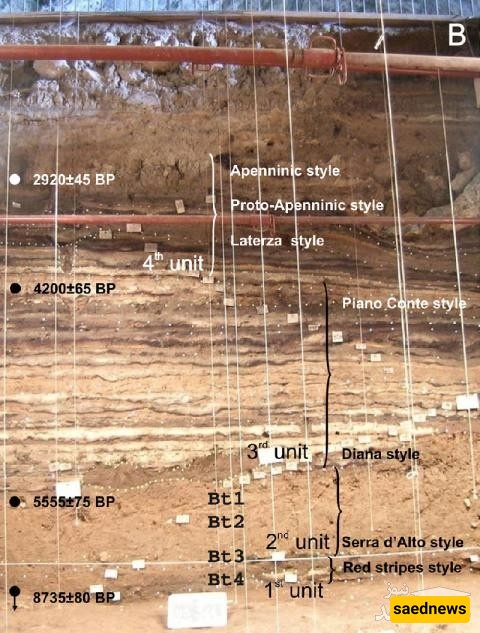
Stratigraphy is another important and relatively accurate method for determining the age of archaeological remains. Archaeological sites are excavated layer by layer, with each layer representing a different historical period.
Excavations are usually carried out systematically from the top layer down to the sterile soil beneath. Each layer may contain cultural remains from a specific period of human occupation.
By analyzing the boundaries and characteristics of each layer, archaeologists can determine the relative age of the artifacts found within them.
In some cases, other sciences such as geology are also used to support relative dating and stratigraphic analysis.