SAEDNEWS: After the temporary bridges that the engineers had built for King Xerxes' army to advance were destroyed, he issued a surprising and unusual order.
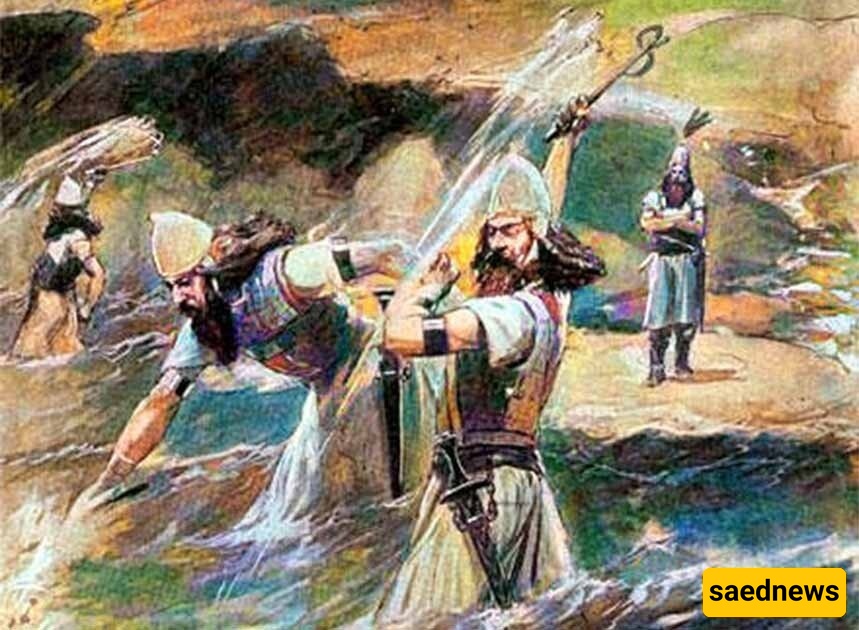
According to Saednews, one of the most famous legends about Xerxes I, the Achaemenid king of Persia, tells of his extraordinary reaction after a violent storm destroyed a bridge his army was preparing to use during the invasion of Greece.
Xerxes I, who ruled the Persian Empire in the 5th century BCE, is remembered for his military campaign against Greece, including the famous battles of Thermopylae, Salamis, and Plataea. However, historians also recount another remarkable episode associated with this campaign.
As the Persian army advanced toward the Hellespont (modern-day Dardanelles), the narrow strait separating Asia from Europe, Xerxes ordered the construction of a massive pontoon bridge to transport his forces across the water. After the bridge was completed, a powerful storm struck and destroyed the structure before the army could cross.
Enraged by the loss, Xerxes reportedly ordered that the sea itself be punished for its defiance. According to the ancient Greek historian Herodotus, the waters were symbolically whipped 300 times, branded with hot irons, and cursed as a demonstration of the king's authority over nature.
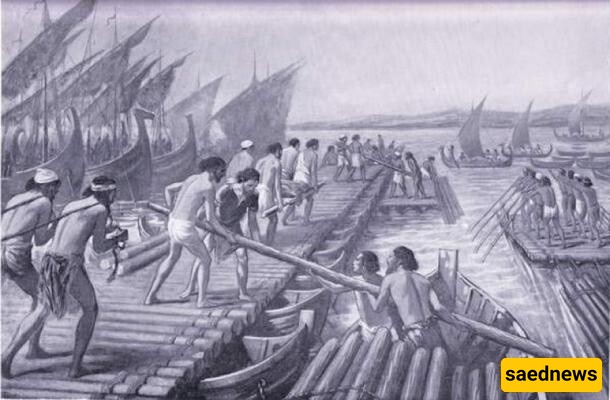
Historical sources also state that the engineers responsible for building the original bridge were executed. A new pontoon bridge was later constructed by securing hundreds of ships together with heavy cables, allowing the Persian army to cross the Hellespont.
It is said that the crossing took the Persian forces seven days and seven nights to complete. Despite this remarkable engineering achievement, Xerxes' campaign ultimately ended in failure. The Persian army was defeated by the Greek city-states, and during its retreat, the bridge was reportedly destroyed once again by the sea, preventing an easy withdrawal.
Although some details of this story are debated by modern historians and largely originate from Herodotus' writings, the tale of Xerxes ordering the sea to be punished remains one of the most enduring and symbolic episodes of the Greco-Persian Wars, illustrating the themes of royal pride, human ambition, and the uncontrollable power of nature.