SaedNews: The oldest known example of restorative dentistry in Scotland has recently been discovered in the remains of a church.
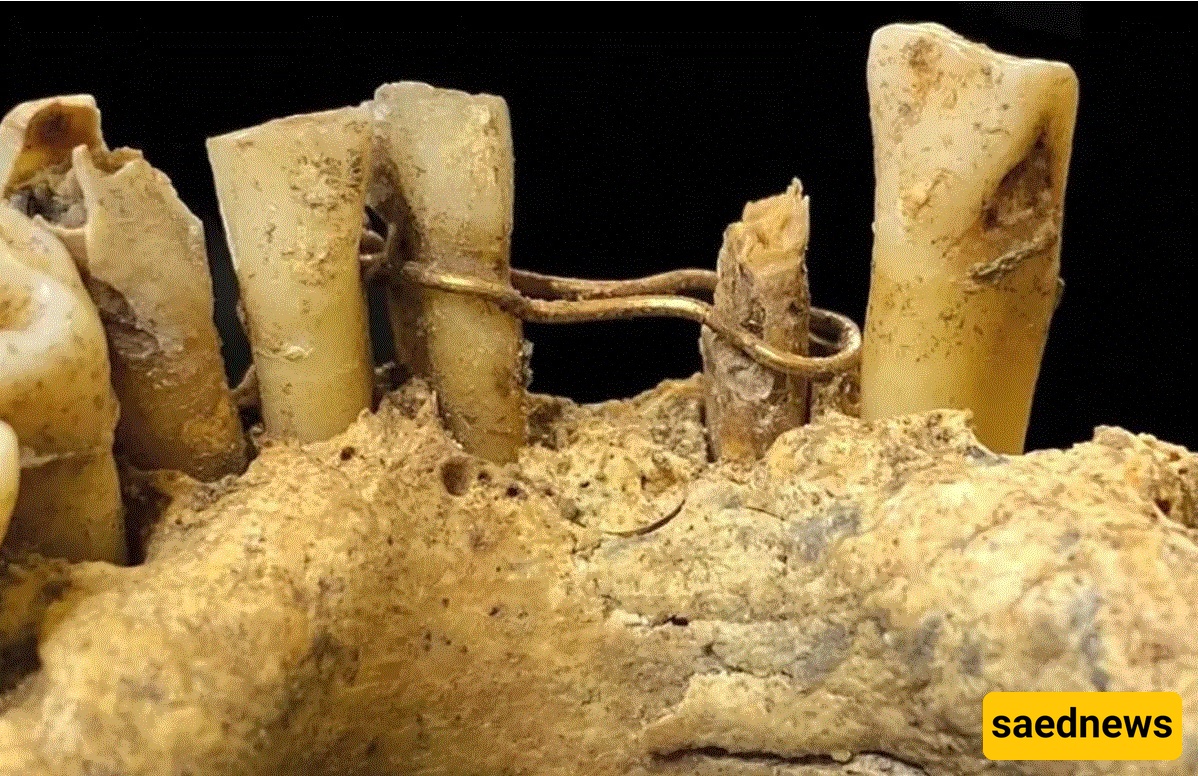
According to SAEDNEWS, the case belongs to a man who lived between 1460 and 1670 AD, and a bridge of gold wire can be seen on his dental remains. This discovery predates the establishment of professional dentistry in the 19th century, suggesting it was likely performed for a wealthy individual.
The gold wire was found during excavations in 2006 at St Nicholas Church in Aberdeen, where the remains of around 900 individuals were uncovered. Recent examinations showed that the man’s lower jaw still had nine teeth, and based on tooth wear, he was a middle-aged man. His teeth were severely decayed, with more than half of the crowns missing in three teeth.
A thin gold wire, made of 20-carat gold, was wrapped around two front teeth, bridging a missing tooth gap. The wire shows signs of flattening at the knot, suggesting it was shaped using tools such as pliers. Additionally, grooves on the teeth indicate that the wire had been in place for a long time before the individual’s death.
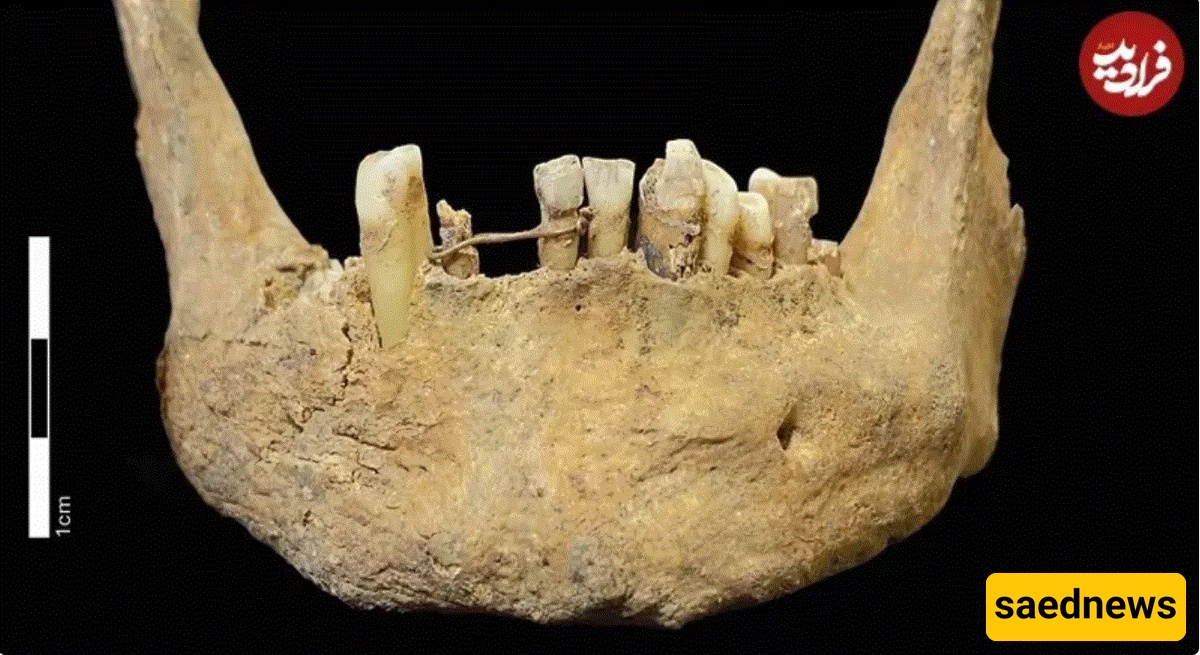
It appears that the wire was used either to stabilize remaining teeth or as a base for fitting a prosthetic tooth (possibly made from another human tooth or animal bone).
Attempts to repair teeth have a very ancient history, dating back to the Neolithic period. Evidence of fillings and dental drilling goes back as far as 6,500 years. Although gold wires have also been found in ancient Egypt, they were mostly used after death during mummification. The earliest true example of a dental bridge for functional restoration dates to the Ptolemaic period in Egypt.
Medieval medical texts mention the use of gold or silver wire to stabilize teeth, but dentistry knowledge at that time was very limited. Therefore, such treatments are extremely rare before the 17th century.
Researchers believe the wire may have been made by a goldsmith, who might also have installed it, as such precise work required high skill. At that time, at least 22 goldsmiths were active in Aberdeen capable of such craftsmanship.
Among about 100 skeletons from the same period found in the church, only this individual showed clear evidence of dental treatment. This suggests that such services were not accessible to most people, mainly due to the high cost of gold. The burial location inside the church also indicates that the individual likely belonged to a wealthy social class.
In that era, appearance had significant social importance and reflected a person’s status. Therefore, this treatment was likely not only functional but also served aesthetic and social purposes.