Saed News: A Minoan bronze dagger with silver rivets has been discovered in a 3,600-year-old shipwreck off the Mediterranean coast of Kumluca, Turkey.
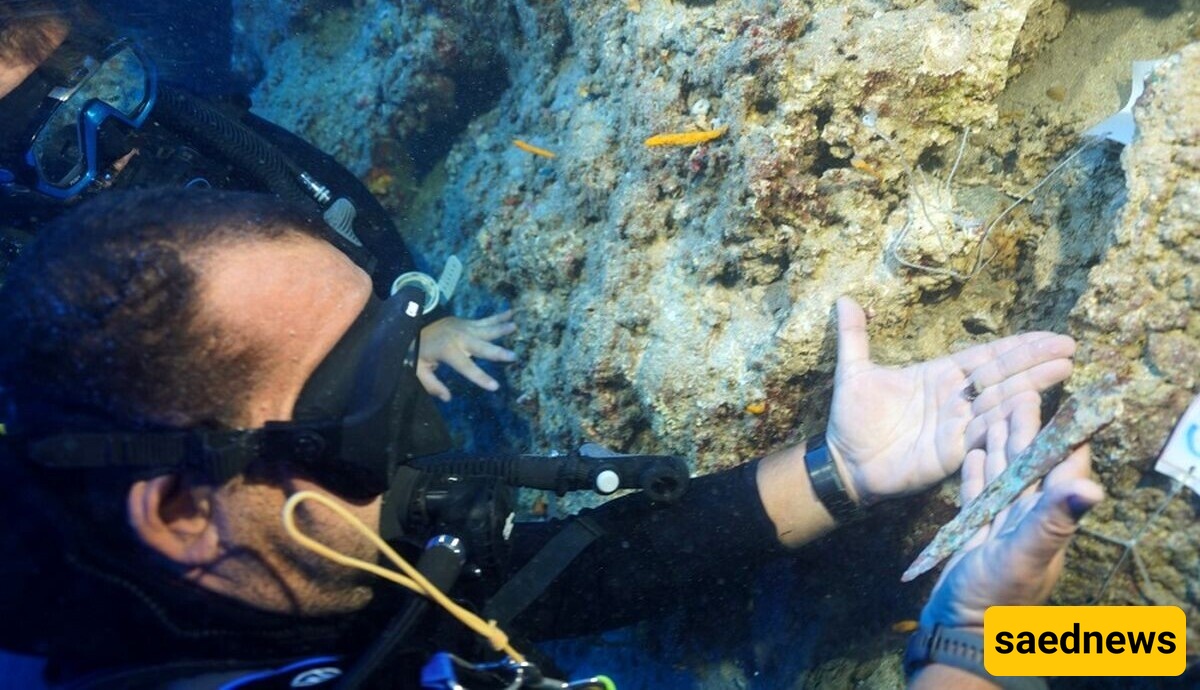
According to SAEDNEWS, citing Faradid, the shipwreck—located at a depth of 50 meters—is considered the oldest known commercial shipwreck in the world and one of the oldest shipwrecks of any kind ever discovered. The vessel, measuring about 14 meters in length, was carrying 1.5 tons of copper ingots from the Troodos Mountains in Cyprus to Crete when it sank. Underwater archaeologists have been documenting the wreck on-site and recovering samples since 2019.
Modern investigative techniques, including sonar scanning, photogrammetry, and photomosaic mapping, have enabled researchers to create precise 3D models of the ingots. Analysis shows that the copper originated from Cypriot mines and was cast in the 15th or 16th century BC. Research on this significant shipwreck is expected to continue over the next five years.
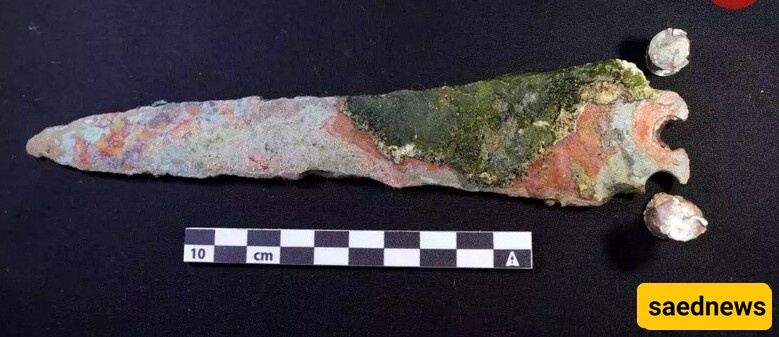
At their peak around 3,600 years ago, the Minoans established themselves as a major maritime power in the eastern Mediterranean, creating extensive trade networks. These routes connected them with Egypt, the Levant (modern-day Syria, Lebanon, and Israel), Anatolia (modern Turkey), Cyprus, and mainland Greece.
Renowned for their seafaring skills, the Minoans facilitated widespread exchange of goods and positioned Crete as a central hub in ancient trade. Their trade included a wide range of commodities, especially metals. Copper, essential for producing bronze, was primarily imported from Cyprus, while tin came from distant regions such as present-day Afghanistan or Cornwall in England. The Minoans not only traded raw metals but also manufactured and distributed tools, weapons, and bronze artifacts across the Mediterranean.
Artifacts recovered from this shipwreck and other excavations in the region are planned to be displayed in the future Underwater Archaeology Museum in Kemer, which is currently in the planning stages.