SAEDNEWS: 1,700-Year-Old Roman Coin Hoard Discovered Beneath a Quiet French Village, Challenging What We Know About Life on the Empire’s Frontier
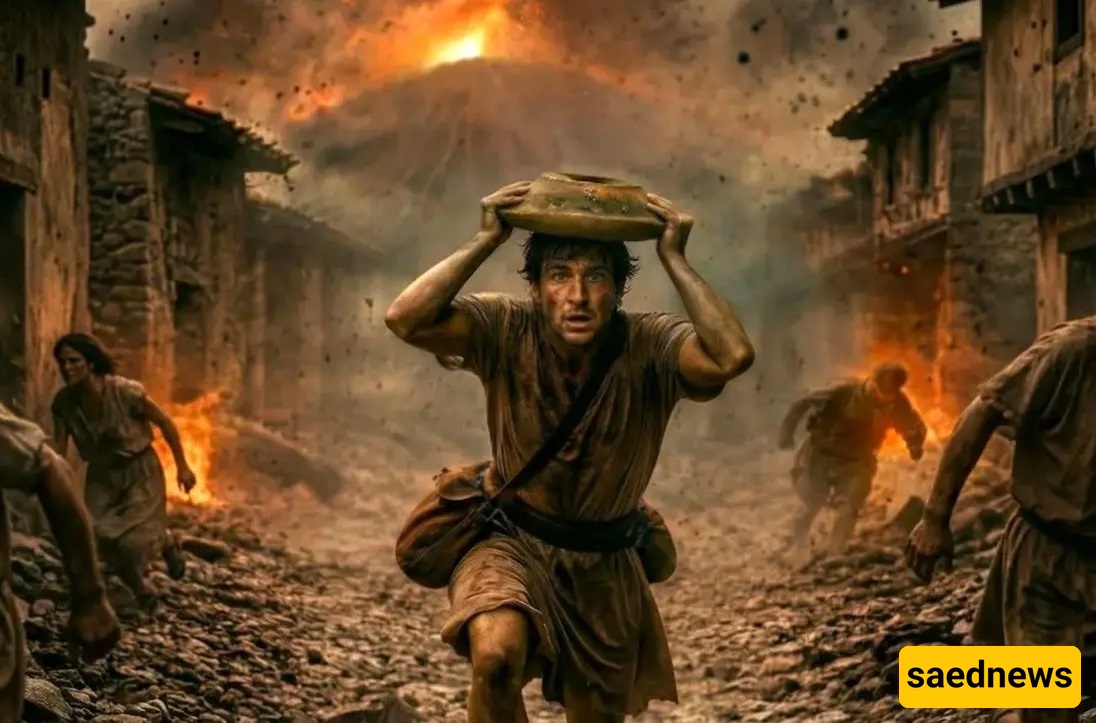
According to Saednews, Recent archaeological excavations have uncovered two skeletons outside the ancient city walls of Pompeii. Researchers have also used artificial intelligence to create a reconstructed image of the terrifying final moments of one of the victims.
When Mount Vesuvius erupted in 79 AD and destroyed the city of Pompeii, a man named Pliny the Younger, who was in the city of Misenum across the Bay of Naples, witnessed the disaster from a distance.
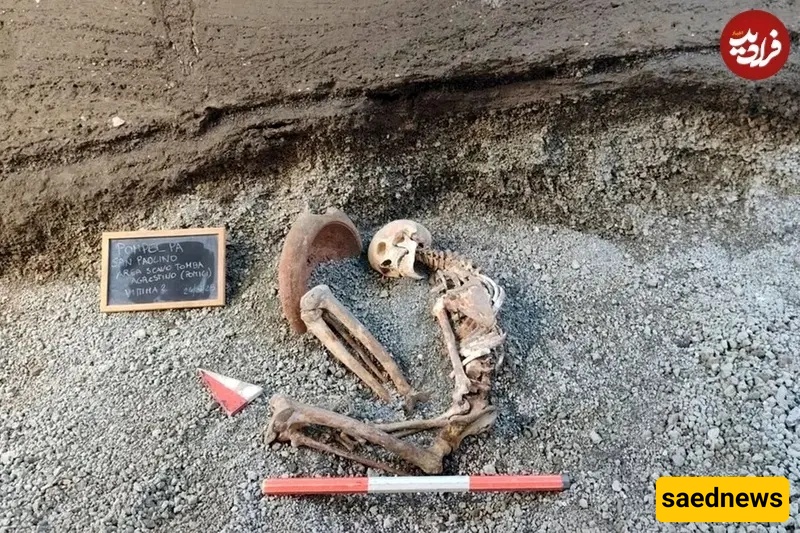
The male skeleton and a bowl he appears to have used for protection were found at the site. Pliny later described the horrific scene in a letter, writing that people had wrapped pillows over their heads to protect themselves from falling stones. He also noted that even after sunrise, people were forced to move in darkness with torches—darkness “thicker and more oppressive than any night.”
Archaeologists have now discovered two skeletons outside Pompeii’s walls whose details remarkably match Pliny’s account. The first victim was a man about 35 years old who died shortly after the eruption began, likely due to falling volcanic ash. The second was a young man aged between 18 and 20, who likely died hours later from deadly flows of superheated volcanic material.
The older man’s remains were found beside a ceramic bowl. Researchers, publishing their findings in Scavi di Pompei, believe he may have held it above his head as a form of protection. A small oil lamp was also discovered nearby.
Using artificial intelligence, researchers created a digital reconstruction of the man’s attempt to escape. In the image, he is shown running through streets covered in debris, holding the bowl above his head while Mount Vesuvius erupts in the background.
Gabriel Zuchtriegel, director of the Pompeii Archaeological Park, said: “If used correctly, AI can help revive classical studies and present the ancient world in a more tangible and immersive way.”
The skeletons were found near the Porta Stabia necropolis, outside Pompeii’s southern gate. It is believed both men were trying to flee the city and reach the coast.
The younger victim appears to have survived the initial phase of the eruption and attempted to escape during a brief lull in volcanic activity. However, the calm did not last, and he was ultimately killed by fast-moving pyroclastic flows.
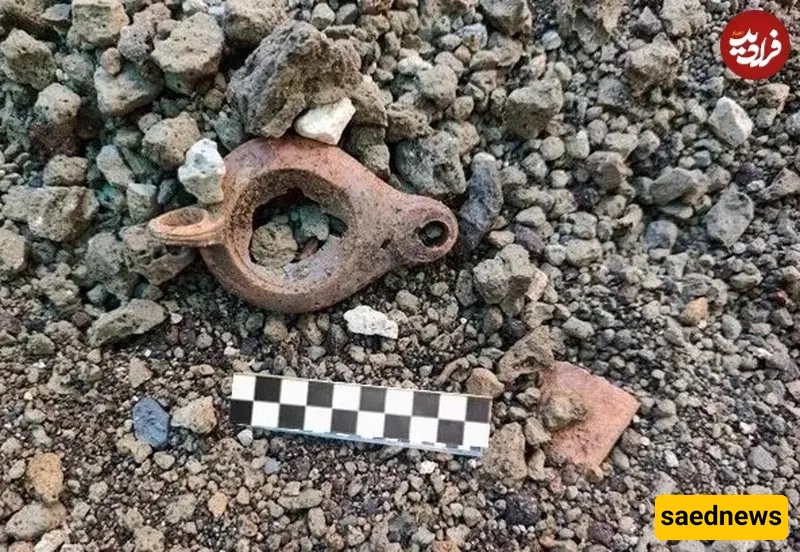
The older man was found in a crouched position, with his right hand raised holding the bowl. An iron ring was found on one of his toes, and ten bronze coins were discovered with him. Researchers believe he had gathered items he thought essential for survival: money, light, and protection.
Scientists hope that such digital reconstructions can make historical stories more vivid and accessible to the public. Working with the University of Padua, they used AI image-generation tools and photo-editing software to transform osteological and archaeological data into realistic human representations.
However, researchers caution that AI-generated images may oversimplify the complexity of archaeological evidence, and some experts argue that such visuals can appear overly dramatic or resemble video game or comic book imagery. Even so, they believe these reconstructions help audiences better engage with ancient history.
Archaeologists note that while experts can mentally reconstruct collapsed architecture when studying ruins, the general public does not naturally visualize these missing elements. As a result, visual reconstructions play an important role in historical interpretation.
Reconstructing historical faces is not new. For years, forensic artists and scientists have used skull scans, precise measurements, and even DNA analysis to recreate the appearance of ancient individuals, often estimating features such as hair and eye color.