SAEDNEWS: A major archaeological discovery in southern Russia has captured the attention of the global scientific community. Researchers believe they may have found the legendary lost city of Magas—a city that once served as the capital of the powerful Alania state.
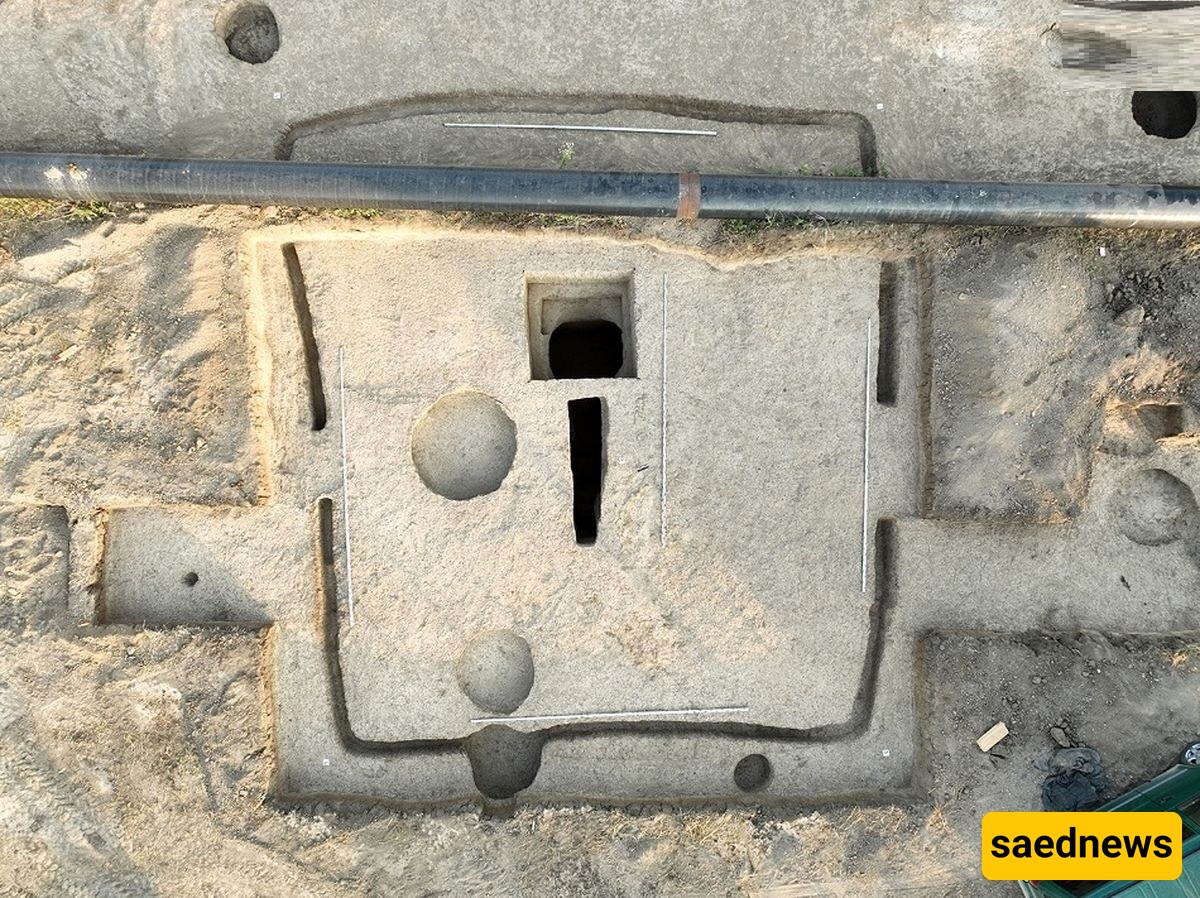
According to the Saed News Society Service, a remarkable archaeological discovery has been made in Chechnya, in Russia’s North Caucasus region, during extensive excavations at the Mayertop cemetery. What began as a salvage dig related to infrastructure development has now become one of the most significant historical finds in the region in decades.
Russian archaeologists report that the site covers roughly 350 hectares, making it the largest known medieval settlement in the North Caucasus. Its vast scale, along with numerous artifacts such as coins and funerary structures, suggests that this was not merely a simple settlement but a major, fortified urban center.
Researchers from the Russian Academy of Sciences, led by Vladimir Malashev, have noted that the site’s characteristics closely match historical descriptions of the city of Magas—including its size, strategic location, and signs of economic and political importance.
Coins discovered at the site are particularly significant, indicating a sophisticated economy and potential trade connections beyond the region. These findings strengthen the hypothesis that the city played a central role in the Alan society.
The name Magas appears in historical sources from the 9th to 11th centuries, especially in the writings of Muslim historians. These sources describe Magas as the capital of Alania, a powerful kingdom that controlled parts of the Caucasus in the early medieval period.
According to these texts, Magas was roughly a three-day journey from the kingdom of Sarir, a region likely located in present-day Dagestan. Intriguingly, the geographic location of the newly discovered site aligns closely with these historical descriptions.
If this hypothesis is confirmed, it could resolve a centuries-old mystery. Historians and archaeologists have long debated the precise location of Magas, but none of the proposed sites have offered such a compelling combination of archaeological and textual evidence.
Beyond its potential identification as Magas, the site offers an extraordinary glimpse into the development and transformation of human settlement in the region. Archaeologists report that the area contains cultural layers spanning from the Chalcolithic (Copper Age) to the late Middle Ages.
This indicates continuous human habitation for thousands of years, encompassing shifts in civilization, technology, and social structures. Such continuity is extremely rare and provides a valuable opportunity to study long-term historical developments in the Caucasus.
Initially, the excavations were part of a preparatory project for a gas pipeline. While salvage digs often yield important discoveries, few are as spectacular and historically significant as this one.