SAEDNEWS: In the late 20th century, a treasure was discovered in the city of Środa, Poland, which some consider the most significant archaeological find of the century—a treasure of a kind rarely seen before.
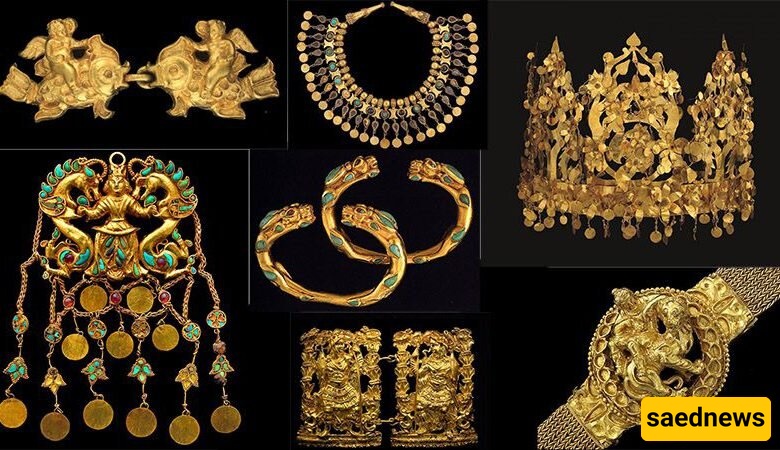
According to Saed News, quoting Khabar Farsi, how likely is it for humans to uncover a great treasure? Are ancient hoards merely the stuff of books and movies? The truth is that discovering ancient treasures is far from simple—but it is real and possible. One of the most significant of these treasures is the Środa Treasure in Poland.
The Środa Treasure (also spelled Seroda) is among the most valuable archaeological finds of the 20th century. This immense hoard was discovered in 1985 during excavation work in Środa Śląska, Poland. Researchers now conclude that the treasure belonged to King—or later Emperor—Charles IV of the House of Luxembourg. Around 1348, Charles, in need of funds to support his claim to the throne, deposited these items with a Jewish banker named Moshe in Środa.
Charles IV was King of Bohemia and Holy Roman Emperor, reigning over Bohemia from 1346 to 1378. He was the first Bohemian king to become Holy Roman Emperor. Through his father, he belonged to the House of Luxembourg, and through his mother, to the Přemyslid dynasty of Bohemia. Throughout his life, he emphasized his Bohemian and Přemyslid heritage, partly due to his lifelong attachment to Bohemia and the fact that two of his direct ancestors in the Přemyslid line were canonized saints.
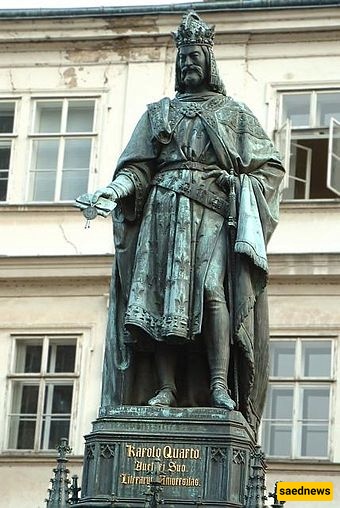
A statue of Charles IV stands in Prague.
Shortly after Charles deposited the treasure in Środa, the Black Death reached the town, causing upheaval. Moshe disappeared—he either died, fled, or was murdered, as Jews at the time were blamed for spreading the plague. One fact remains certain: Charles’s guarantees were never returned, and the treasure faded from history.
Among the Środa hoard was a gold jeweled crown believed to have belonged to Blanche of Valois, Charles IV’s first wife. The crown is distinguished by seven eagles atop it, a key identifying feature.
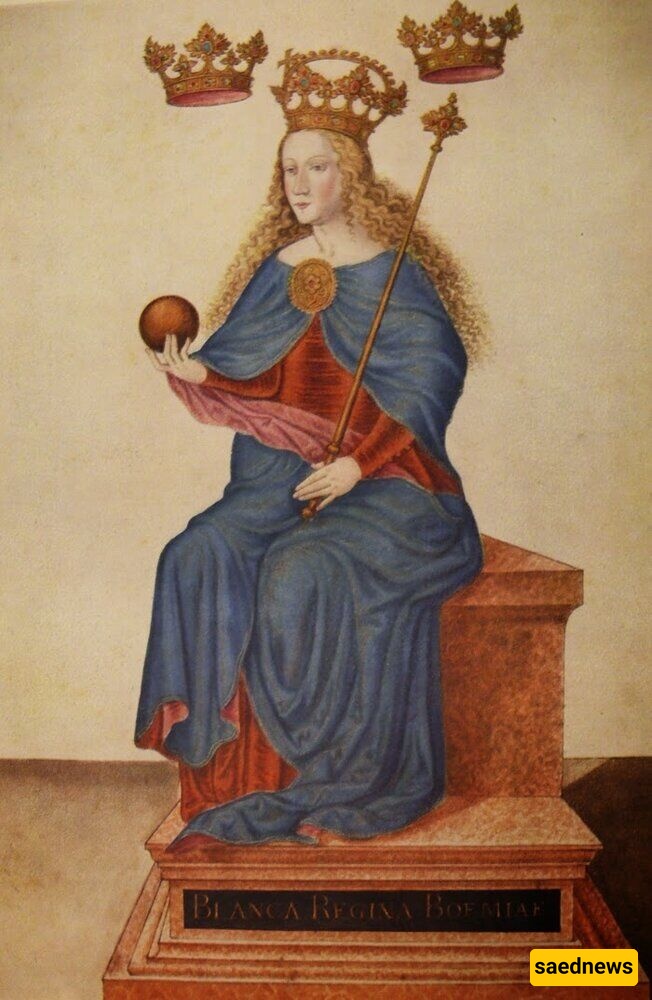
Blanche of Valois, first wife of Emperor Charles IV
Over 3,000 coins were discovered alongside rings and a gold chain. Unfortunately, before the hoard could be secured, much of it was looted by locals, leaving only a portion in government custody. Today, what remains is housed in the Środa Regional Museum. These rare and distinctive items, especially the crown, allowed historians to trace the treasure’s origins.
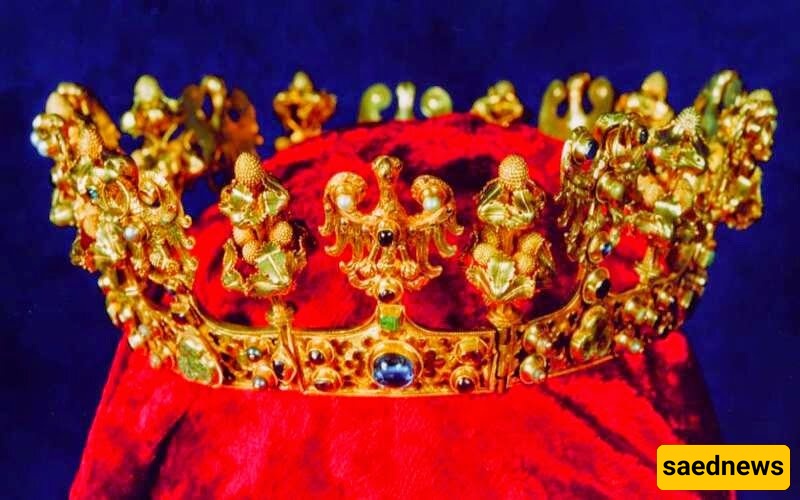
The golden crown with eagles is an exceptional piece, completely unlike other medieval crowns. This masterpiece of goldsmithing was likely crafted in early 14th-century central Paris, though Prague—home to French and Italian goldsmiths—remains a possibility. The crown was almost certainly a ceremonial female piece, probably made for Blanche’s wedding.
The pendants found among the treasure may be the oldest part of the collection. Decorated with garnet, sapphire, and pearls, these circular pendants were typical in Byzantine-influenced regions. Historical comparisons suggest Sicily in the 12th century as their possible origin, making them roughly two centuries older than the crown itself.
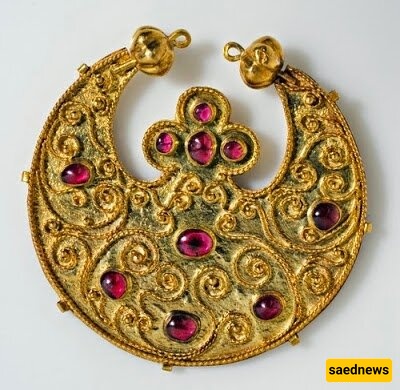
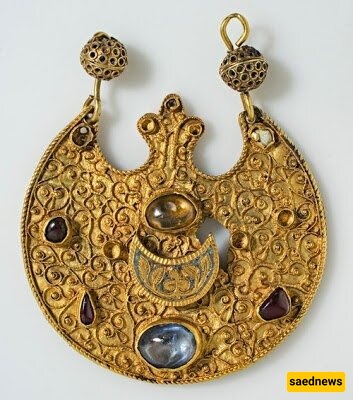
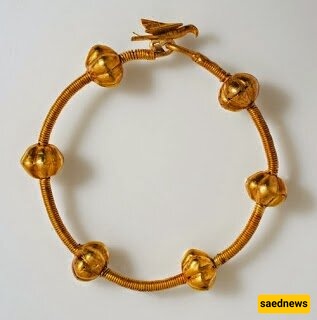
A bracelet with knots, similar in design to the pendants and featuring a bird motif (eagle or hawk), may have originated from the same workshop. It’s also possible both items were made in 13th-century Hungary.
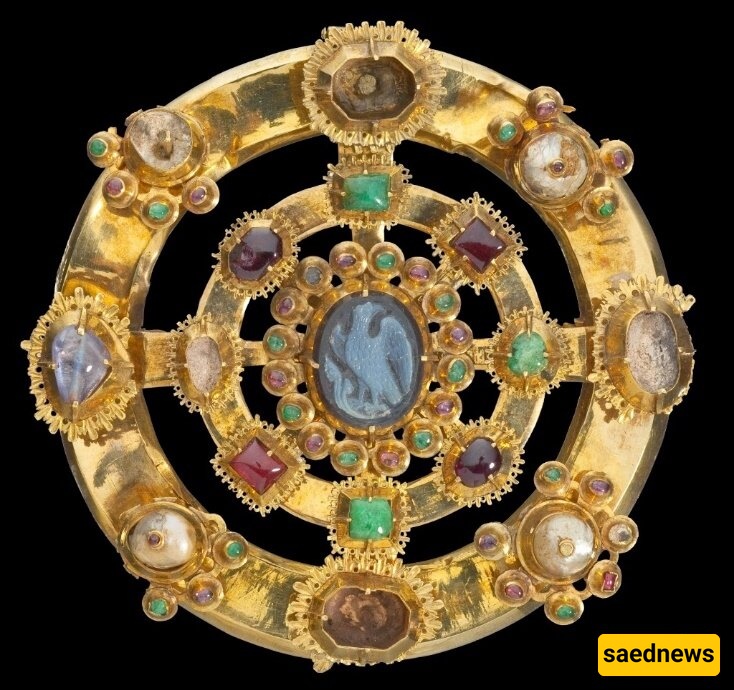
One of the most remarkable pieces is a large ring or circlet, 129.3 mm in diameter, with short-cut stones in blue, garnet, sapphire, emerald, and pearls (22 gems are now missing). This ring is likely the largest of its kind and was probably crafted in mid-13th-century Italy by court goldsmiths.
A central question about the Środa hoard concerns its ultimate owner and when it was hidden. Strong evidence suggests the jewelry could have originated from the Czech treasure during the House of Luxembourg era, serving as collateral for loans Charles IV collected from Środa’s citizens between 1346 and 1378.
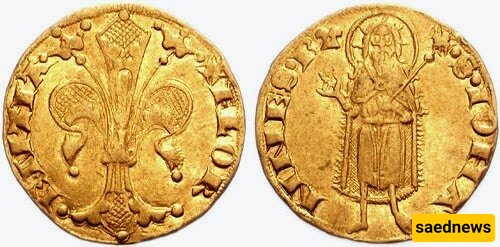
The Środa treasure is considered extremely valuable. Experts describe it as “one of the most important archaeological finds of the 20th century.” In 2006, specialists noted that valuation is difficult due to the rarity of comparable items. A 2001 estimate placed the hoard’s minimum value at $50 million, while a 2006 specialist publication suggested at least $100 million. By current assessments, its value likely exceeds $160 million.