SAEDNEWS: Oman’s Foreign Minister has expressed support for the negotiations and confirmed that a new round of talks between Iran and the United States will be held next Thursday in Geneva.
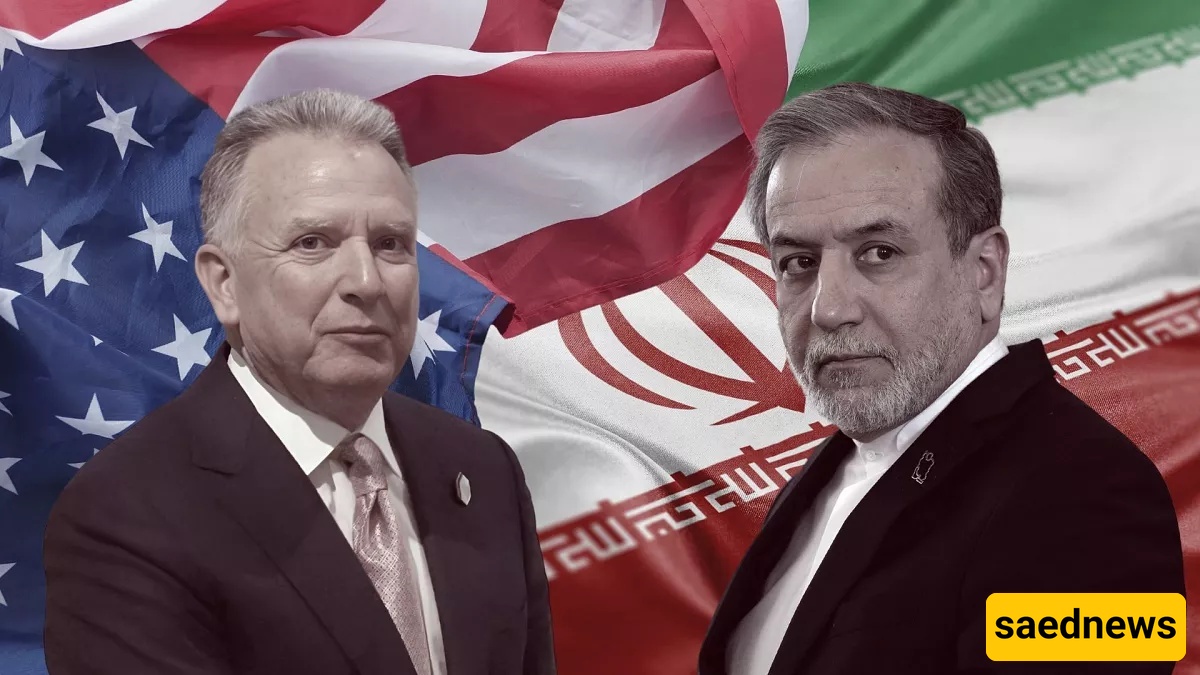
According to the political service of Saed News, citing Al Jazeera, Oman’s Foreign Minister Badr Al-Busaidi announced: “I am pleased to confirm that the U.S.-Iran talks will be held next Thursday in Geneva.”
Al-Busaidi’s remarks came just hours after Iran’s Foreign Minister, Seyed Abbas Araghchi, told CBS News that he expects to hold discussions with U.S. envoy Steve Witkoff in Geneva on Thursday.
The first round of indirect Tehran-Washington talks took place in Muscat following the 12-day conflict, on Friday, 6 February 2026 (17 Bahman 1404). During these talks, the negotiating teams from Iran and the U.S. exchanged a set of views, considerations, and approaches through Oman’s Foreign Minister, Badr Al-Busaidi.
The second round of nuclear negotiations between Iran and the United States was held on Tuesday, 17 February 2026 (28 Bahman 1404) in Geneva, Switzerland. After about three and a half hours of intensive diplomatic consultations, the session concluded.
Like previous rounds, these negotiations were conducted indirectly under the mediation of the Sultanate of Oman. Seyed Abbas Araghchi led the Iranian delegation, while U.S. Special Representative Steve Witkoff and Jared Kushner, son-in-law of the U.S. President, headed the American team.
Looking at the recent diplomatic developments, it is clear that after a period of tension, the atmosphere between Iran and the U.S. has shifted from hard confrontation to a phase of strategic consultation. Many analysts describe this shift as a temporary retreat from the brink of war, resulting from active regional mediation and both parties’ willingness to explore lower-cost pathways. The explicit confirmation by Oman’s Foreign Minister of a new round in Geneva reinforces the idea that communication channels between Tehran and Washington remain open and active despite the complexities.
Meanwhile, remarks by Masoud Pezeshkian about receiving positive signals from the talks indicate an unspoken understanding to halt provocative actions until the results of the negotiations are clear. This optimistic approach has been reinforced at the executive level, with key figures such as Seyed Abbas Araghchi on one side and Steve Witkoff and Jared Kushner on the other. Focus on the first Muscat talks, followed by the three-and-a-half-hour intensive session in Geneva, suggests that diplomacy is being employed not as a formality but as a practical tool to manage the crisis following the 12-day conflict.
Current political realities show that while fundamental disagreements persist, both sides are prioritizing either a temporary agreement or a mechanism to reduce friction. Jared Kushner’s presence alongside the U.S. Special Representative adds political weight to the American delegation and signals the White House’s intent to achieve a tangible, rapid outcome. On the Iranian side, the insistence on defending national rights while remaining open to both direct and indirect negotiations has created a window of opportunity that could, at least temporarily, keep the threat of military escalation at bay. The upcoming Geneva session will determine whether this relative calm is a prelude to a lasting agreement or merely a brief respite amid an ongoing crisis.