SAEDNEWS: Using scientific dating methods, experts estimate these footprints to be around 2,000 years old.
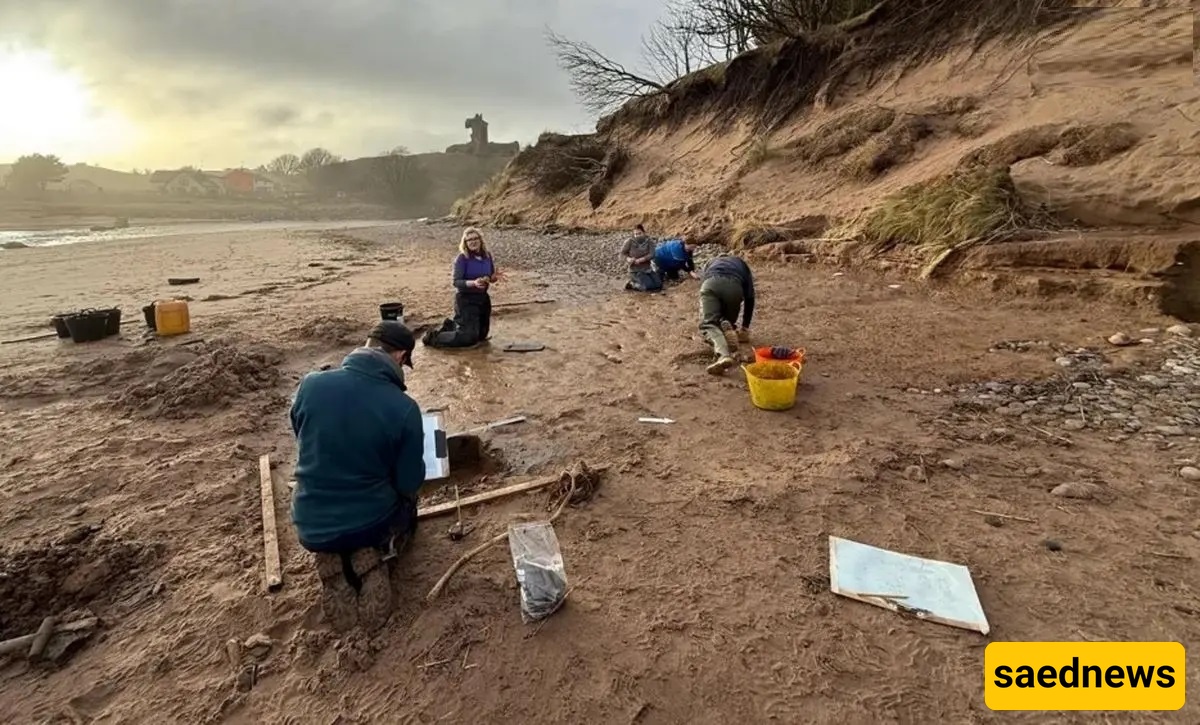
According to Saed News: Two friends walking their dogs along Scotland’s east coast stumbled upon an unexpected archaeological treasure. After gusts reaching up to 55 miles per hour swept the sands of coastal dunes near Angus, Ivor Campbell and Jenny Snedden—accompanied by their dogs, Ziggy and Juno—spotted unique depressions in a long-dried layer of mud.
The pair contacted a local archaeologist, and researchers from the University of Aberdeen quickly rushed to the scenic coastal site to preserve the discovery. With time being critical, the team acted swiftly using an emergency toolkit, including casting plaster purchased from a nearby craft store.
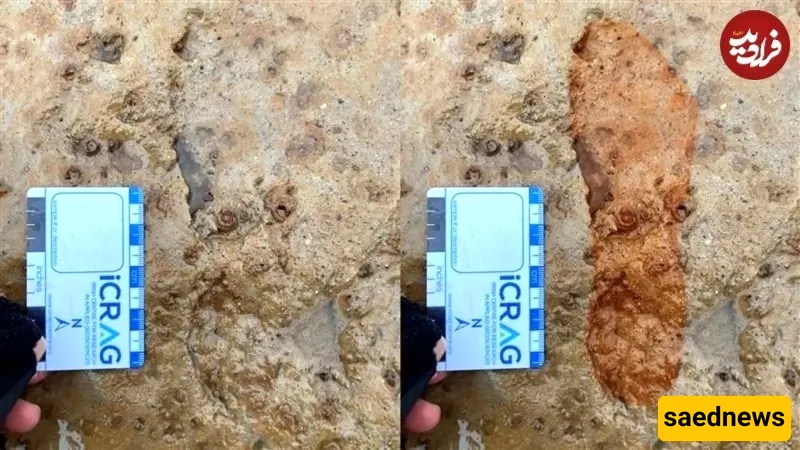
Thanks to their rapid response, researchers have now documented the first recorded examples of preserved human and animal footprints in Scotland. Using scientific dating methods, experts estimate these geological time capsules are around 2,000 years old.
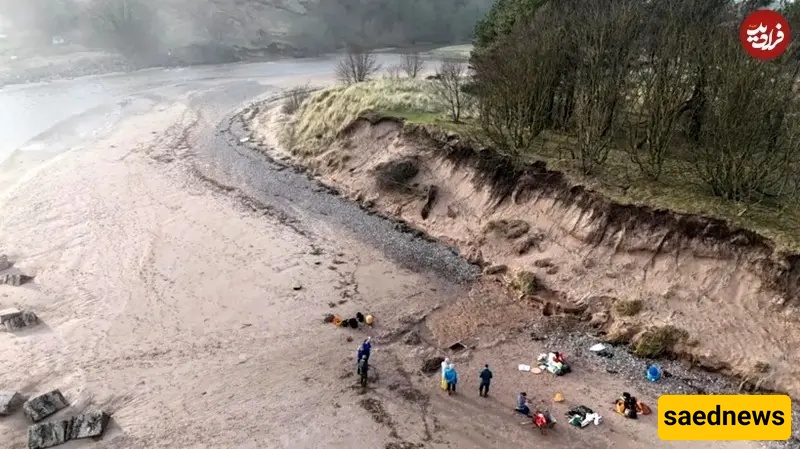
Kate Britton, an archaeologist at the University of Aberdeen, said: “We had to work fast under the worst conditions I’ve ever experienced in field archaeology. The sea was advancing rapidly, washing away parts of the site with every high tide, while wind-driven sand simultaneously caused damage. Both the team and the site were under assault as we carefully cleaned, studied, and documented the footprints. It truly became a race against the elements.”
Although the entire discovery disappeared within 48 hours of its initial identification, Britton’s team managed to map the site both physically and digitally and created plaster casts. Preliminary data suggest the area once served as a pathway for both humans and animals such as deer. The findings date back to the late Iron Age, a pivotal period in the region’s history.
Only a handful of similar sites have been discovered across the UK.
Gordon Noble, an archaeologist, added: “It’s thrilling to think these footprints were made by people living around the time of Roman incursions into Scotland and in the centuries leading up to the emergence of the Picts.”
Researchers have recorded similar tracks at only a few sites across the UK, many of which no longer exist today.
William Mills, a collaborator on the project, said: “It’s incredibly rare to witness such delicate records that form in minutes and vanish within hours—a fleeting snapshot of what people were doing thousands of years ago. While this site was very short-lived, it highlights the potential for similar discoveries. Each clay layer across the larger Montrose Basin could preserve additional important archaeological information.”