SAEDNEWS: Reuters reports: As U.S. midterm elections approach, Trump advisers urge focus on the economy, not attacks on Iran.
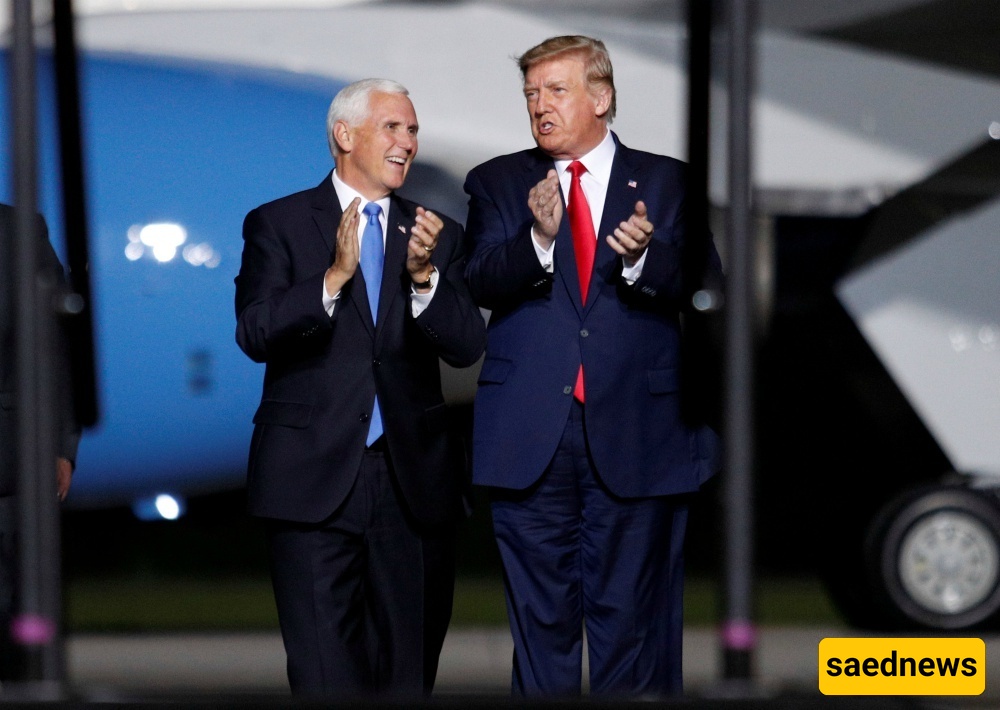
According to Reuters, President Donald Trump has brought the United States to the edge of war with Iran, even as his advisors urge him to focus more on voters’ economic concerns—a dynamic highlighting the political risks of military escalation ahead of this year’s midterm elections.
Entekhab reports that Trump has ordered a massive U.S. troop deployment to the Middle East and preparations for a potential weeks-long air strike against Iran. However, he has only partially explained to the American public why the U.S. might take its most extreme military action against the Islamic Republic of Iran since the 1979 revolution.
Trump’s focus on Iran is the clearest example of how foreign policy—including his extensive use of military force—has taken precedence in the first 13 months of his second term, often overshadowing domestic issues such as cost of living, which polls show are higher priorities for most Americans.
A senior White House official told Reuters, on condition of anonymity, that despite Trump’s aggressive rhetoric, there is still no “unified support” within the administration for military action against Iran. Advisors are also mindful of not sending a “distracting” message to undecided voters who are primarily concerned about the economy.
White House advisors and Republican campaign officials want Trump to focus on economic issues—a point emphasized during a private meeting this week with several cabinet members, according to someone present, though Trump did not attend.
Another White House official told Reuters that Trump’s foreign policy agenda “has directly benefited the American people.” The official added, “All of the president’s actions prioritize America—whether by making the world safer or bringing economic gains to our country.”
The November elections will determine whether Trump’s Republican Party retains control of both chambers of Congress. Losing one or both to the Democrats could pose significant challenges for Trump during the final years of his presidency.
Republican strategist Rob Godfrey warned that a prolonged war with Iran would carry considerable political risk for both Trump and the GOP. “The president must consider his political base, which has supported him three consecutive times for the Republican nomination. These voters are skeptical of foreign conflicts, and his campaign promise included ending the era of ‘endless wars,’” he said.
Republicans plan to campaign on individual tax cuts passed by Congress last year, as well as programs to reduce housing costs and certain prescription drugs.
Despite dissenting voices, many within the “Make America Great Again” movement, which leans toward isolationism, supported Trump’s sudden removal of Venezuelan President Nicolás Maduro last month. But he could face stiffer resistance if he pushes the U.S. into a war with Iran, a far more formidable adversary.
Trump, who has repeatedly threatened military action if Iran fails to reach an agreement on its nuclear program, reiterated his warning last Friday, saying Tehran “better make a fair deal.” The U.S. targeted Iranian nuclear sites in June, and Iran has threatened a strong response if attacked again.
Trump returned to power in 2024 on a “America First” platform, largely promising to curb inflation and avoid costly foreign conflicts. Yet polls indicate he has not convinced voters that he has successfully lowered prices.
Republican strategist Lauren Cooley said Trump supporters might back military action against Iran if it is decisive yet limited. “The White House must clearly link any action to American security and domestic economic stability,” she said.
However, with polls showing little appetite for a new foreign war and Trump struggling to convey his economic message, any escalation with Iran is a high-risk move for a president who recently acknowledged to Reuters that his party could face challenges in the midterms.
Foreign policy has rarely been a decisive issue for midterm voters. But with a massive deployment of aircraft carriers, ships, and warplanes to the Middle East, Trump may feel compelled to act militarily unless Iran concedes major points—something it has shown little interest in. Otherwise, he risks appearing weak internationally.
Trump’s reasons for a potential strike have been vague and varied. He initially threatened action in January in response to domestic events in Iran but later backed down. More recently, he tied military threats to demands for ending Iran’s nuclear program and raised the idea of “regime change,” though neither he nor his advisors have explained how airstrikes could achieve these goals.
A second White House official emphasized that Trump “always prefers diplomacy, and Iran must reach a deal before it’s too late.” The president has also insisted that Iran “must not have nuclear weapons or the capacity to produce them and cannot enrich uranium.”
Many view this lack of clarity as a sharp contrast to the extensive public case presented by former President George W. Bush for the 2003 invasion of Iraq, which explicitly aimed to eliminate weapons of mass destruction. While that mission was ultimately based on faulty intelligence, its objectives were clear from the outset.
Godfrey said independent voters—who often play a key role in close elections—will closely scrutinize Trump’s handling of Iran. “Midterm voters and his base will be waiting for the president to provide his reasons,” he said.