SAEDNEWS: Turkish Foreign Minister Hakan Fidan says a new defense agreement involving Turkey, Pakistan and Saudi Arabia is technically similar to NATO’s Article 5, while insisting that the arrangement is not directed against Iran. He also said Egypt could join once several technical issues are resolved.
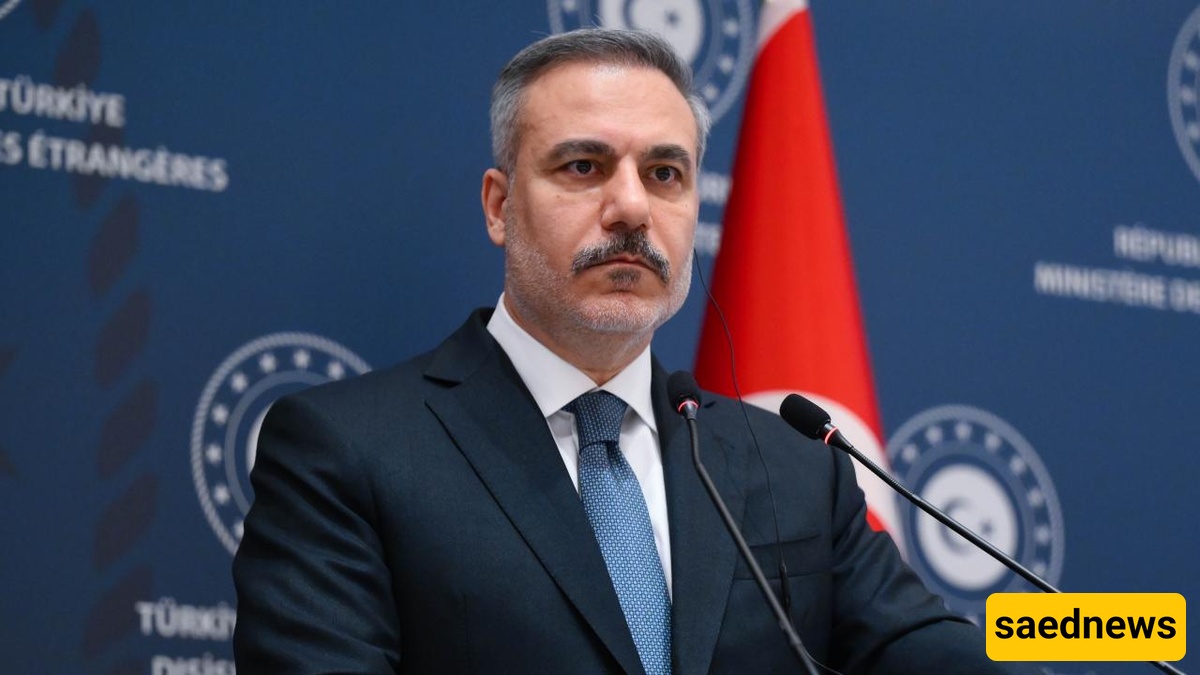
According to SaedNews: A new regional defense framework involving Turkey, Pakistan and Saudi Arabia is being described by Ankara in terms usually associated with NATO, with Turkish Foreign Minister Hakan Fidan saying the agreement is technically similar to Article 5 of the alliance’s founding treaty.
Fidan’s comments put the emerging three-country arrangement under a sharper international spotlight. Rather than describing it simply as a conventional bilateral or multilateral security agreement, the Turkish foreign minister presented a structure that would include a ministerial committee and a secretariat operating within the framework of the agreement.
The comparison with NATO’s Article 5 is particularly significant because that provision is associated with the principle of collective defense. Fidan said the agreement between Turkey, Pakistan and Saudi Arabia is technically similar to that model.
At the same time, he sought to clarify what the agreement is—and what it is not. According to Fidan, the defense arrangement is not directed against Iran.
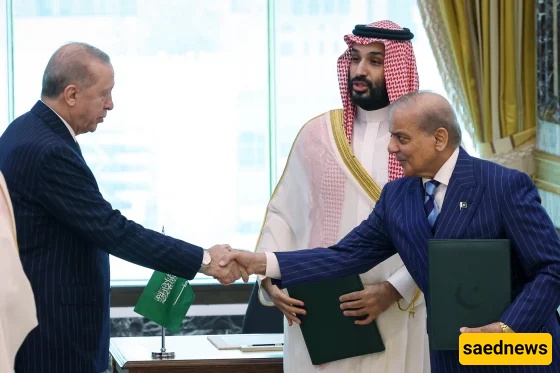
That point was central to his explanation of the pact. Fidan said that as long as none of the three countries becomes the target of an attack, no country will be considered their target.
His formulation presents the agreement as a defensive arrangement rather than an instrument designed to establish a specific regional adversary. The distinction is notable given the broader security tensions and competing strategic interests that shape the region.
Under the structure outlined by Fidan, the three countries would have a ministerial committee alongside a dedicated secretariat. The framework is intended to provide an institutional mechanism for cooperation rather than relying solely on political declarations.
Fidan also connected the security discussion to another issue with major regional importance: maritime security in the Red Sea.
He said maritime security in the Red Sea is important to Turkey’s interests and argued that Turkey should participate within an international coalition led by Saudi Arabia.
The reference to the Red Sea adds another dimension to the proposed security cooperation. The waterway is strategically important for regional trade and maritime activity, and Fidan’s remarks indicate that Ankara sees maritime security as part of its broader regional security interests.
The Turkish foreign minister also raised the possibility of another major regional country joining the framework.
According to Fidan, Egypt could become part of the agreement once certain technical issues are resolved. If that happens, the arrangement could expand beyond the three countries currently at its center.
Fidan did not provide further details in the reported remarks about the specific technical issues that would need to be settled before Egypt could join. For now, his statement establishes the possibility of a broader regional security arrangement while leaving the details of any future expansion open.
The agreement is therefore drawing attention not only because of the countries involved, but also because of the way Ankara is describing its potential operation. Comparing it technically to NATO’s Article 5 gives the pact a clear collective-defense dimension, while Fidan’s insistence that it is not aimed at Iran offers an important qualification.
The combination of those two messages is likely to fuel discussion about the strategic purpose and future direction of the arrangement. On one hand, Turkey is emphasizing defense cooperation and a collective security structure. On the other, it is explicitly rejecting the characterization of the agreement as an anti-Iran alliance.
Fidan’s comments also suggest that the framework is still evolving. The planned ministerial committee and secretariat would give the agreement an institutional structure, while the possibility of Egypt joining indicates that its eventual shape may extend beyond the original three participants.
For now, the key message from Ankara is clear: Turkey views the agreement with Pakistan and Saudi Arabia as a defense-oriented framework with technical similarities to NATO’s collective-defense principle, while maintaining that it is not intended to target Iran.
Whether the arrangement ultimately develops into a wider regional security mechanism will depend on how the participating countries implement it and whether additional countries, including Egypt, decide to join. That uncertainty makes the agreement one to watch as the region’s security architecture continues to evolve.