SAEDNEWS: Saudi Arabia has signed a new defense agreement with Turkey and Pakistan as regional tensions involving Iran, the Houthis and the United States reshape the Gulf's security environment. Analysts say the pact reflects Riyadh's growing desire to diversify its security partnerships rather than depend on a single American security umbrella.
According to SaedNews: Saudi Arabia is taking a significant step toward reshaping its security partnerships at a moment when the regional balance of power is becoming increasingly uncertain.
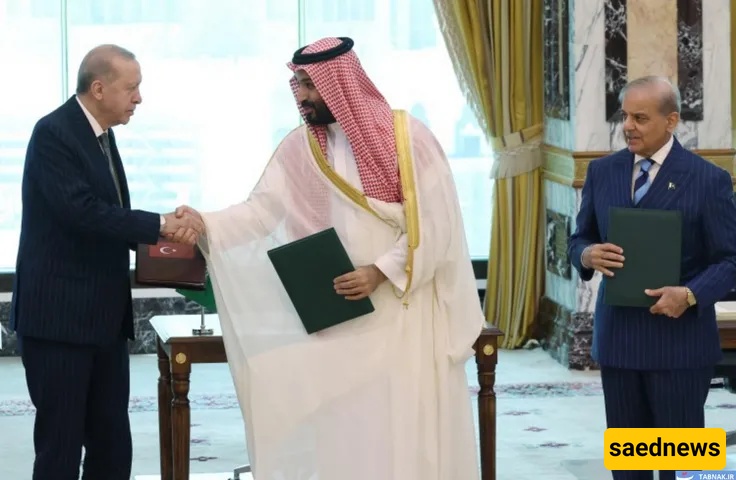
Riyadh has signed what has been described as the “Mecca Mutual Defense Agreement” with Turkey and Pakistan, announcing a joint commitment to strengthening collective security and promoting peace, stability and security in the region and beyond.
The agreement comes against the backdrop of escalating tensions involving the United States and Iran, with the conflict affecting neighboring countries and disrupting shipping routes around the Strait of Hormuz and the Red Sea.
For Saudi Arabia, the timing is particularly significant.
The regional conflict has coincided with renewed pressure from Iran and its Houthi allies in Yemen. Saudi Arabia has faced attacks from both, while Washington is increasingly being viewed by some regional analysts as a less predictable security partner.
Pakistan's Foreign Ministry said the agreement means an attack against one member would be treated as an attack against all. Islamabad described the pact as a mechanism intended to strengthen collective deterrence.
That language immediately gave the agreement greater strategic weight.
However, Turkey later emphasized that the agreement was not directed against any particular country. A post shared by the Turkish presidency's communications office on X stressed that the pact should not be interpreted as targeting a specific state.
Saudi Arabia also moved to address concerns about the agreement's broader intentions.
Riyadh said the pact was not designed to create a military axis or sectarian bloc. Raed Krimly, deputy minister for public diplomacy, also said the agreement was not connected to any nuclear ambitions or arms race, but instead focused on developing sustainable capabilities.
He added that the agreement should not be considered a threat to the security of any country in the region.
Yet behind the diplomatic language, analysts see a much broader strategic calculation.
Since the outbreak of the regional conflict, Saudi Arabia has moved closer to Turkey, Egypt and Pakistan — countries that have called for mediation and a political settlement to the dispute.
Omar Karim, a Saudi foreign-policy expert at the University of Birmingham, argued that the alignment is “clearly” focused on Iran. In his assessment, the arrangement is designed to respond to what he described as Iran's evolving strategic approach toward greater influence across the wider Gulf region.
The geographic position of Turkey and Pakistan could also matter.
Both countries share borders with Iran, giving them a different form of leverage and strategic access than Saudi Arabia itself possesses. Their involvement therefore adds another layer to Riyadh's regional calculations.
A source close to the Saudi military and government told AFP before the agreement was signed that the pact had been under discussion for some time, but recent regional developments accelerated the process.
That detail may be one of the most revealing aspects of the agreement.
The pact did not suddenly appear because of a single event. Instead, the latest conflict appears to have pushed an existing security discussion toward a concrete arrangement.
Andreas Krieg of King's College London described the agreement as a clear indication that Saudi Arabia wants to diversify its alliances beyond the United States.
But diversification does not necessarily mean replacing Washington.
According to Krieg, Saudi Arabia, Turkey and Pakistan are not looking to replace the United States. Instead, they are building additional capacity to protect their interests at times when Washington may be unwilling or unable to do so.
For Riyadh, this represents a fundamental shift in thinking.
Rather than relying on one dominant security umbrella, Saudi Arabia increasingly appears interested in developing multiple layers of protection involving different regional and international partners.
Krieg said the recent conflict with Iran had reinforced this desire. Saudi Arabia, in his assessment, now wants several security layers instead of depending on a single American umbrella.
The agreement could also support Riyadh's ambition to become a more important organizer of regional security.
At the same time, Turkey and Pakistan stand to gain their own advantages. Their participation can provide them with greater political influence and access to potential Saudi investment opportunities.
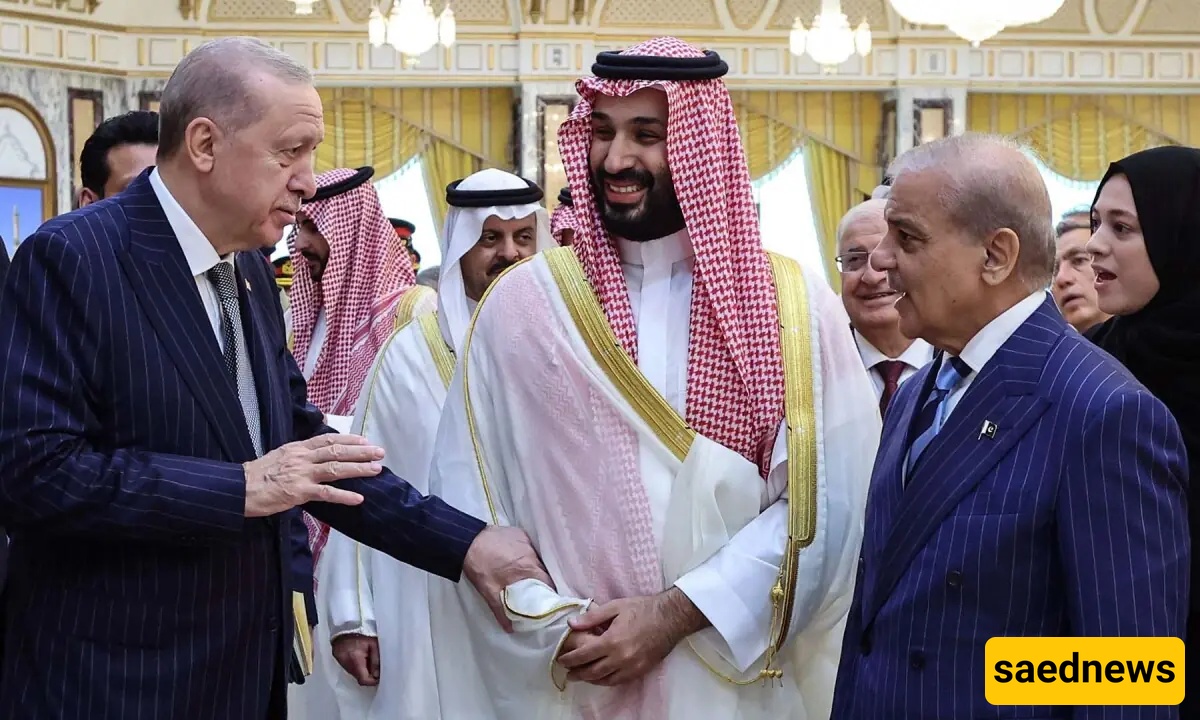
The symbolism of the agreement was reinforced by a high-level meeting in Mecca.
Turkey's presidency shared images of President Recep Tayyip Erdogan meeting Saudi Crown Prince Mohammed bin Salman on Friday. Pakistan's Prime Minister Shehbaz Sharif and army chief Asim Munir also traveled to the Gulf kingdom for the signing.
The meeting brought together three countries with different strategic priorities but overlapping interests in regional stability.
The timing is also linked to the renewed activity of Yemen's Houthis.
Saudi Arabia and Pakistan had already announced a mutual defense pact in 2025, an agreement that attracted attention because Pakistan is the only nuclear-armed country in the Muslim world.
The latest developments come as a previous ceasefire between Saudi Arabia and the Houthi rebels in neighboring Yemen has broken down.
The Houthis have launched attacks inside Saudi territory and announced a maritime blockade against Saudi Arabia, attempting to enforce it through attacks on Saudi oil tankers, according to the source.
The Iran-backed group has also threatened shipping in the Red Sea, adding pressure on Gulf energy exporters that were already facing disruption linked to the Strait of Hormuz.
For Riyadh, the threat is therefore not confined to one border or one military front.
Saudi Arabia has led a military coalition since 2015 supporting Yemen's internationally recognized government against the Houthis. A ceasefire reached four years ago largely held for an extended period, but fighting has returned in recent weeks.
The renewed violence has added urgency to Saudi Arabia's search for stronger and more diversified security arrangements.
On Thursday, a military source said Houthi missile and drone attacks had killed at least 58 Yemeni government soldiers, describing the incident as one of the deadliest days of the conflict in recent years.
Taken together, these developments help explain why Riyadh is looking beyond a single traditional alliance.
The Mecca agreement may not represent the creation of a formal military bloc, as Saudi and Turkish officials have emphasized. But it does demonstrate a growing willingness to construct a broader security network.
For Saudi Arabia, the objective appears less about abandoning the United States than reducing dependence on any single partner.
The result could be a more complex regional security landscape in which Riyadh works simultaneously with Washington, Ankara, Islamabad and other regional actors.
And that may ultimately be the most important message of the Mecca agreement: Saudi Arabia is no longer content to place all of its security expectations under one umbrella. As regional threats become more complicated, Riyadh appears determined to build multiple layers of protection — and to ensure that its strategic options remain open.