SAEDNEWS: U.S. Vice President JD Vance says Washington is in talks with Iran over the Strait of Hormuz, while insisting that the United States will judge Tehran by its actions rather than its promises. He says the immediate goal is to restore oil and gas shipments and establish safe passage for commercial vessels.
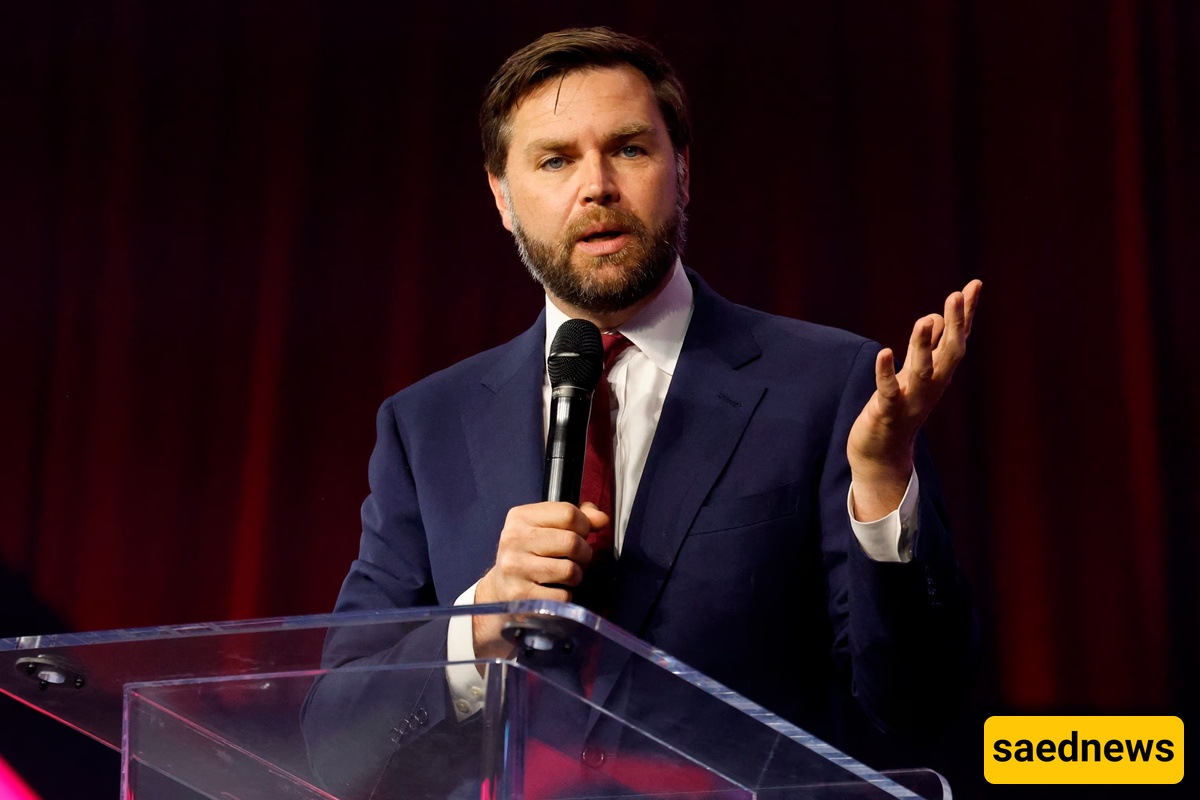
According to SaedNews: The Strait of Hormuz has emerged as the focus of a high-stakes diplomatic effort involving Washington, Tehran and Gulf countries, with U.S. Vice President JD Vance saying that American officials are talking to Iran even as the United States remains deeply distrustful of Tehran.
Vance said the immediate objective is clear: Washington wants to maximize the amount of oil and gas leaving the Gulf through the Strait of Hormuz and ultimately restore energy exports to the level seen before the conflict.
But behind that goal is a more complicated problem. The United States is not simply looking for assurances from Iran. According to Vance, Washington intends to judge Tehran by what it actually does.
“We don’t trust; we verify,” was the central message in his description of the American approach.
Vance said the United States is currently engaged in talks with Iranian officials and is trying to determine whether Tehran is prepared to make longer-term changes that Washington considers necessary for a better relationship with the United States.
He presented the conflict as an ongoing process rather than a concluded episode. In his words, the United States is “in the middle of the game,” with the outcome still undecided.
According to Vance, Washington has already targeted Iran’s nuclear program, conventional military forces and asymmetric military capabilities. He said the United States is now watching to see whether Iran will accept longer-term changes that could alter its relationship with Washington.
If Tehran does not do so, Vance said the United States would continue applying pressure while pursuing its broader objective of increasing the flow of oil and gas from the Middle East. He linked that goal directly to American consumers, arguing that higher energy exports could help bring lower gasoline and energy prices for Americans.
Yet the most immediate challenge appears to be at sea.
Vance said that during roughly the previous week, Iran and Gulf countries—particularly Oman—had been discussing how to guarantee safe passage for ships.
That effort faces a major obstacle. According to Vance, Iran laid a large number of naval mines at the beginning of the war. As a result, restoring normal maritime traffic is not simply a matter of political agreement. It also requires dealing with the physical danger facing commercial vessels.
This is where mine clearance becomes a key part of the discussions.
Vance said the mechanism being examined would need to allow ships using the route to travel safely. That would include clearing mines as well as an Iranian commitment not to fire on commercial vessels.
The issue is particularly significant because the Strait of Hormuz is a crucial route for energy shipments from the Gulf. In the account provided by Vance, the desired outcome is for oil and gas exports to return to approximately the same level that existed before the conflict began.
He said this is also what Iranian officials have told the United States they intend to do, while Gulf countries are likewise seeking the same outcome.
But Vance repeatedly emphasized that Washington is not prepared to rely solely on those statements.
The distinction between promises and actions appears to be central to the American position. Rather than accepting verbal commitments as sufficient, Vance said U.S. officials will monitor what Iran actually does on the ground and at sea.
At the same time, the U.S. approach described by Vance is not limited to military pressure. He said Washington is using a combination of diplomatic, economic and military tools in an effort to secure what he considers the best possible outcome for the American people.
His remarks therefore portray the current situation as a combination of pressure and negotiation. Washington is talking with Tehran, but it is also maintaining leverage and insisting that any commitments be demonstrated through concrete actions.
The maritime question may ultimately become one of the most practical tests of whether the discussions can produce results. If commercial vessels are to resume safe passage through the Strait, the issues of mine clearance and guarantees against attacks on shipping would have to be addressed.
For now, Vance's comments indicate that the situation remains unresolved. The United States says it is negotiating, but it also says it does not take Iran's promises at face value. Iran and Gulf states are described as discussing safe maritime passage, while Washington continues to press for the restoration of energy exports.
The message from Vance is therefore twofold: diplomacy remains active, but the pressure has not ended.
As he put it, the United States is no longer at the beginning of the confrontation, but it has not reached the end either. What happens next may depend less on what the parties promise and more on whether those promises translate into safe passage for ships, removal of maritime mines and a return of Gulf oil and gas exports to pre-conflict levels.