SAEDNEWS: CNN reported that U.S. President Donald Trump has become increasingly angry and frustrated over the conflict with Iran. According to the report, the situation has led to tense private meetings behind closed doors, as well as heated phone conversations with his allies, during which harsh language was reportedly used.
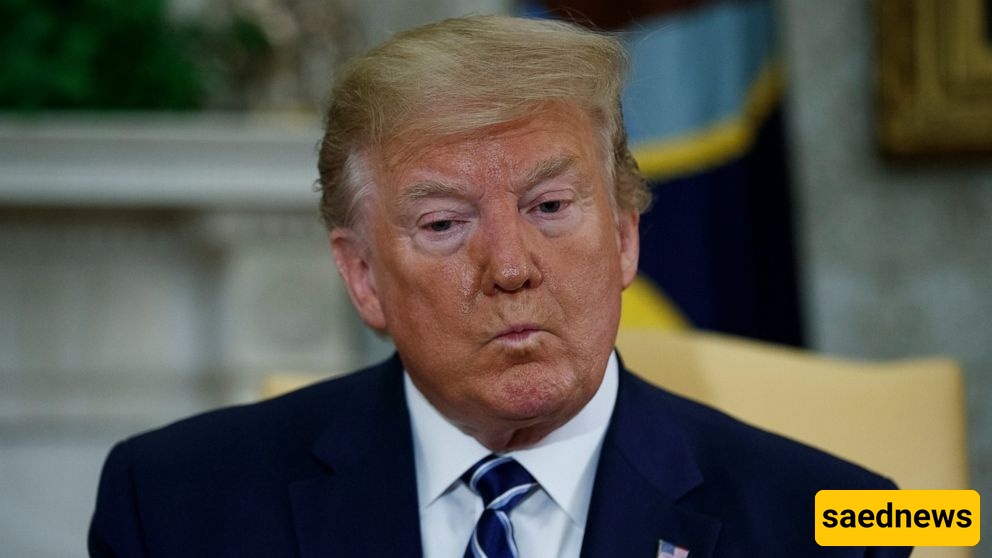
According to Saednews citing a CNN report, the Trump administration is facing growing internal and external pressure over its approach toward Iran, with key regional allies delivering sharply different messages to the White House.
Shortly after 10 a.m. on Wednesday, a Saudi delegation arrived at the West Wing carrying a message from Saudi Crown Prince Mohammed bin Salman. Saudi Defense Minister Khalid bin Salman, who made an unannounced visit to Washington, conveyed the message to U.S. President Donald Trump and Vice President J.D. Vance. According to people familiar with the discussions, Saudi Arabia urged the United States to reduce tensions with Iran, warning that continued conflict would create serious regional risks.
Just one day earlier, another high-level visitor entered the White House with a very different message. Israeli officials said Prime Minister Benjamin Netanyahu expressed skepticism during an Oval Office meeting with Trump about the chances of successful diplomacy with Iran. Instead, the two leaders discussed ways to increase pressure on Tehran, including the possibility of resuming a full-scale military campaign.
Although the two meetings were scheduled independently, they highlighted the competing demands facing Trump as he searches for a way to end a conflict that has lasted far longer than he originally expected.
CNN reported that despite growing pressure from Republican lawmakers to bring the conflict to an end, the war appears to be expanding. New fronts have emerged, more regional countries have become involved, and diplomatic efforts have slowed significantly.
A senior U.S. official said that restarting direct negotiations with Iran in the near future appears unlikely.
While Trump has publicly claimed that Iran is "begging" for a deal, some American officials are concerned that Iranian leaders may instead be more determined than ever to use control of the Strait of Hormuz as leverage and could potentially target U.S. forces with missile attacks.
According to U.S. officials, Trump has become increasingly frustrated by Tehran's refusal to accept his demands. His dissatisfaction has reportedly led to tense private meetings and heated phone conversations with allies.
On Friday, Trump gathered members of his Cabinet at Camp David, hoping the historic presidential retreat—known for hosting major Middle East peace agreements—might help produce a new diplomatic breakthrough.
When asked how he planned to revive stalled diplomacy, Trump replied only, "I think we just want to win." He added that Iran would eventually weaken again despite any temporary recovery.
Officials also said that heightened threats linked to Iran forced Trump to alter personal travel arrangements earlier this month by switching Air Force One aircraft during his return flight from Turkey. Reports about the security change reportedly angered and embarrassed the president after they became public.
Some of Trump's allies are now concerned that a prolonged conflict with Iran could overshadow the remainder of his presidency and weaken Republican prospects in upcoming midterm elections. A recent CNN poll found that only 28% of Americans approve of Trump's handling of the conflict.
The report states that Trump has been presented with several military options for escalating the conflict, while additional U.S. forces and equipment have been deployed to the region in preparation for possible action.
According to American officials, one proposal developed by U.S. Central Command (CENTCOM) calls for one to two weeks of intensive bombing aimed at destroying Iran's missile capabilities.
When asked whether he planned to significantly expand military operations, Trump responded, "We've already acted big. We've already entered the big stage."
General Dan Caine, Chairman of the Joint Chiefs of Staff, acknowledged during a congressional hearing that airstrikes alone would likely not achieve all of the administration's stated military objectives.
"Air power has its limitations," he told lawmakers.
CNN reported that Trump has so far declined to authorize broader military escalation, partly after hearing warnings from General Caine about declining U.S. air defense interceptor missile stockpiles.
Officials familiar with ongoing negotiations said regional diplomatic efforts are now focused on reaching a short-term agreement centered on reopening the Strait of Hormuz. Such an agreement could provide Trump with an opportunity to present the outcome as a political success.
The strategic waterway has become the central issue in the crisis after the United States and Iran offered sharply different interpretations of a memorandum of understanding reached the previous month.
Republican Party officials have also reportedly become increasingly concerned that higher fuel prices resulting from the conflict could hurt the party's performance in the upcoming midterm elections. In private discussions, they have emphasized the importance of restoring shipping through the Strait of Hormuz.
Senate Majority Leader John Thune said this week that Republicans want to see the administration succeed and believe substantial military progress has already been made. He added that negotiations over the Strait of Hormuz are continuing and expressed hope that a solution would be reached in the near future.