SAEDNEWS: Today, all disputes in the Persian Gulf concerning the Strait of Hormuz stem from efforts to diminish Iran’s authority and sovereignty over this strategic waterway. Consequently, the Islamic Republic of Iran is making every effort to ensure that its exercise of power and control over the Strait of Hormuz continues to be maintained.
According to political news reports of Saednews, military affairs analyst Mehdi Bakhtiari said in an interview with Hamshahri Internet TV:
Today, much of the dispute surrounding the Persian Gulf centers on the Strait of Hormuz because certain actors seek to challenge Iran’s authority and influence over the waterway. According to Bakhtiari, the Islamic Republic of Iran is committed to maintaining its ability to exercise control and influence in the Strait.
The issue of potentially closing the Strait of Hormuz and demonstrating power in this vital maritime corridor is not new. It has been discussed since the Iran-Iraq War. Over time, however, Western countries came to believe that the possibility of closing the Strait would remain only a theoretical threat and would never be put into practice.
Bakhtiari argued that the recent conflict involving Iran, the United States, and Israel altered this perception by demonstrating that such a threat could be viewed as a realistic possibility. In his view, this shift significantly changed the strategic dynamics of the conflict.
He added that the Strait of Hormuz remains an important strategic instrument for Iran, while the United States and its Western allies continue efforts to reduce or eliminate Iran’s leverage over this critical maritime passage.
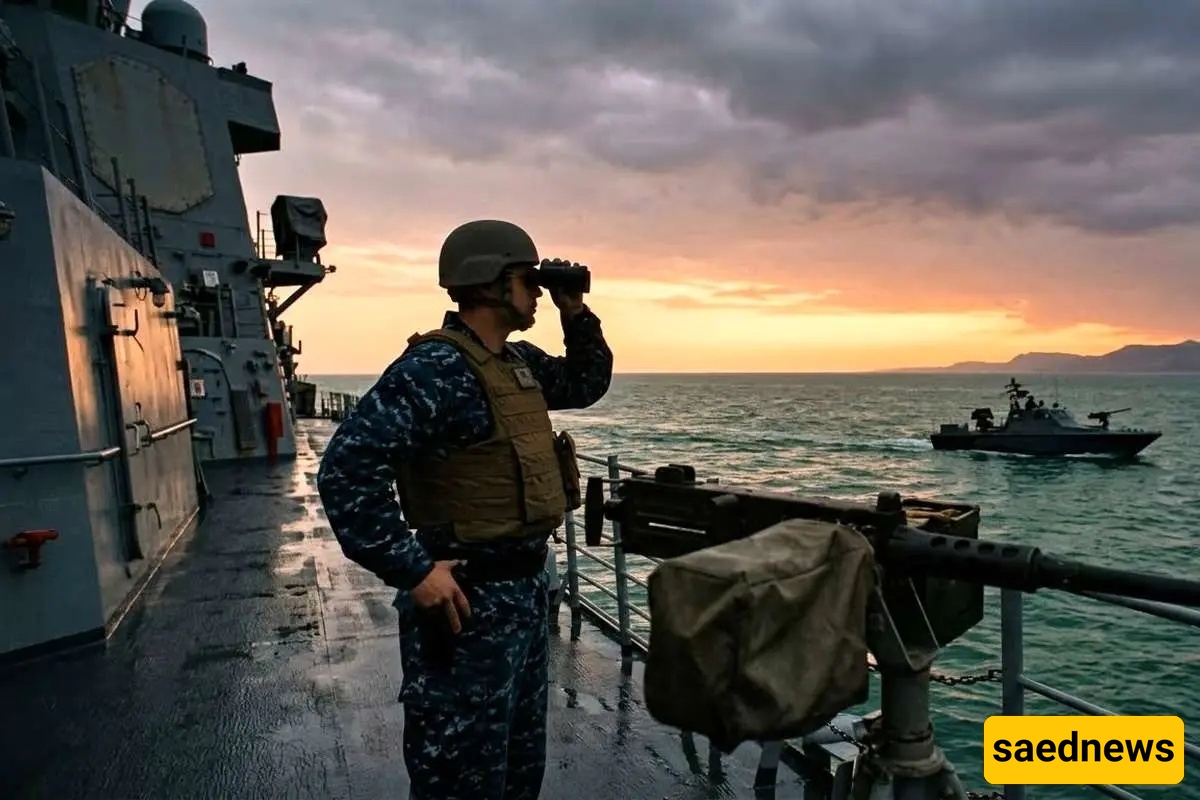
Referring to reports of the presence of a French naval vessel and a U.S. warship in the region, Bakhtiari stated that part of this deployment appears intended to exert psychological pressure and project deterrence.
He also suggested that, in practical terms, European countries appear reluctant to engage in a direct military confrontation with Iran in the Persian Gulf.
Bakhtiari’s remarks focus less on predicting an imminent naval confrontation and more on highlighting the concept of deterrence through the Strait of Hormuz, which has become an increasingly significant component of Iran’s strategic posture in regional affairs.
According to his assessment, the recent conflict has transformed the prospect of closing the Strait of Hormuz from a purely political bargaining tool into an option that international actors now consider more plausible. He argues that this change in perception is significant because, in deterrence theory, credibility depends not only on possessing the capability to act but also on convincing others that such action could realistically occur.
Bakhtiari also interprets the deployment of U.S. and French naval forces primarily as part of a broader strategy of psychological signaling rather than preparation for a direct military clash. From his perspective, Western governments seek to maintain pressure and demonstrate military readiness while avoiding a large-scale naval conflict that could threaten global energy supplies and international trade.
Another key theme of his analysis is the strategic competition over authority and influence in the Strait of Hormuz. In this view, the issue extends beyond the movement of commercial shipping and concerns Iran’s broader geopolitical leverage over one of the world's most important energy transit routes. Such leverage, he argues, can shape the political and economic calculations of major powers during periods of heightened tension.
Views differ among analysts and research institutions regarding the extent to which the recent conflict has influenced Western strategic calculations or motivated increased naval deployments in the region. Overall, Bakhtiari’s analysis is built around the argument that the Strait of Hormuz continues to serve as one of Iran’s principal instruments of strategic deterrence and geopolitical influence, and that competition between Tehran and Western powers is driven not only by military considerations but also by efforts to preserve or diminish the strategic value of this critical maritime chokepoint in the regional security landscape.