SAEDNEWS: Mohsen Rezaee, a military adviser to Iran’s Commander-in-Chief, told CNN that Donald Trump’s proposal to meet Iran’s Supreme Leader is unacceptable. He also revealed a $24 billion dispute in negotiations and warned that any U.S. military action would provoke an Iranian response beyond the Persian Gulf and across four key seas.
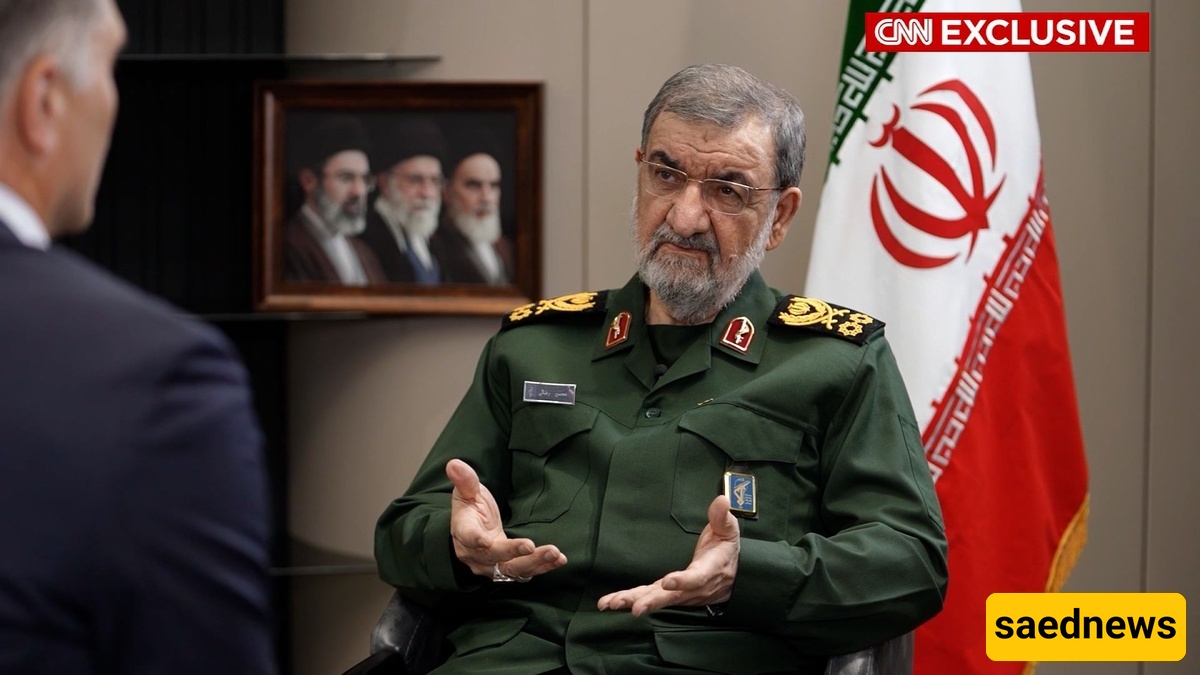
According to Saed News political desk, U.S. President Donald Trump had previously stated that meeting with Iran’s Supreme Leader would be “an honor” for him. However, Mohsen Rezaei, former commander of Iran’s Islamic Revolutionary Guard Corps (IRGC) during the Iran-Iraq War, dismissed the possibility in an interview with CNN, saying:
“That will not happen. We are currently in the first stage of negotiations, and Trump has driven the talks into a dead end. This will not happen.”
In the interview, Rezaei emphasized that the path toward mutual understanding is clear and stated that the major test of trust-building for the Trump administration is the release of Iran’s frozen assets. According to Iran’s stated position, Tehran is seeking a two-stage process for restoring access to its funds:
First stage: Immediate release of $12 billion following the signing of an interim agreement.
Second stage: Release of an additional $12 billion during the final phase of negotiations.
The military adviser to Iran’s Commander-in-Chief stressed that these assets belong to Iran and that their release by the United States could open “a new horizon for the future” of relations between the two countries. However, he argued that Trump has currently brought the negotiations to a standstill and must take the necessary steps to break the deadlock.
The final and most significant part of Rezaei’s remarks focused on Iran’s military strategy should hostilities resume. While stressing that “the likelihood of war is low,” he issued a strong geopolitical warning to the United States, stating that if Washington embarks on a new military adventure, Iran would expand the scope of conflict beyond the Persian Gulf.
According to his warning, in the event of war, Iranian military operations could extend not only to the Strait of Hormuz but also to the following strategic waterways:
The Indian Ocean
The Bab el-Mandeb Strait
The Red Sea
The Mediterranean Sea
The former wartime commander also expressed doubts about the durability of any nuclear agreement with Trump. He stated that if diplomacy completely fails and the United States launches an attack, the world would witness Iran’s true military strength:
“In that case, the world will recognize Iran’s real capabilities, because our ground forces are several times stronger than our missile capabilities.”
Rezaei concluded by addressing the management of the Strait of Hormuz, noting that Iran and Oman share sovereignty over the strategic waterway. He argued that Iran should not bear the heavy costs of securing and managing one of the world’s most important maritime routes on its own and maintained that Tehran reserves the right to seek compensation for its maintenance and security responsibilities.