SAEDNEWS: The New York Times has reported that Mohammed bin Salman, the Crown Prince of Saudi Arabia, in his recent communications with U.S. President Donald Trump, has encouraged him to continue the war against the Islamic Republic. He has described the conflict as a “historic opportunity” to reshape the order of the Middle East.
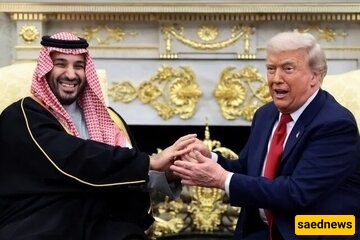
According to the political desk of Saed News, citing Khabar Online and based on a translation by Jamaran of a New York Times report, informed sources say the Saudi Crown Prince told Donald Trump that the only way to end Iran’s threat to Gulf countries is to eliminate the government in Tehran. He also emphasized continuing military pressure, including attacks on Iran’s energy infrastructure.
The report adds that Benjamin Netanyahu also views Iran as a long-term threat, but there is a key difference between Israeli and Saudi perspectives: Israel may consider a destabilized Iran facing internal crises as an acceptable outcome, whereas Saudi Arabia sees such a scenario as a direct threat to its own security.
However, senior officials in the United States and Saudi Arabia are concerned that a prolonged conflict could lead to more intense Iranian attacks on regional oil facilities and drag the U.S. into a war of attrition. At the same time, Iran’s missile and drone strikes have already caused notable disruptions in the energy market.
The report states that the Saudi Crown Prince has even raised the option of ground operations, including the seizure of Iranian energy facilities. In this context, discussions within the U.S. government about plans such as an attack on Khark Island have intensified, although such an operation is considered highly risky.
According to analysts, Saudi Arabia’s main concern is that if the United States retreats now, Tehran will become more emboldened and leave regional countries exposed. In such a scenario, Iran could periodically close the Strait of Hormuz or continue attacks on energy infrastructure.
Meanwhile, Saudi Arabia itself faces economic constraints. Disruptions in the Strait of Hormuz have affected its oil exports, and alternative routes have also come under attack. Experts say Saudi Arabia cannot compensate for oil supply shortages on its own, and a prolonged war could seriously endanger the country’s ambitious economic plans.
Finally, the New York Times notes that while some in Riyadh see the war as an opportunity to expand regional influence, the reality is that the outcome and conclusion of the conflict are critical for Saudi Arabia. According to the country’s foreign minister, the top priority is stopping Iran’s attacks, and Riyadh will use all political, economic, and diplomatic tools to achieve this goal.