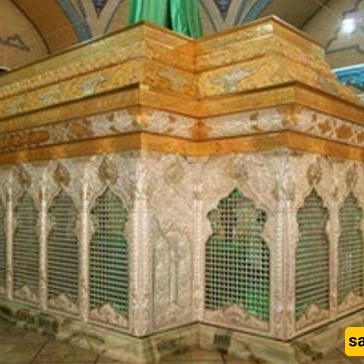
SAEDNEWS: Why Does the Holy Shrine of Imam Hussain (AS) Have Six Corners? Discover the Secret Behind Its Unique Design
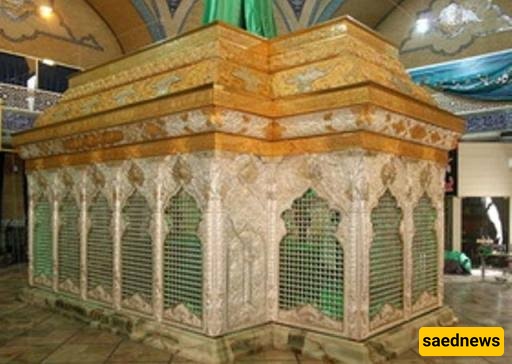
According to Saednews, Unlike the shrines of other revered Imams, the shrine of Imam Hussein (peace be upon him) has a six-sided structure. According to traditional accounts, this distinctive design is associated with the burial place of the sons and descendants of the revered leader of the martyrs.
Numerous narrations and historical accounts have been reported on this subject. However, one of the most widely cited accounts is attributed to Sheikh al-Mufid in his book Al-Irshad.
In one section of the book, Sheikh al-Mufid names 17 martyrs from the Banu Hashim clan who were killed on the day of Ashura. He writes:
“They were buried at the feet of Imam Hussein in a single grave, a large pit, and no individual graves remain visible. Visitors pay their respects to them by pointing toward the ground near the feet of the Imam (peace be upon him). Ali ibn al-Hussein, known as Ali al-Akbar, was among them. Some have stated that the burial place of Ali al-Akbar is the closest to the grave of Imam Hussein.”
Sheikh al-Mufid also recounts that after Umar ibn Sa'd left Karbala, a group of people from the Banu Asad tribe, who lived in the nearby area of Ghadiriyah, arrived and performed funeral prayers for Imam Hussein and his companions.
They buried Imam Hussein at the location where his shrine stands today. Ali ibn al-Hussein (Ali al-Akbar) was buried near his father's feet. They then dug a large pit and buried the other martyrs and companions of Imam Hussein together.
Abbas ibn Ali was buried in Ghadiriyah, at the place where he was martyred, which is now his own shrine.
Another account, attributed to Ja'far ibn Muhammad al-Qummi's Kitab al-Ziyarat (The Book of Pilgrimages), states that Imam Zayn al-Abidin (Imam Sajjad, peace be upon him) came to Karbala through his spiritual authority and found the Banu Asad tribe bewildered because the heads and bodies of the martyrs had been separated, making identification difficult.
Imam Zayn al-Abidin announced that he would undertake the burial of the martyrs. He approached the lifeless body of his father, embraced him one final time, and mourned him aloud.
He then moved the soil aside, and a prepared grave appeared. He placed his father in the grave by himself and said, “Is there anyone who can help me?”
After burying him, he inscribed the following words on the grave:
“This is the grave of Hussein ibn Ali ibn Abi Talib, whom they killed while he was thirsty and far from home.”
After completing his father's burial, Imam Zayn al-Abidin went to his uncle Abbas and buried the great martyr separately as well. He then instructed the Banu Asad tribe to dig two large pits in which the remaining noble martyrs would be buried.
Ali al-Akbar, the beloved elder son of Imam Hussein, is traditionally regarded as the martyr buried closest to the Imam.
Imam Ja'far al-Sadiq reportedly told Abdullah ibn Hammad al-Basri:
“Imam Hussein was killed as a stranger. Whoever visits his grave feels sorrow for him and weeps over him. Whoever cannot visit him still feels deep sadness for him, especially when imagining his son's grave at his feet.”
According to these traditional accounts, the additional corners of Imam Hussein's shrine are associated with the burial places of his elder son, Ali al-Akbar (peace be upon him), and his infant son, Ali al-Asghar (peace be upon him).
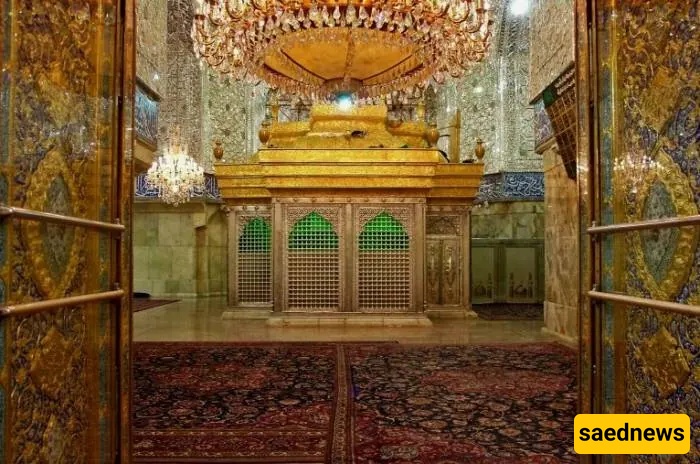
Abdul Razzaq al-Hasani described the sacred tomb of Imam Hussein as follows:
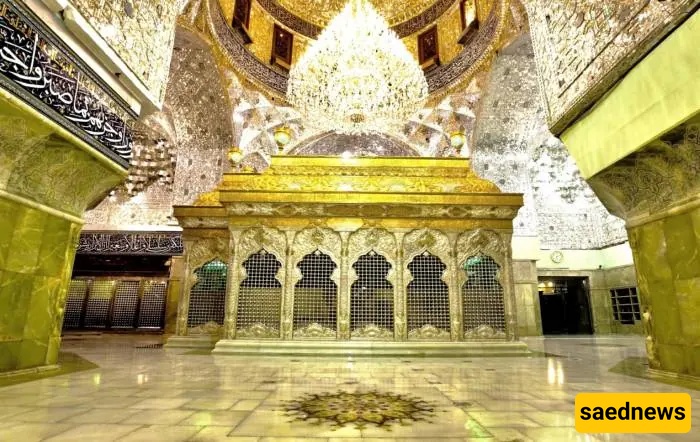
“The tomb of Imam Hussein consists of a raised, chest-like wooden structure decorated with ivory, over which two lattice enclosures are placed. The inner enclosure is made of precious steel, while the outer enclosure is made of bright, white silver.
Another lattice structure is attached to the outer enclosure without any barrier between them. It is approximately one metre shorter on each side than the outer enclosure associated with Imam Hussein. Beneath this inner lattice lies the grave of Ali ibn al-Hussein (Ali al-Akbar), who was martyred alongside his father on the same day and now rests beside him.”
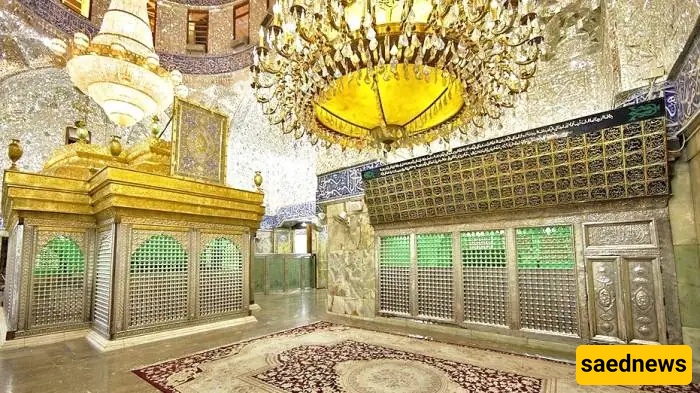
According to these historical and religious traditions, the distinctive six-sided design of Imam Hussein's shrine is associated with the burial arrangements of his sons and the martyrs of Karbala, particularly Ali al-Akbar. These explanations reflect traditional accounts; the precise historical origins of the shrine's architectural design are not conclusively established by these narrations alone.