SAEDNEWS: The game of Snakes and Ladders was first played in India as early as the 2nd century BC. At that time, it was used as a teaching tool to introduce children to Hindu and Jain philosophies—especially the concepts of karma and kama, representing human destiny and desires.
According to the history and culture section of Saed News Agency, as cited from Net Nevesht:
Most of us have played Snakes and Ladders in childhood (and perhaps still do!). The rules are simple: players take turns rolling a die and move forward according to the number shown. If you land on a ladder, you climb up; if you land on a snake, you are bitten and slide backward. In this game, chance plays the decisive role. Interestingly, the history of Snakes and Ladders is far older and deeper than many people realize.
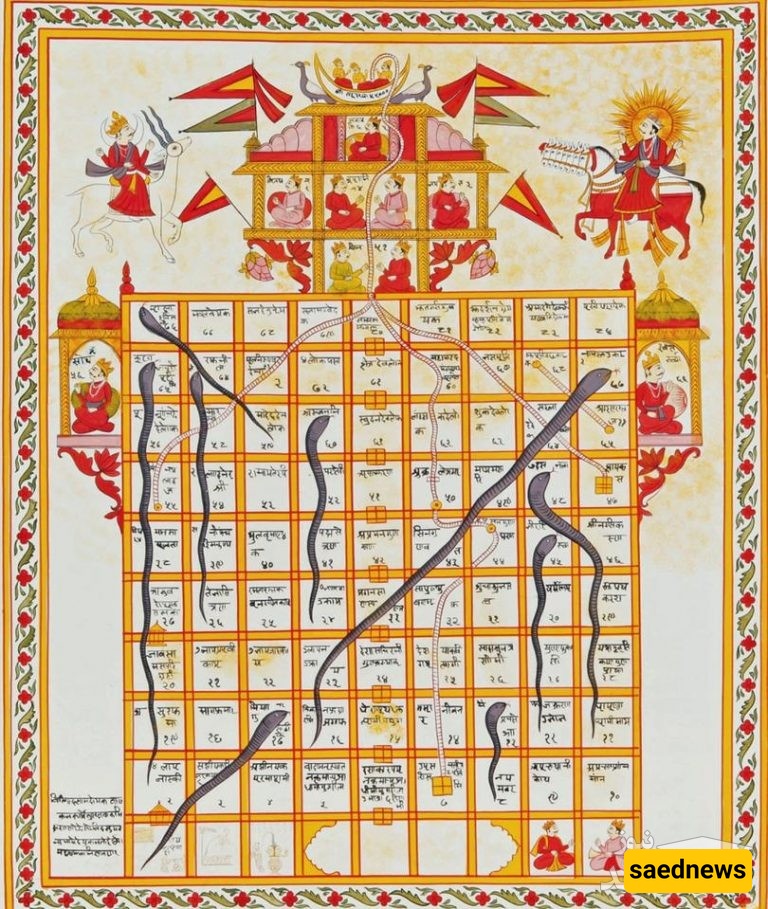
A Jain version of the game, known as Jnana Bazi or Gyan Bazi, was played in 19th-century India. It was illustrated with gouache on fabric.
The earliest known form of Snakes and Ladders dates back to the 2nd century BCE in India. At that time, the game was used as a teaching tool to introduce Hindu and Jain philosophies to children—especially concepts such as karma and desire. While Islamic, Buddhist, and other versions also existed, the core idea remained similar: life is shaped by chance, choices, and consequences.
The game symbolized the cycle of karma. The final square represented moksha (liberation or enlightenment) from samsara (the cycle of birth and rebirth). Ladders represented moral progress and rebirth into higher states of existence through good deeds, while snakes symbolized moral decline and rebirth into lower states due to wrongdoing.
In older versions, the number of snakes was often greater than the number of ladders, emphasizing that the path of righteousness is more difficult than the path of wrongdoing. For example, one ancient version included five ladders (penance, faith, generosity, reliability, and knowledge) and twelve snakes (disobedience, debt, intoxication, greed, lust, lying, murder, pride, anger, theft, laziness, and suspicion).
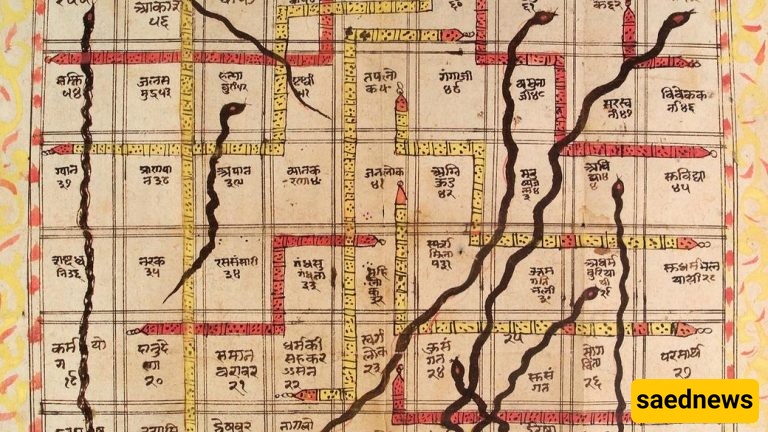
These moral and philosophical ideas later inspired a similar game in Victorian England in 1892. In this version, Indian spiritual concepts were replaced with Victorian and Protestant moral teachings. Squares such as satisfaction, fulfillment, and success were associated with virtues like industry, obedience, forgiveness, punctuality, and thrift. Meanwhile, squares such as disgrace, illness, and poverty reflected sins like disobedience, uselessness, gambling, laziness, excess, and corruption.
Unlike earlier Indian versions, the number of ladders and snakes was made equal, reflecting the idea that for every sin, there is also a path toward redemption.
Much of the early British artwork on the game reflected colonial connections between Britain and India. However, after India’s independence in 1947, many of these cultural interpretations faded.
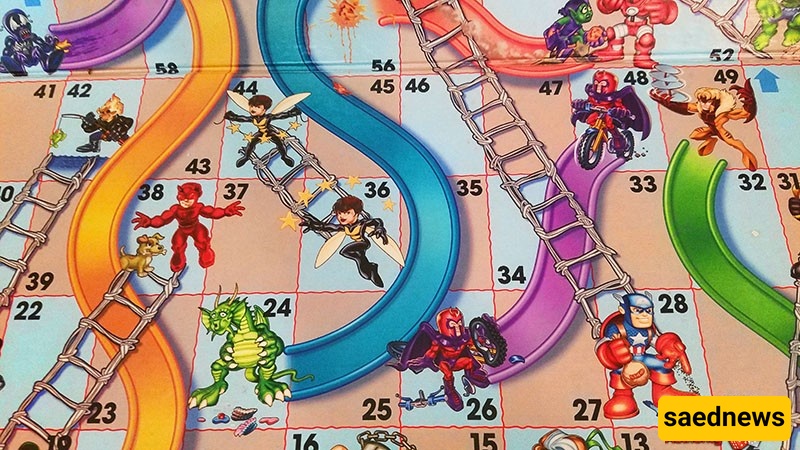
In 1943, Milton Bradley introduced the game in the United States under the name Chutes and Ladders. While much of its original symbolism was simplified, the moral structure remained. It was adapted for children with lighter themes—good actions might involve helping a cat down from a tree, while bad actions could include eating too much candy or neglecting schoolwork.
Today, Snakes and Ladders continues to be used as an educational tool, with modern versions addressing topics such as climate change, health education, and habit awareness.
Ultimately, Snakes and Ladders shows how deeply culture can shape even the simplest games, turning them into reflections of philosophy, morality, and human life itself.