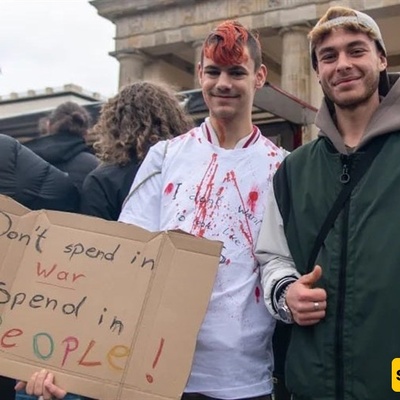
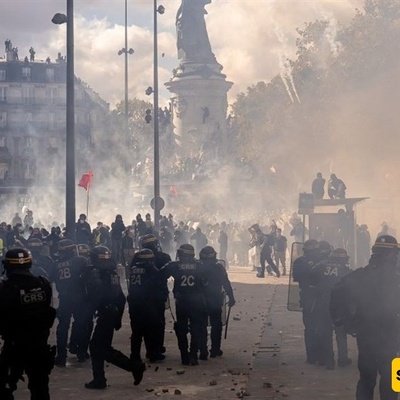
SAEDNEWS: Thousands of people took to the streets in Berlin and more than 30 other German cities on Saturday to protest rising living costs, cuts to education funding and increased military spending, as a growing wave of youth-led demonstrations continues to spread across Europe.
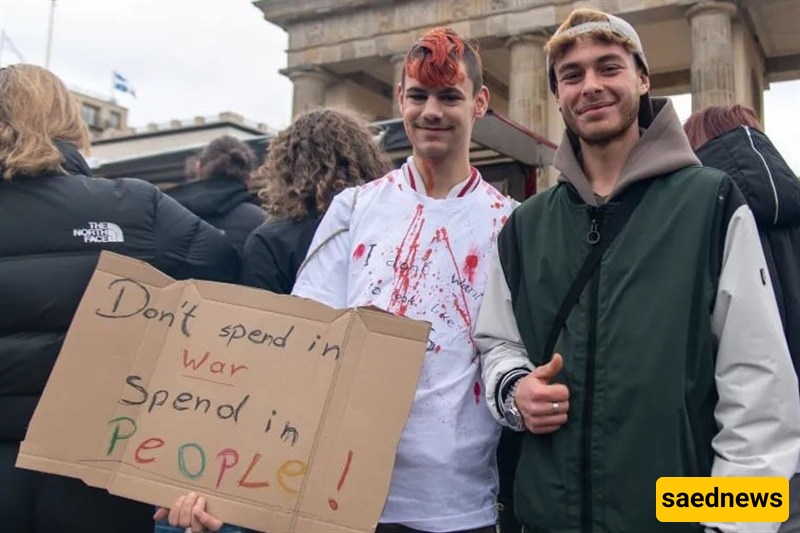
According to Saednews, Organized by the Gen Z Regelt (Gen Z Takes Action) alliance, demonstrations across Germany brought together students, young activists and older supporters. Nearly 180,000 people registered to join rallies in 34 cities ahead of the protests.
Police estimated that approximately 5,000 people took part in the Berlin demonstration, while organizers put attendance at around 10,000. Across the country, more than 100,000 people participated, according to the alliance, citing German news agency dpa. Berlin, Frankfurt, Cologne and Munich were among the main locations of the protests.
The demonstrations reflected growing anger among younger generations over the government's plans to increase military spending while reducing financial support for universities, educational institutions and social services.
Veronika Dinter, a 23-year-old political science student who travelled from Hannover to Berlin, said the rising cost of living had forced her to take a part-time job to cover her education expenses.
She criticized the government's priorities, arguing that education and social services were suffering from budget reductions as living costs continued to climb. She pointed to struggling universities, closing research institutes, job losses among teachers and deteriorating educational facilities.
Dinter described the situation as a consequence of government policy, accusing Chancellor Friedrich Merz and wealthy supporters of directing billions of euros towards military spending instead of addressing the country's social challenges.
Similar concerns were raised by Emma Heymann, a 24-year-old student from Berlin. She accused the government of placing military expenditure and support for Israel's war in Gaza ahead of young people's living standards and social welfare.
The protests were not limited to economic concerns. Participants also condemned growing militarization, ongoing wars and the possibility of introducing compulsory military service. These issues were among the six main priorities identified by the organizing alliance.
The demonstrations were influenced by recent youth-led protest movements in France, Belgium, Italy, Spain and Serbia, reflecting a wider European backlash against economic inequality, austerity measures and government military policies.
Kilian Hampel, a senior research fellow at the University of Konstanz's Future of Work Lab, said dissatisfaction among young people in Germany had been increasing for several years. He added that demonstrations in other European countries had encouraged German youth to express their grievances publicly.
Hampel also emphasized that concerns about the declining condition of educational infrastructure were justified and that policymakers should take protesters' demands seriously.
While the Berlin demonstration remained largely peaceful, police reported several minor incidents involving pyrotechnics. In Cologne, however, confrontations between demonstrators and police were reported.
Protesters dismissed concerns that isolated incidents of violence could distract attention from their central demands. They urged authorities to protect the right to peaceful assembly and respond to the growing economic and social difficulties confronting younger generations.