SAEDNEW: China is expanding and diversifying its launch infrastructure to accommodate the rising demand from the commercial space sector, including offshore launch platforms, commercial spaceports, and dedicated launch facilities.
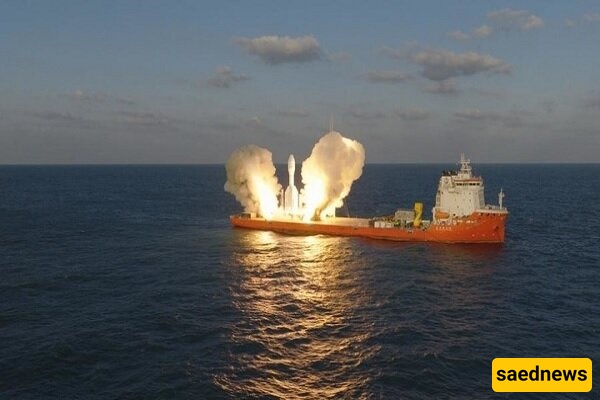
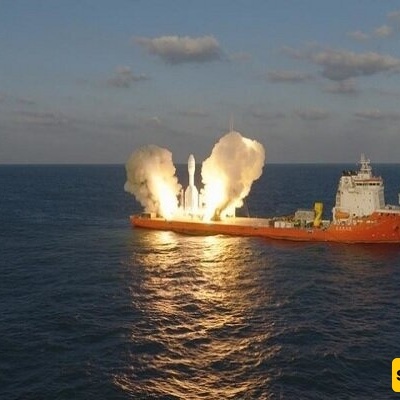
According to Saednews, A typical example of China's expanding space industry is a commercial rocket that carried nine satellites into orbit from a vessel in the East China Sea, near Shanghai, in September. Despite lacking a conventional rocket launch facility, Shanghai has found a way to participate in the country's growing space sector through offshore launch operations.
China conducted its first sea-based rocket launch in 2019 off the coast of Haiyang, in Shandong Province. Since then, the coastal city has developed a dedicated spaceport equipped for rocket assembly, testing and launch activities. According to Teng Yao, the spaceport's chief engineer, launching rockets from the sea provides greater flexibility in selecting launch locations and flight paths while ensuring that falling rocket debris lands in uninhabited waters.
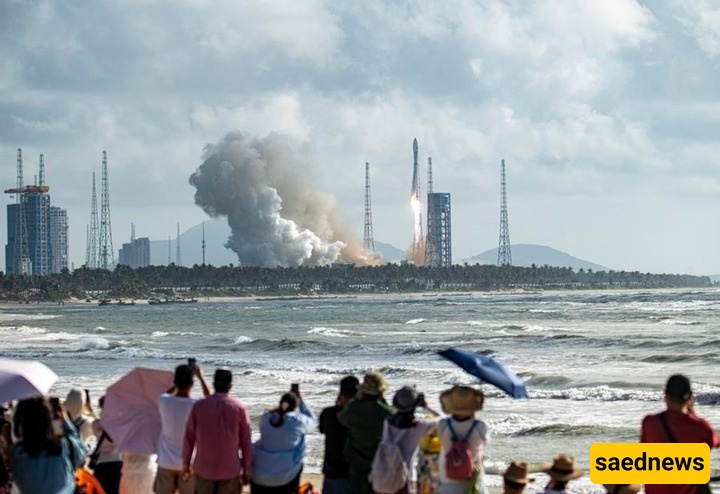
Wenchang, located in Hainan Province in southern China, is also expanding its launch capabilities. Known for supporting major national missions, including space station construction and lunar exploration, the city has introduced additional infrastructure for commercial rocket and satellite launches since 2024.
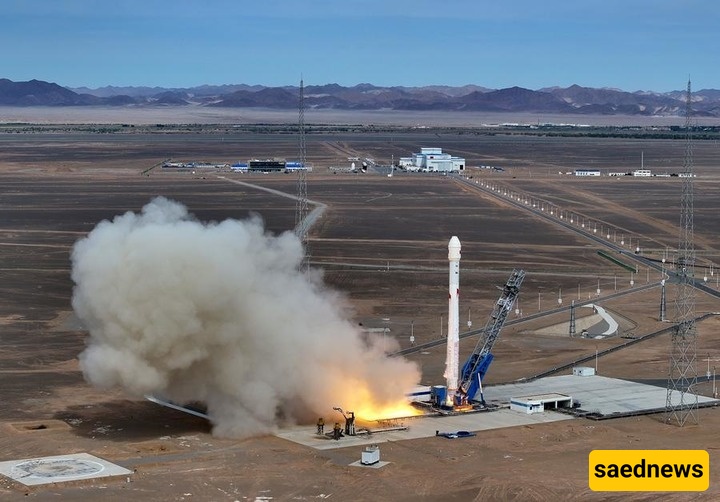
Similarly, the Dongfeng Commercial Space Innovation Pilot Zone, situated near the Jiuquan Satellite Launch Center in northwestern China, has established specialized launch facilities designed to meet the needs of private rocket manufacturers.
However, limited access to launch infrastructure remains a major obstacle for China's commercial space industry. Wang Lifeng, a professor at Nanjing University of Aeronautics and Astronautics, explained that restricted launch capacity, crowded schedules and considerable distances between rocket production facilities and launch sites are slowing the sector's development.
The growing number of large satellite constellations, including Qianfan (Spacesail) and GW, each planned to contain more than 10,000 satellites, is creating an even greater demand for frequent and reliable launches.
The development of different types of launch facilities is expected not only to increase launch frequency but also to improve operational efficiency.
At Wenchang's commercial launch complex, the first two launch pads have entered regular operation. The second pad is particularly versatile, supporting more than 20 rocket models and requiring only 66 hours to prepare for another launch. Construction of the third and fourth pads under the project's second phase is expected to be completed by the end of this year. Once the entire complex becomes operational, it will have the capacity to support approximately 60 launches annually.
Haiyang provides another example of how infrastructure development can reduce costs and improve efficiency. Peng Haomin, co-founder of private rocket manufacturer Orienspace, explained that the company's facilities are concentrated within the local spaceport. This arrangement enables rockets to be assembled, tested and transported to launch vessels within a distance of just five kilometers.
According to Peng, this integrated system eliminates the need for conventional transportation over distances exceeding 1,000 kilometers, significantly reducing both transportation expenses and logistical delays.
Specialized launch infrastructure also helps accelerate rocket preparation. Meng Xiangfu, deputy chief commander of CAS Space's Lijian-1 rocket program, noted that the dedicated launch pad and technical facilities at the Dongfeng pilot zone allow the company to complete rocket testing and pre-launch preparations in just 10 days.
Investment in launch infrastructure is generating benefits beyond the aerospace sector, contributing to local economic development and attracting new businesses.
Haiyang, for example, has secured approximately 33.5 billion yuan (around 5 billion U.S. dollars) in related investment after attracting more than 30 aerospace projects. Wenchang's space industry park is now home to over 700 companies. Meanwhile, Shanghai is developing a terminal connected to its commercial spaceport plans, aiming to integrate rocket assembly operations with port logistics and maritime launch services.
These developments reflect a wider international movement toward strengthening national space capabilities. The United States is seeking to expand its space transportation infrastructure, while Russia is emphasizing the modernization of its industrial base and ground-based space facilities.
China is also pursuing a coordinated strategy. Its National Space Administration's 2025–2027 action plan promotes the development of commercial launch facilities and encourages innovative launch technologies, including maritime launch and recovery systems.
In parallel, the country is advancing the development of heavy-lift rockets and reusable launch vehicles to increase launch capacity and reduce operational costs.
Industry analysts believe that the effective use of these expanding facilities will provide China's commercial space sector with greater launch capacity, improved efficiency and the operational flexibility required for sustained growth.