Saed News: The results of a new study show that, contrary to common belief, human aging is not always gradual, and the body undergoes sudden and widespread molecular changes at two specific stages of life.
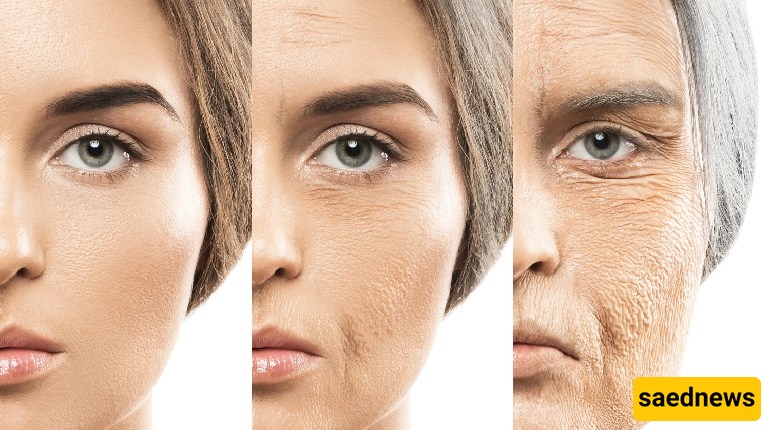
According to SAEDNEWS, you may also have experienced suddenly feeling one day that your face looks more tired, your energy is lower, or your body no longer functions the way it used to. Now scientists say this feeling may not be just a mental illusion.
According to ScienceAlert, a new study shows that the human body suddenly enters a stage of “aging acceleration” twice during life; an event that may explain the sudden rise of certain diseases in middle age and old age.
This study, published in 2024 in the scientific journal Nature Aging, examined molecular changes related to aging and showed that human aging does not progress in a linear and smooth manner. According to the researchers, there are two critical periods in human life during which the body undergoes major biological changes: the first in the mid-40s and the second in the early 60s.
Michael Snyder, a genetics specialist at Stanford University and one of the authors of the study, said: “We do not just change gradually; in some periods, very dramatic changes occur. The 40s and early 60s are two major turning points in the body.”
To conduct this research, scientists examined the biological status of 108 adults over several years. Participants provided different biological samples from their bodies every few months, and in total more than 135,000 biological features, including RNA, proteins, fats, and bacteria found in the gut, skin, mouth, and nose, were analyzed.
The volume of collected data was enormous; more than 246 billion data points, allowing researchers to examine hidden patterns of bodily changes with high precision.
The results showed that about 81 percent of the studied molecules underwent sudden changes in one or both of the mentioned age periods. However, the type of these changes differed in each stage.
Around the age of 44, the biggest changes were related to the metabolism of fats, caffeine, and alcohol. Signs of increased risk of cardiovascular disease and problems in skin and muscle health were also observed.
In the early 60s, the changes were mostly related to carbohydrate metabolism, immune system function, kidney health, and heart disease.
One of the interesting findings of this study was that scientists initially thought the changes in the 40s were mainly related to menopause in women, but the data showed that men also experienced similar transformations at almost the same age. According to researchers, this indicates that more important factors are behind these biological shifts.
Of course, scientists emphasize that this study also had limitations. The examined samples only included people aged 25 to 70, and the number of participants was not very large. Therefore, broader studies will be necessary for a more accurate understanding of the aging process.
Nevertheless, these findings may change scientists’ view of aging; a perspective that could eventually lead to the design of new methods for preventing age-related diseases and even slowing down the aging process.