Saed News: It is said that at the “Alcor” center in Arizona, more than 150 human heads are stored in cryogenic chambers—people who hoped that future medical advances could revive their frozen brains in new bodies.
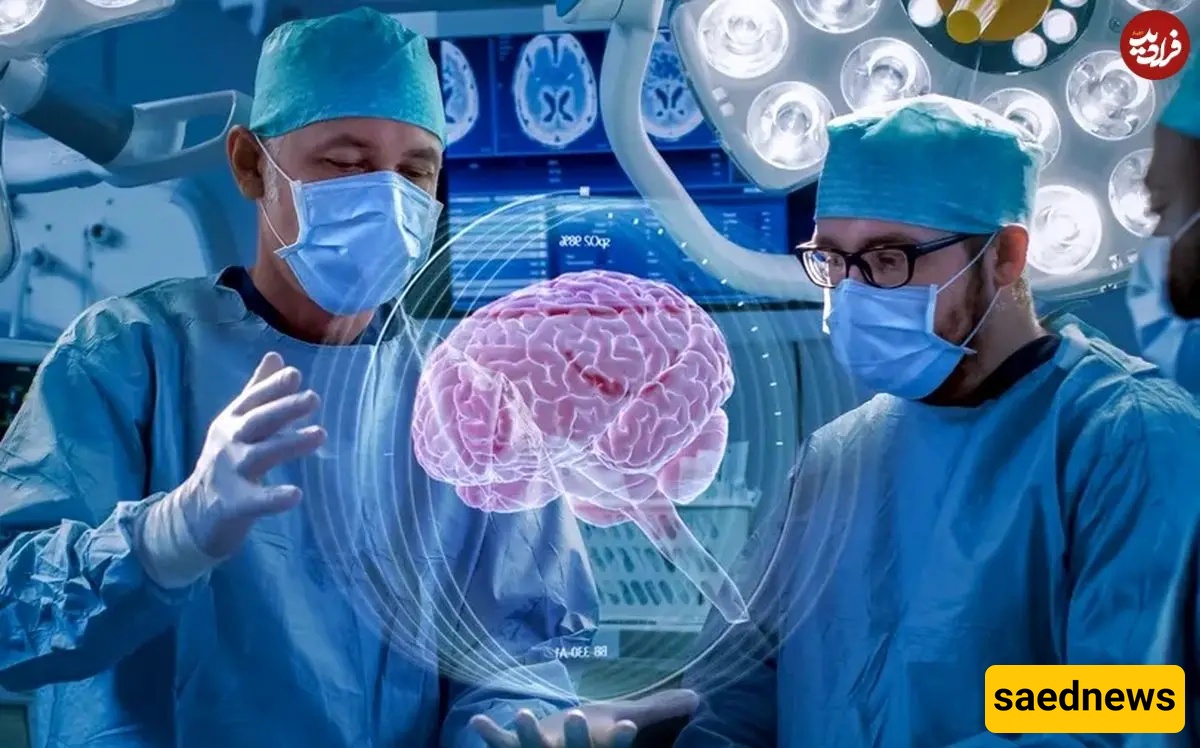
According to SAEDNEWS, But the question arises: why can’t these heads be transplanted into new bodies right now? Why is brain transplantation impossible?
Dr. Max Krukoff, a neurosurgery professor at the Wisconsin College of Medicine, believes it is better to call such a procedure a “body transplant” rather than a brain transplant. He says that unlike someone receiving a new heart or liver, transferring a brain into another body would essentially mean creating a “completely new human,” because human identity, consciousness, and personality reside in the brain.
But beyond terminology, he explains that this procedure is currently impossible because surgeons still cannot re-establish the connection of neural signals in the central nervous system, which includes the brain and spinal cord.
Peripheral nerves, meaning those spread throughout the body outside the brain and spinal cord, have some ability to regenerate. That is why if part of them is transplanted, they may eventually reconnect with surrounding nerves over time.
However, the situation is completely different for the brain and spinal cord. There is very little evidence that the adult human central nervous system can produce new neurons, and if it does, it is extremely limited.
Neurons can form new connections throughout life; this process is the basis of learning and memory. But scientists still do not understand these connections well enough to use them for brain transplantation.
Krukoff says that even transplanting part of the brain, such as the cerebellum, is currently impossible. The cerebellum contains millions of specialized neurons called Purkinje cells, each making thousands of connections with other neurons.
He explains: “The number of these connections is overwhelmingly large and far beyond our current capabilities.” In theory, the simplest form of brain transplantation would be connecting the brain and body through the spinal cord, because neural connections in the spinal cord are simpler than in the brain. Surgeons can connect skin, muscles, blood vessels, and neck bones, and even align spinal nerves, but there is still no way to make these cells form real functional connections.
Since the early 20th century, with advances in vascular suturing techniques, scientists began experiments on head transplantation in animals. Most dogs and monkeys used in these experiments survived only a few days. Researchers could not maintain stable blood circulation or control immune rejection.
In 1970, Dr. Robert J. White transplanted monkey heads onto other monkeys’ bodies. After surgery, the animals could chew and swallow, and brain tests showed their brains were still conscious, but none survived more than nine days.
Years later, Italian surgeon Sergio Canavero proposed his plan for the first human head transplant in 2013. The idea faced strong criticism from scientists and medical ethicists. In 2017, he claimed to have performed the first human head transplant on a cadaver, but many experts described the claim as a form of “scientific deception.”
Critics emphasized that beyond severe immune rejection risks, the main problem remains the inability to reconnect the brain to the nervous system of a new body.
Although full brain transplantation is impossible, in the future it may be possible to replace damaged brain tissue using stem cells or lab-grown tissues.
Scientists are currently working on stem cells that can turn into neurons. These cells may be better able to integrate into the brain’s neural network and establish connections.
Ideally, these cells should be taken from the patient’s own body to reduce immune reactions, but some researchers use standard cell lines, meaning neurons derived from one person’s body may one day be introduced into another person’s brain.
At present, stem-cell-based treatments for diseases such as Parkinson’s, stroke, spinal cord injury, and epilepsy are being tested in clinical trials, but none have yet been approved by the US Food and Drug Administration for general use.
Scientists are also using stem cells to create “brain organoids,” structures resembling brain tissue grown in laboratories. A 2023 study showed that human brain organoids were able to repair part of the damaged cortex of mice, but this technology is still years away from clinical application.
Researchers say the main challenge is ensuring that transplanted cells differentiate into exactly the required cell types and properly integrate into the brain’s complex neural network without causing disruption or even tumors.
In conclusion, the problem of brain transplantation is not just surgical; the main issue is that the human brain is an extraordinarily complex network of billions of neural connections that modern science still cannot fully reconstruct.