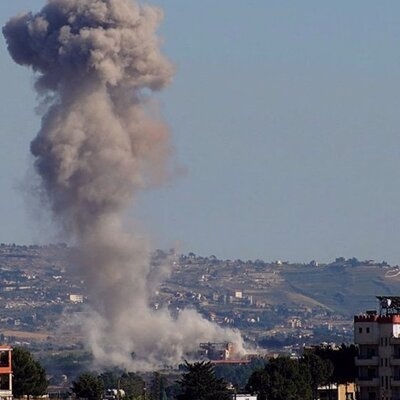
SAEDNEWS: A senior IRGC adviser claims that, for the first time, no U.S. vessels are present in the Persian Gulf, the Strait of Hormuz, the Sea of Oman, or the northern Indian Ocean.
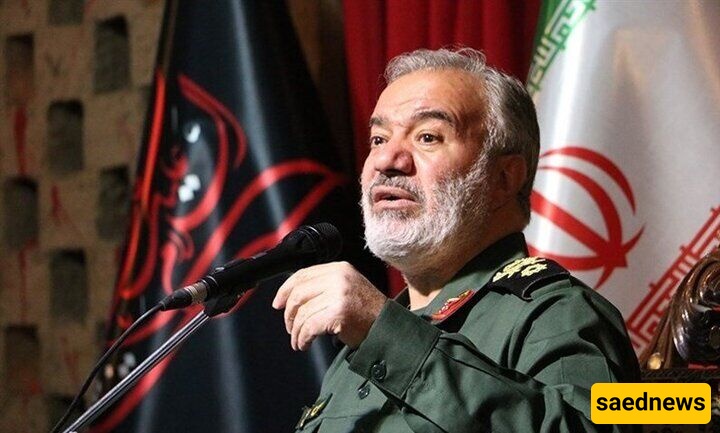
According to Saednews, Brigadier General Ali Fadavi, head of the advisory group to the commander-in-chief of Iran’s Islamic Revolutionary Guard Corps (IRGC), said in a televised interview that the Strait of Hormuz has remained firmly under Iranian control in recent months.
Fadavi said the United States has maintained a military presence in the Persian Gulf since 1853, but claimed that, for the first time, no US vessels are currently present in the Persian Gulf, the Strait of Hormuz, the Sea of Oman, or the northern Indian Ocean.
“The Americans have fled and moved more than a thousand kilometers away from our borders,” Fadavi said, attributing the development to what he described as the authority of the Islamic Republic of Iran and the IRGC Navy rather than a voluntary US decision.
He claimed that US officials say they can transport a maximum of three to four million barrels of oil per day through the southern route of the Strait of Hormuz, outside the area officially designated by Iran. Fadavi described this volume as insignificant compared with the amount of oil that normally passes through the strategic waterway.
According to Fadavi, more than 20 million barrels of oil previously passed through the Strait of Hormuz each day through official channels, with additional volumes exported through informal routes.
The IRGC official also claimed that 46 percent of global oil exports pass through the Strait of Hormuz. He argued that the frequently cited figure of 20 percent refers instead to global oil consumption, noting that many countries consume much of their own domestic production rather than exporting it.
Fadavi said oil exports through the Strait are now facing significant disruption, with consequences for the global economy, including the United States and Europe.
He warned that any further escalation in the region would harm the United States, claiming that American warships are directly threatened by IRGC naval forces operating in the Strait of Hormuz.
According to Fadavi, the United States would have to rely on its naval vessels if it sought to further escalate tensions. “Even if they bomb a region every day, they cannot impose their demands as long as they lack a physical presence,” he said.
Fadavi further claimed that US vessels are “exposed and vulnerable” to the IRGC Navy. He said American forces have repeatedly attempted to move warships into the Strait of Hormuz but were confronted by the IRGC Navy and Aerospace Force.
“Any escalation of tensions will definitely be to their own detriment,” Fadavi said.