SAEDNEWS: Persimmon Panna Cotta: A Complete Guide to Preparation, Perfect Layering, and Common Mistakes
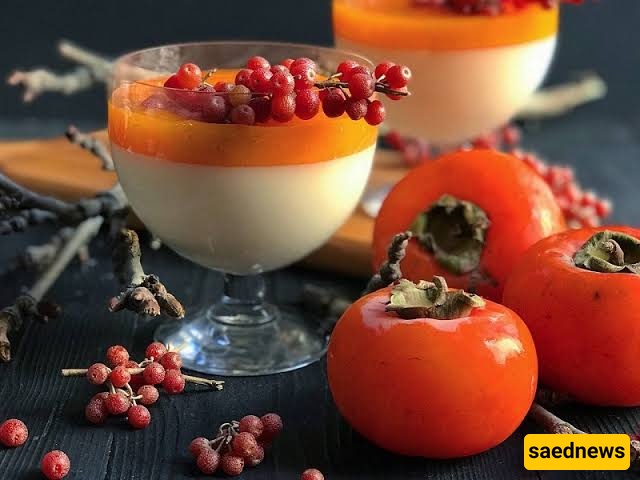
According to Saednews, Panna cotta is a traditional Italian dessert whose name means “cooked cream” in Italian. Originally from the Piedmont region of Italy, this delicate and silky dessert is made with a simple combination of cream, milk, sugar, and gelatin. Once chilled, it develops a soft, delicate, gently wobbly texture similar to pudding.
Its simplicity has inspired chefs around the world to experiment with local ingredients and create countless variations.
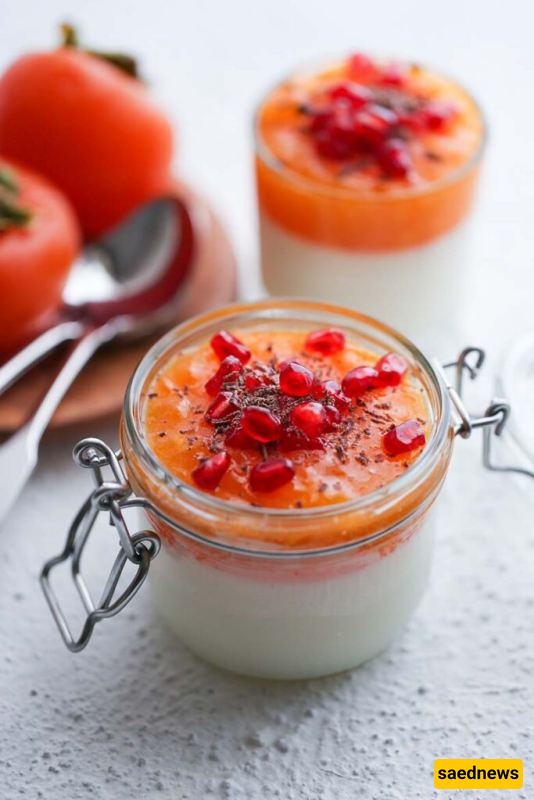
One of the most beautiful and delicious variations is Persimmon Panna Cotta. Persimmon is a seasonal autumn and winter fruit, known for its warm orange color and naturally sweet, honey-like flavor. It pairs wonderfully with cream and vanilla.
The result is an elegant dessert with an attractive appearance and a beautifully balanced flavor—not overly sweet or too heavy.
In this article, we'll explore how to make Persimmon Panna Cotta, with step-by-step instructions, essential technical tips, professional layering techniques, solutions to common problems, and creative serving ideas so you can prepare a bakery-quality dessert at home.
Heavy cream: 400 ml
Milk: 150 ml
Fine granulated sugar: 80–90 g (depending on the sweetness of the persimmons)
Gelatin sheets: 6 sheets (approximately 12 g), or 14 g powdered gelatin
Fully ripe persimmon purée: 250 g (approximately 3 medium persimmons)
Vanilla extract: 1 teaspoon
Lemon juice: 1 teaspoon
For decoration: Fresh persimmon slices, chopped pistachios, a little cinnamon, or mint leaves
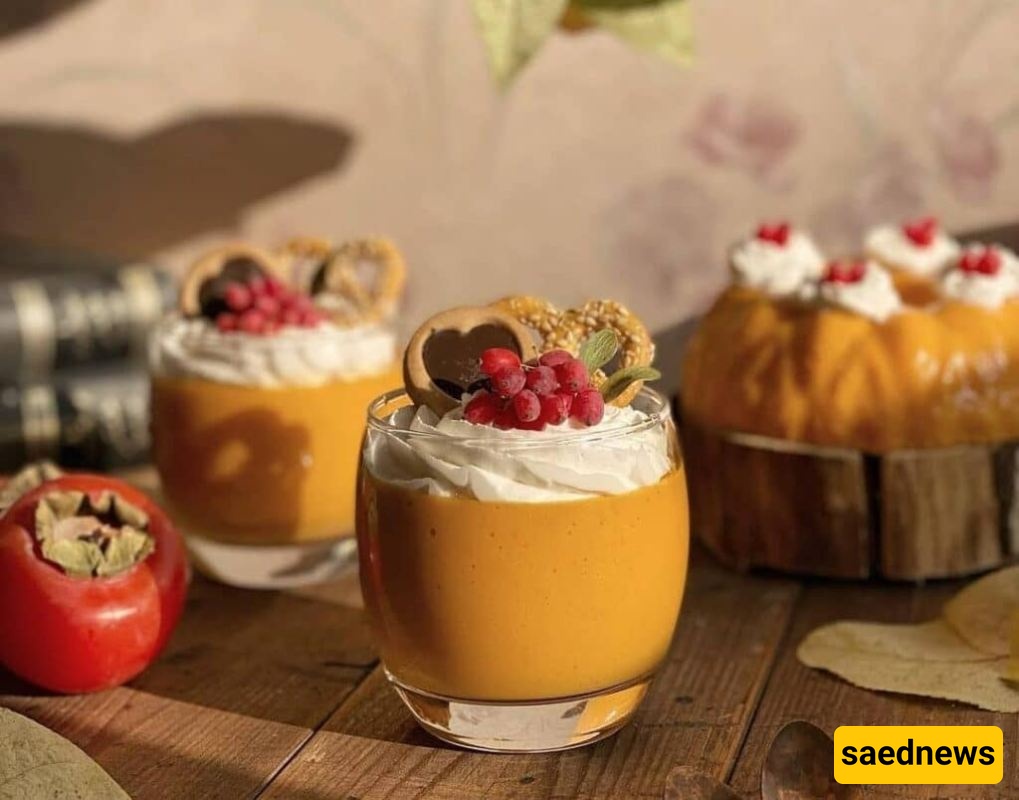
Choosing the right persimmons is the most important step in making this dessert.
For the purée, use fully ripe, soft persimmons. Look for fruits with shiny, slightly wrinkled skin and flesh that yields easily when gently pressed.
Unripe, astringent persimmons can leave an unpleasant, mouth-drying sensation and produce an uneven purée.
If you are using astringent varieties, make sure they are completely ripe before using them. To speed up the ripening process, place the persimmons in a paper bag with a few apples or bananas. The ethylene gas released by these fruits helps accelerate ripening.
Non-astringent varieties, such as Fuyu persimmons, can be used while slightly firm, although fully ripe fruit is still preferable for making purée.
Another important tip is to pass the persimmon purée through a fine-mesh sieve after blending. This removes coarse fibers and gives the finished panna cotta a perfectly smooth, velvety texture.
Step 1: Prepare the gelatin
If using gelatin sheets, place them separately in a bowl of cold water and leave them to soak for approximately 5–10 minutes until soft and jelly-like.
Remove the sheets and gently squeeze out the excess water using your hands or a clean towel.
If using powdered gelatin, sprinkle it over 4 tablespoons of cold water and let it sit for 5 minutes until it absorbs the water and blooms.
Never bloom gelatin in warm or boiling water, as this can compromise its gelling properties and prevent your dessert from setting properly.
Step 2: Prepare the persimmon purée
Wash and peel the persimmons. Place them in a blender or food processor and blend until completely smooth.
Pass the purée through a fine-mesh sieve and stir in the lemon juice.
The lemon juice helps balance the sweetness and maintain the purée's vibrant orange color.
Set aside.
Step 3: Heat the cream mixture
Pour the heavy cream, milk, and sugar into a heavy-bottomed saucepan.
Place over low heat and stir until the sugar has completely dissolved.
Do not allow the mixture to boil. It should become hot enough to release gentle steam, reaching approximately 70–80°C (158–176°F).
Boiling the cream can create an overly cooked flavor and alter its color.
Step 4: Add the gelatin and vanilla
Remove the saucepan from the heat.
Add the prepared gelatin and whisk gently until it has completely dissolved.
Stir in the vanilla extract.
If using bloomed powdered gelatin, dissolve it first in 2–3 tablespoons of the warm cream mixture before adding it back to the saucepan. This helps prevent lumps.
Step 5: Divide and flavor the mixture
Divide the panna cotta mixture into two portions.
Add the persimmon purée to one portion and gently whisk until the color is evenly distributed.
Leave the second portion plain to create a vanilla layer.
If you prefer a completely persimmon-flavored dessert, simply add all the purée to the entire cream mixture.
Step 6: Pour into serving glasses or molds
Choose glass dessert cups, ramekins, or silicone molds.
If you plan to unmold the panna cotta, lightly grease the molds with a neutral-flavored oil or rinse them with cold water.
Pour the mixture gently into the molds.
To remove air bubbles, tap the molds lightly against the countertop a few times.
Step 7: Refrigerate until set
Place the molds in the refrigerator for 3–4 hours, or until completely set.
For a two-tone dessert, pour the first layer into the glasses and refrigerate for approximately 90 minutes until it has set.
Then gently spoon the second layer over the first.
Pouring the second layer before the first has sufficiently set can cause the colors to blend and ruin the clean layered appearance.
To achieve a clean, perfectly defined line between the two layers, both mixtures should be at approximately the same temperature.
If the second layer is too warm, it may melt the layer underneath.
When pouring the second mixture, hold a spoon close to the surface of the first layer and pour gently over the back of the spoon. This reduces direct pressure on the lower layer.
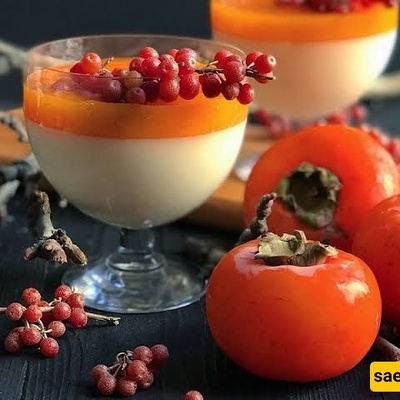
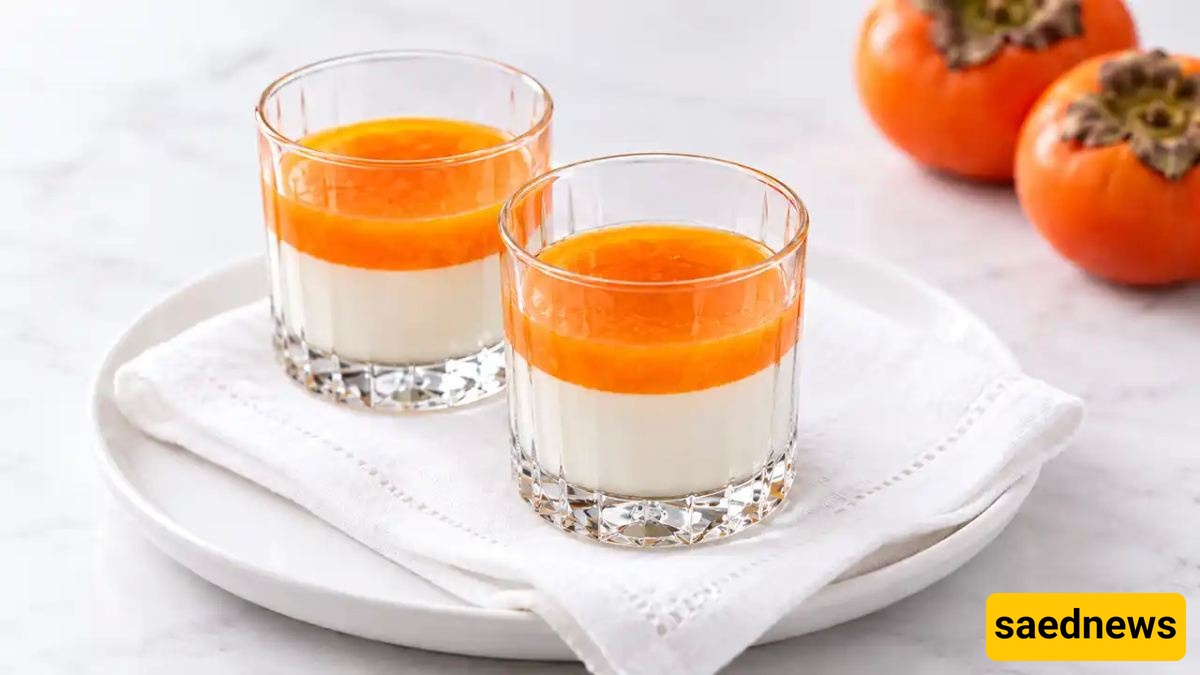
For the most attractive presentation, place the persimmon layer at the bottom and the vanilla layer on top. The vibrant orange color looks especially beautiful through clear glass dessert cups.
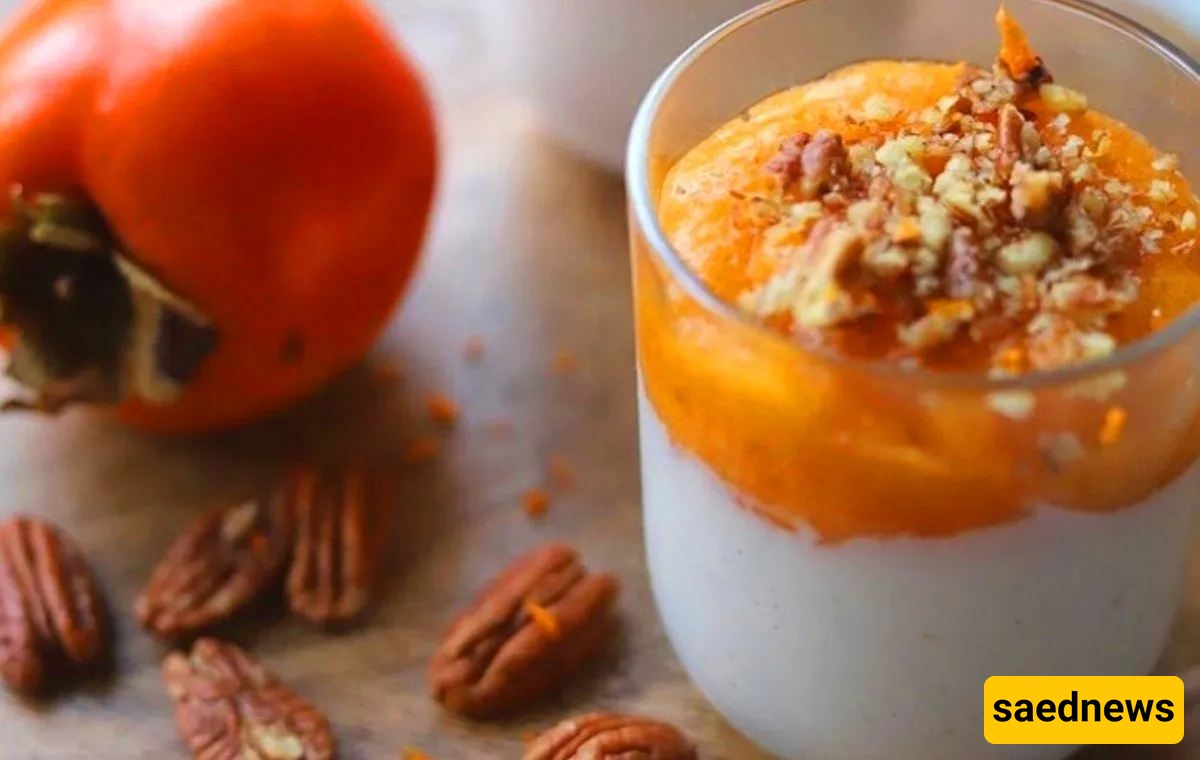
You can serve Persimmon Panna Cotta simply with a light dusting of cinnamon, but a few additional toppings can make it look even more elegant.
Here are some delicious decorating ideas:
Fresh persimmon slices or thin strips.
Chopped pistachios or almonds.
A drizzle of light caramel sauce.
Small dots of persimmon purée on the surface.
A small mint leaf for a refreshing color contrast.
If serving the dessert in glasses, there is no need to unmold it.
However, if you have prepared it in molds, briefly dip the bottom of each mold into warm water for a few seconds, then carefully invert it onto a serving plate.
1. The panna cotta does not set
The most common reasons are insufficient gelatin, expired gelatin, incomplete dissolving, or boiling the mixture.
Always bloom gelatin in cold water before adding it to the warm cream mixture. Dissolve it at approximately 70–80°C rather than in a boiling mixture.
If your persimmon purée is particularly watery, you can add one extra gelatin sheet or reduce the milk by 30 ml.
2. The texture is rubbery or too firm
This usually happens when too much gelatin is used.
For this recipe, 6 gelatin sheets or approximately 12–14 g of powdered gelatin is sufficient.
Even if your persimmons have thick, fleshy pulp and contain little water, there is no need to increase the gelatin.
3. Gelatin settles at the bottom of the mold
Gently stir the mixture once more before pouring it into the molds, then refrigerate immediately.
Also, pour the mixture slowly and from a short distance.
4. The panna cotta has a grainy or uneven texture
Always pass the persimmon purée through a fine-mesh sieve.
This is particularly important when using fibrous persimmons, as removing the coarse fibers significantly improves the final texture.
5. The dessert tastes bitter or astringent
This usually means that the persimmons were unripe or only partially ripe.
Only fully soft and ripe persimmons should be used for the purée.
Adding one teaspoon of lemon juice can help balance the flavor, but avoid using too much, as excessive acidity may interfere with gelatin setting.
6. The layers blend together
The first layer should remain in the refrigerator for at least 90 minutes, preferably 2 hours, until its surface has fully set.
The second mixture should not be hot. It should be close to refrigerator temperature or, at most, slightly lukewarm.
7. Bubbles or foam appear on the surface
After preparing the mixture, remove any foam from the surface using a spoon or skimmer.
Gently tap the molds against the countertop several times to help air bubbles rise and disappear.
8. The dessert releases water after a few hours
Sudden temperature changes, excessive acidity, or insufficient gelatin can cause liquid separation.
Store the panna cotta in covered containers in a part of the refrigerator where the temperature remains stable.
Avoid leaving the dessert at room temperature for extended periods.
Persimmon Panna Cotta is an elegant yet surprisingly simple dessert that brings together the creamy richness of traditional Italian panna cotta and the naturally sweet, honey-like flavor of seasonal persimmons.
With the right fruit, properly prepared gelatin, and careful layering, you can create a beautiful restaurant-style dessert at home.
Whether served in individual glasses for a dinner party or unmolded onto dessert plates for a special occasion, this creamy orange dessert is a wonderful way to celebrate the flavors of autumn and winter.