SAEDNEWS: Alternative Routes to Chalus and Haraz Roads During Holiday Travel to Avoid Traffic and Ensure a Faster, Safer Journey
According to Saednews, As holidays approach, northern Iran’s roads become some of the busiest travel routes in the country. The Chalus and Haraz roads are usually the first choices for travelers from Tehran because of their convenient access and scenic landscapes. However, heavy traffic, temporary one-way traffic regulations, road accidents, and occasional closures caused by road maintenance can disrupt travel plans.
To avoid unexpected delays, it is best to decide on your destination before setting off and check traffic conditions, weather forecasts, and road restrictions in advance.
If you are planning to travel from Tehran to northern Iran during the holidays, you can consider three main alternative routes:
Alternative Route | Route | Best For |
|---|---|---|
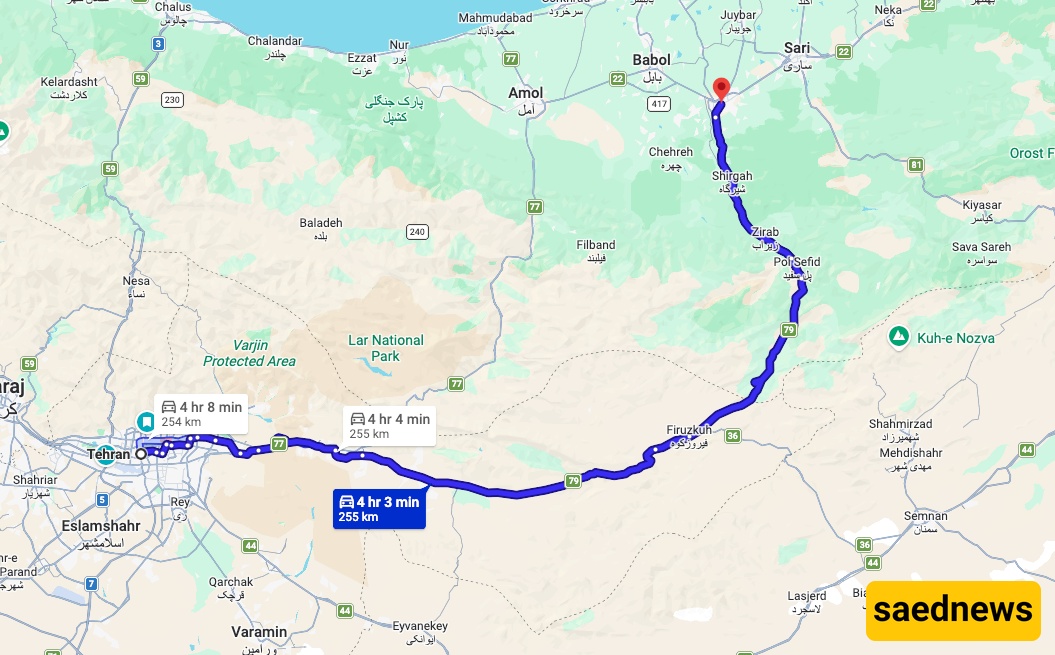
Firuzkuh Road | Tehran, Pardis, Bumehen, Firuzkuh, Pol-e Sefid, Qaem Shahr | Central and eastern Mazandaran |
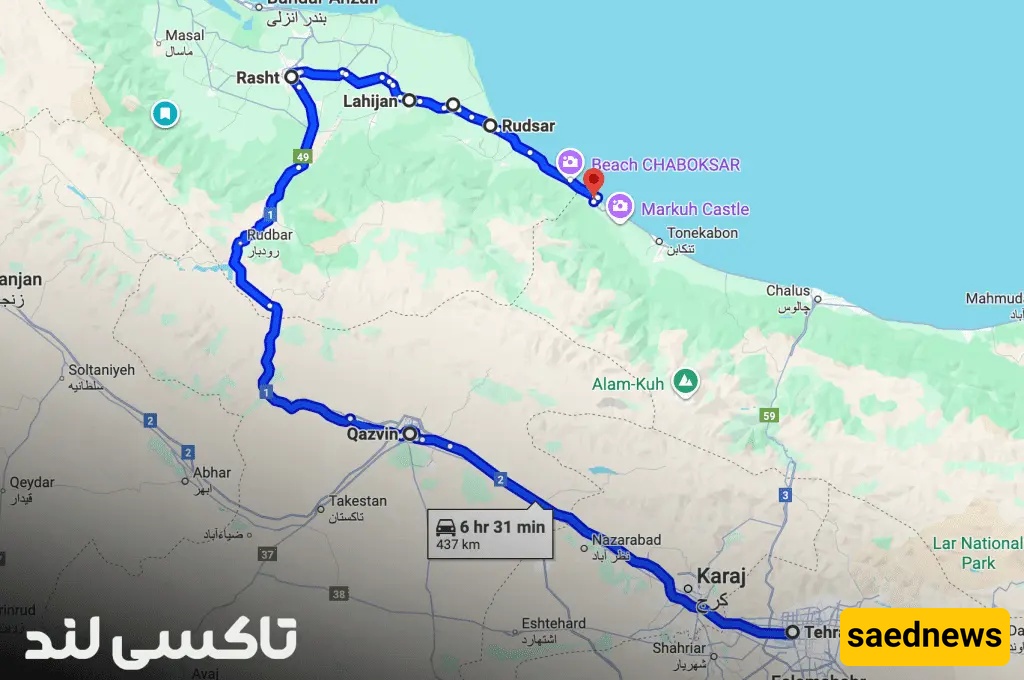
Qazvin–Rasht Freeway | Tehran, Karaj, Qazvin, Rudbar, Manjil | Rasht, Gilan, and parts of western Mazandaran |
Tehran–North Freeway | Tehran, Karaj, Shahrestanak, Alborz Tunnel, Chalus | Western Mazandaran |
If the Chalus and Haraz routes are congested, Firuzkuh Road can be another option for reaching Mazandaran, especially if your destination is in the central or eastern parts of the province.
To reach this route, you need to travel through Pardis and Bumehen. After passing Firuzkuh, Gaduk Pass, Pol-e Sefid, and Zirab, you will arrive in Qaem Shahr.
This route is suitable for traveling to cities such as Sari, Qaem Shahr, Neka, and Behshahr. From Qaem Shahr, you can also continue to Babol and Babolsar.
However, if your destination is in western Mazandaran, such as Chalus, Nowshahr, or Ramsar, continuing from Firuzkuh will add considerable distance to your journey.
Also, since it is currently the cold season, Gaduk Pass may experience snowfall, fog, and icy road conditions. Therefore, check the road situation and make sure your vehicle has the necessary winter equipment before departure.
The Qazvin–Rasht Freeway is a suitable option for avoiding the heavily traveled routes through Mazandaran.
This freeway is approximately 130 kilometers long and connects Tehran and Karaj to Qazvin, Manjil, and Rudbar, eventually reaching Rasht. From Rasht, you can access various cities throughout Gilan Province.
Although this route is generally less congested than the Haraz and Chalus roads, traffic may still build up around Manjil, Rudbar, and the entrance to Rasht during holidays and weekends.
The Tehran–North Freeway was constructed to reduce travel time between Tehran, Chalus, and other cities in western Mazandaran.
With its long tunnels and mountainous route through the Alborz Mountains, this freeway provides a shorter journey to Chalus.
However, during busy travel periods, the freeway itself may also experience heavy traffic or temporary travel restrictions.
It is important to note that the Tehran–North Freeway should not be considered completely independent of the Chalus Road. Both routes are part of the same transportation corridor, meaning that if both are closed simultaneously, the freeway cannot serve as a suitable alternative.
Your alternative route depends largely on your final destination:
For Amol and central Mazandaran: Under normal conditions, the Haraz Road provides more direct access. However, if it is congested or closed, consider taking Firuzkuh Road and continuing through Qaem Shahr and Babol.
For Sari, Qaem Shahr, and eastern Mazandaran: Firuzkuh Road is a more practical option.
For Nowshahr, Chalus, and Tonekabon: Check the traffic conditions on both the Haraz and Firuzkuh routes, then choose the most suitable way to continue toward western Mazandaran.
For Ramsar and towns near Gilan: The Qazvin–Rasht route, followed by travel through Rudsar and Chaboksar, is also worth considering.
Before heading north, check the following points to avoid having to change your travel plans halfway through the journey.
You can use the official 141 road information website to check traffic conditions, road closures, highway cameras, and travel restrictions.
Before departure, inspect your tires, brakes, windshield wipers, and heating system.
On mountainous roads, even a minor mechanical problem or the absence of snow chains can turn your journey into a difficult experience.
Navigation apps sometimes suggest rural roads and unfamiliar side routes to help drivers avoid traffic congestion. However, not all these roads are suitable for passenger vehicles.
This is particularly important during rainy, foggy, or icy weather conditions.