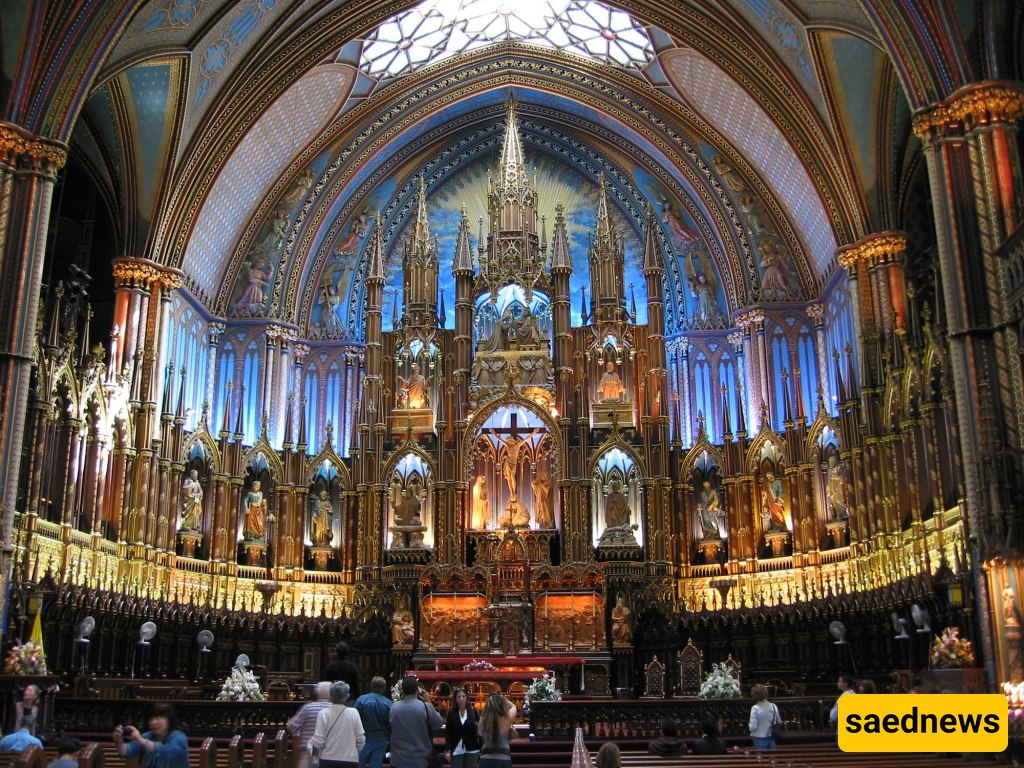
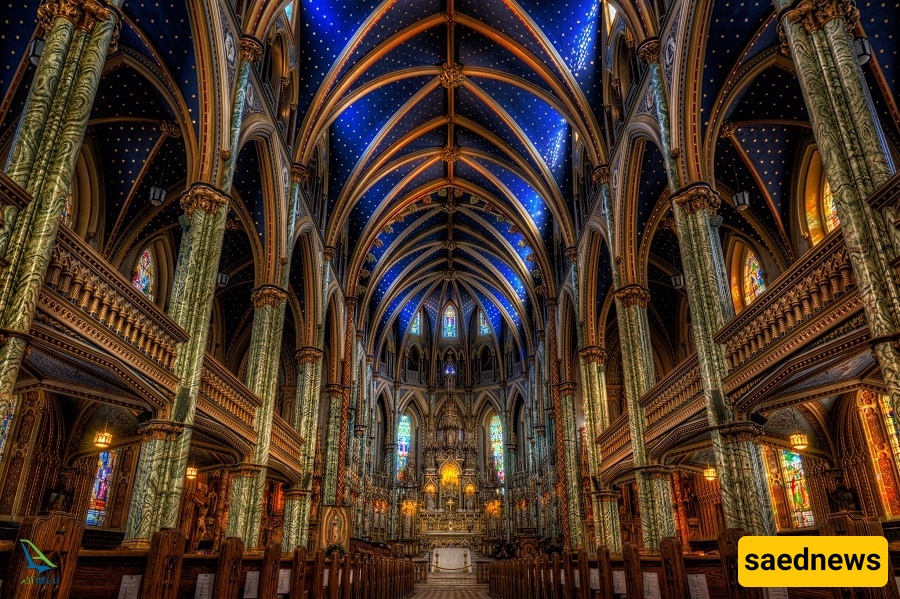
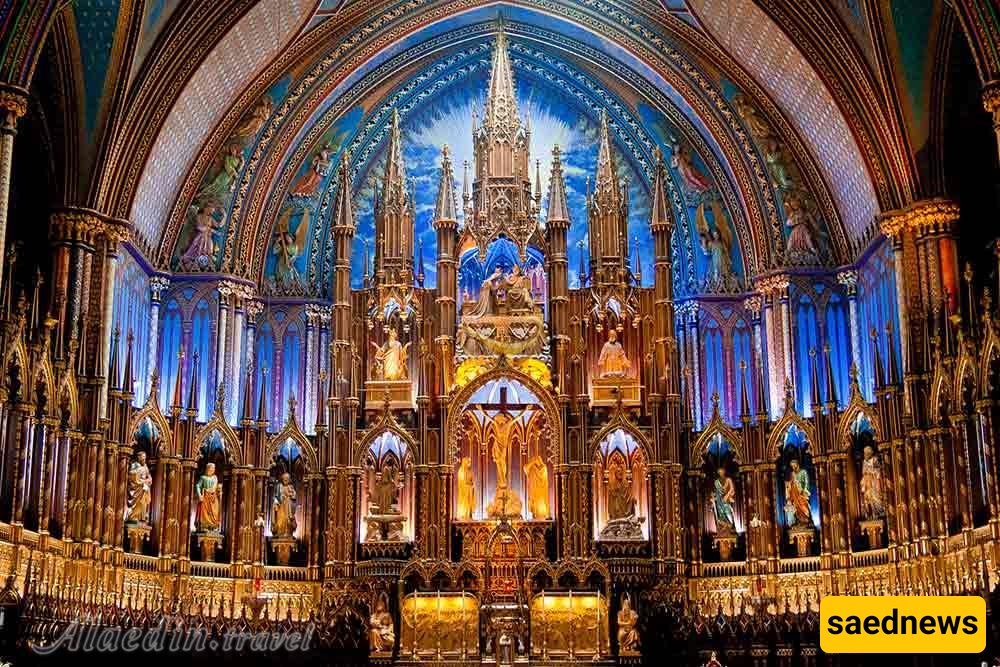
SAEDNEWS: Notre-Dame de Paris is one of the most renowned landmarks in the city of Paris, attracting visitors from around the world every year. In this article, we take a closer look at the history, architecture, and significance of this iconic cathedral.
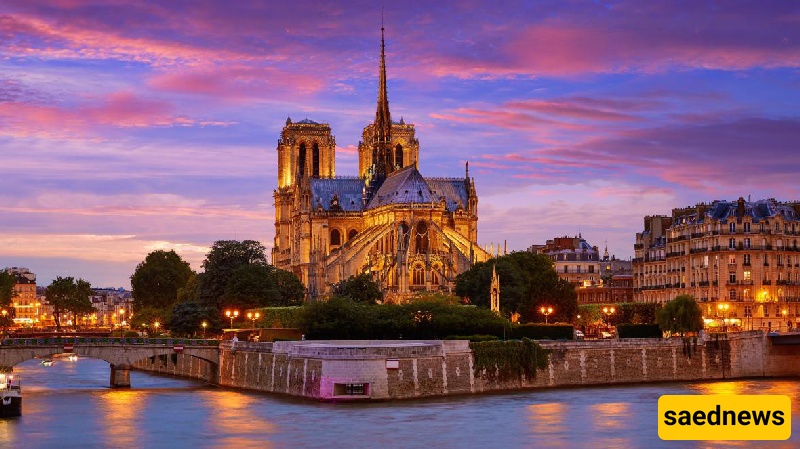
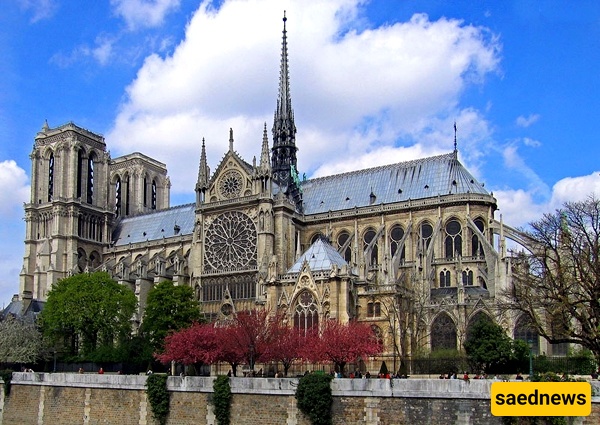
According to Saednews, Notre-Dame Cathedral of Paris (French: Cathédrale Notre-Dame de Paris, pronounced “Notre-Dame de Paris”) is one of the most famous churches in Paris. It is located on the Île de la Cité in the middle of the Seine River, in the 4th arrondissement in central Paris. Before the 2019 fire, it attracted approximately 13 million visitors annually.
The site where Notre-Dame now stands has been a sacred place for thousands of years. It was initially occupied by a pagan sanctuary, which was later replaced by a Roman temple dedicated to Jupiter. Eventually, a Christian church was established on the site. Around 850 years ago, in 1163, King Louis VII of France ordered the construction of a grand cathedral intended to rival the great churches of Europe. This marked the beginning of Notre-Dame, which became one of the world's most distinctive examples of Gothic architecture.
It is worth noting that the word “cathedral” does not simply refer to a large or old church. The term comes from the Latin word cathedra, meaning “chair” or “seat.” The chair is associated with a bishop or archbishop, who presides over the cathedral as the principal church of a diocese. Thus, a cathedral is the seat of a bishop or archbishop, and a city may have only one cathedral—or, in some cases, none.
In French, “Notre-Dame” means “Our Lady,” referring to the Virgin Mary. The cathedral is dedicated to the Virgin Mary. Since many churches in France bear the name Notre-Dame, this particular church is commonly known as Notre-Dame de Paris.
History of Notre-Dame Cathedral
Before the fourth century, a non-Christian temple stood on the site where the cathedral is located today. During the fourth century, a large Christian church replaced the earlier sanctuary. This building remained for centuries, but by the 12th century the population of Paris had grown considerably, leading to the decision to construct a much larger church.
The previous building was demolished, and construction of the present cathedral began in 1163. The project took almost two centuries to complete and was finished in 1345. For a long period, Notre-Dame was one of the largest churches in Europe, although larger churches can now be found both elsewhere in Europe and in France.
Notre-Dame is a masterpiece of Gothic architecture located in the heart of Paris, on the Île de la Cité in the Seine, close to the Latin Quarter. The Île de la Cité is a historic island that is considered the geographical and historical center of Paris. The Romans established a settlement called Lutetia here, and French kings lived on the island from the 6th to the 14th centuries.
Construction of Notre-Dame began in 1163 under King Louis VII and Bishop Maurice de Sully.
The construction process lasted more than 150 years. The cathedral was initially built in the Early Gothic style, while later additions—including parts of the western façade and nave—reflected the development of High Gothic architecture.
Hundreds of large and small sculptures were carved from stone and wood to decorate both the interior and exterior. Visitors are immediately struck by the elaborate façade, numerous sculptures, pointed arches, and imposing columns.
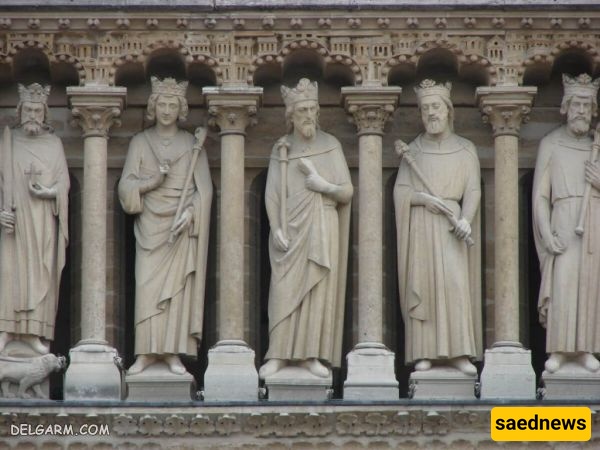
The cathedral's famous Gallery of Kings originally contained 28 monumental statues representing the kings of Judah. During the French Revolution, they were mistakenly believed to represent the kings of France, and their heads were removed. Many of the restored sculptures can be seen today, while some of the original heads are preserved at the Musée de Cluny.
Notre-Dame Cathedral in Numbers
Above the main entrance, at a height of approximately 20 meters, 28 stone statues—each around 3.5 meters tall—were installed. They represent kings who ruled Israel before the time of Jesus.
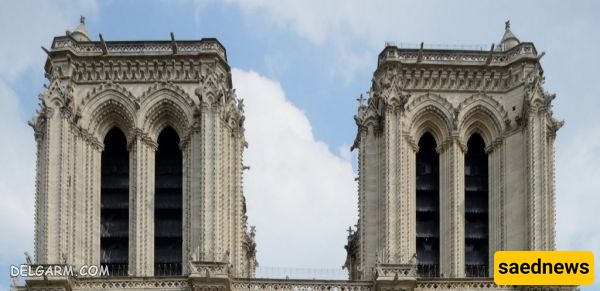
The cathedral's towers are each approximately 69 meters high. Reaching the top historically required climbing around 380 steps. The cathedral's spire reached approximately 96 meters, while the highest point beneath the roof was about 43 meters above ground level.
The building is approximately 130 meters long and 48 meters wide. Its roof is supported by 75 columns, and the cathedral contains 113 windows.
Over the centuries, numerous bells were installed in the cathedral's towers. The largest, known as Emmanuel, was cast in 1685 and weighs approximately 13 tons. Its clapper alone weighs nearly 500 kilograms. Emmanuel is traditionally rung only on exceptional occasions and a few times a year, such as November 11, marking the anniversary of the end of World War I.
The other bells that traditionally ring several times a day weigh between approximately 767 and 1,915 kilograms.
The cathedral also contains two organs. The largest has 7,374 pipes.
Notre-Dame in Literature
Victor Hugo made Notre-Dame the center of his 1831 novel The Hunchback of Notre-Dame, which was later adapted into several famous films and helped renew public interest in the cathedral.
In Hugo's novel, the cathedral's twin towers are associated with Quasimodo, the famous hunchback who lives there.
The 2019 Notre-Dame Fire
Notre-Dame Cathedral, described by the French president as the “heart of Paris,” is one of France's most famous monuments and had attracted millions of visitors each year.
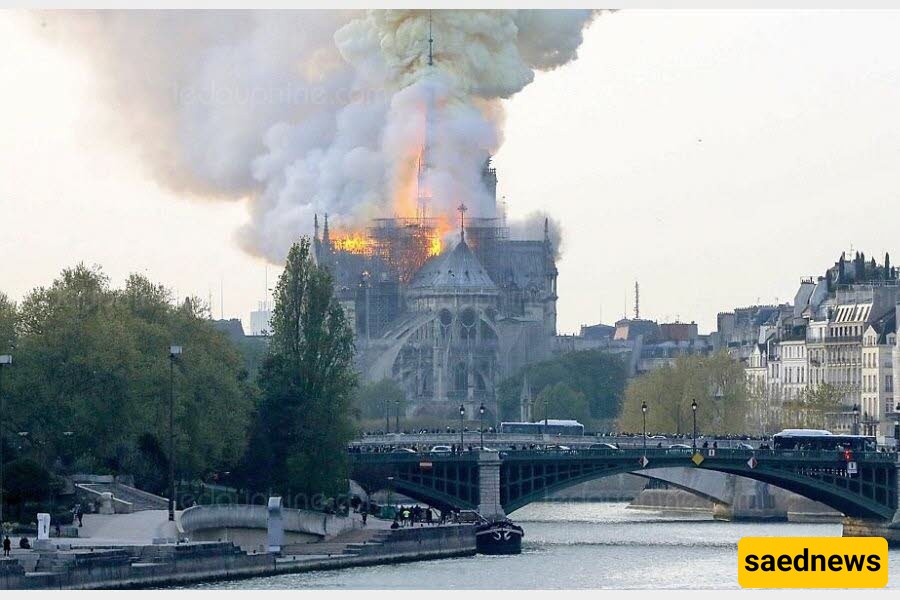
On April 15, 2019, the cathedral suffered a devastating fire. Early reports indicated that the spire and a large section of the roof had collapsed. The exact cause was initially unclear, although the fire was suspected to have been connected to restoration work taking place at the cathedral. No deaths were reported in the initial incident.
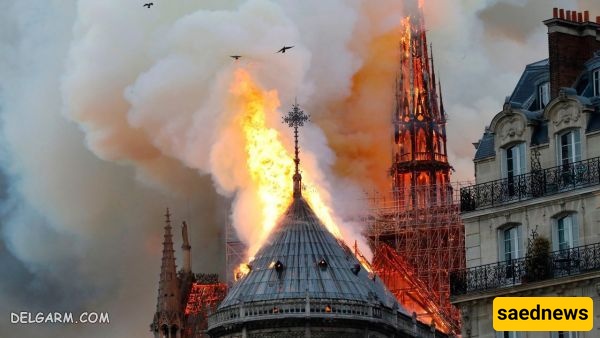
The spire and roof collapsed, causing severe damage to parts of the cathedral's interior and its historic decorations.
Large sections of the building that were destroyed or severely damaged by the fire deeply affected many French people and visitors who had previously experienced the cathedral. Paris is home to many famous landmarks, but two of its most recognizable are the Eiffel Tower, which is roughly 150 years old, and Notre-Dame Cathedral, whose history stretches back nearly nine centuries.
Throughout its long history, Notre-Dame witnessed major changes in Paris. It had suffered damage during the French Revolution but survived both World War I and World War II before the devastating 2019 fire.
The Western Façade of Notre-Dame
In European churches, the traditional layout is generally oriented from west to east. The principal entrance is located on the western side, while the altar and main worship area face east, traditionally toward Jerusalem. As a result, western façades often contain some of the most elaborate decoration.
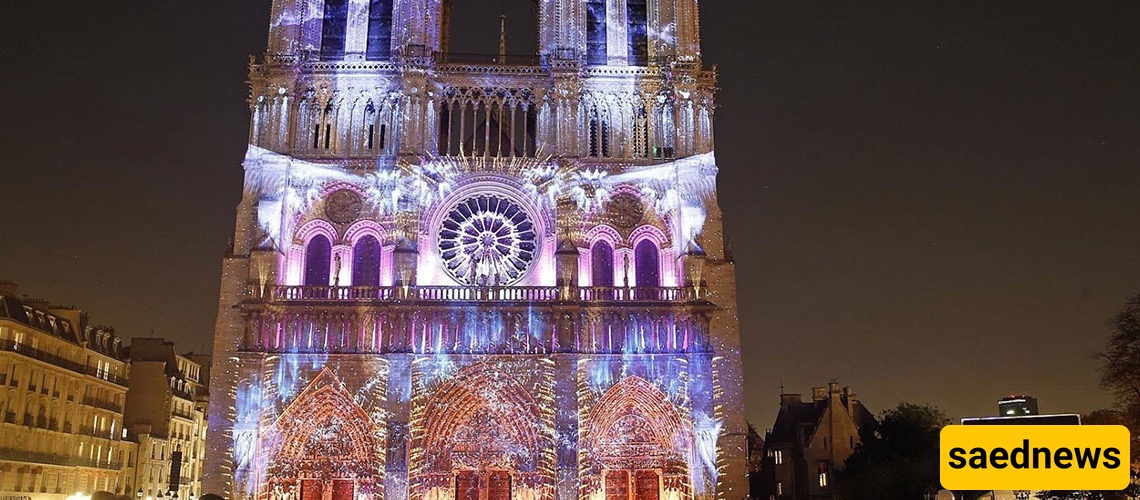
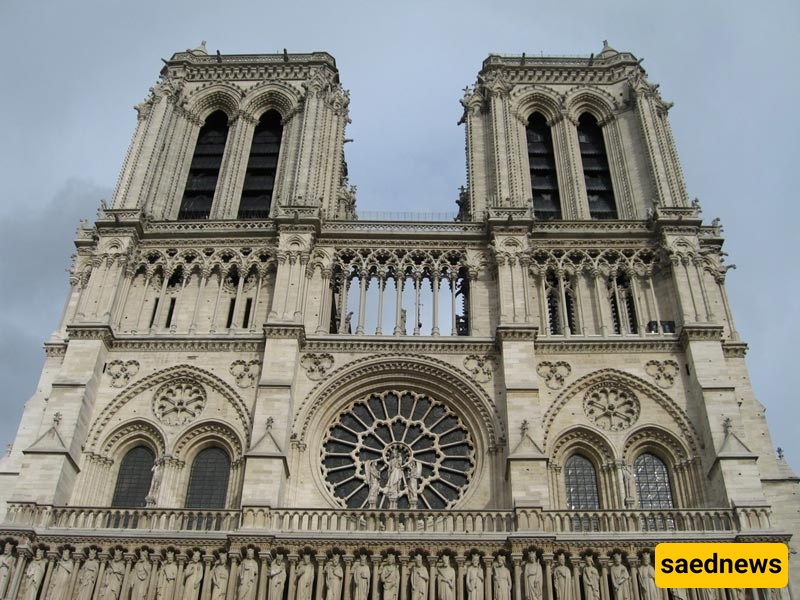
The western façade of Notre-Dame is one of the most richly decorated and visually impressive examples of Gothic church architecture. It can be divided into five main levels, from top to bottom.
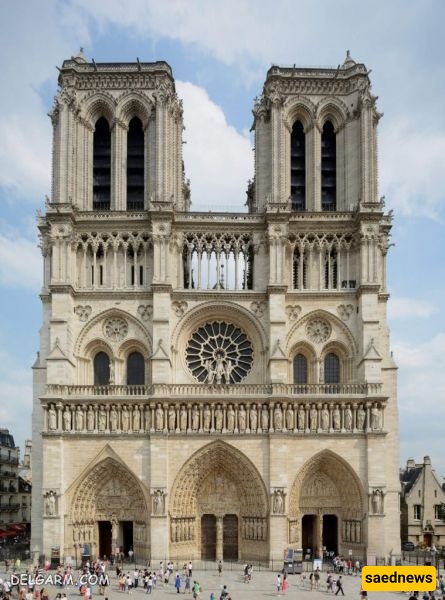
The first level includes the cathedral's two bell towers: the northern tower on the left and the southern tower on the right. Below the towers is the Gallery of Chimeras, which connects them.
Historically, visitors could climb to the terrace and enjoy views across Paris.
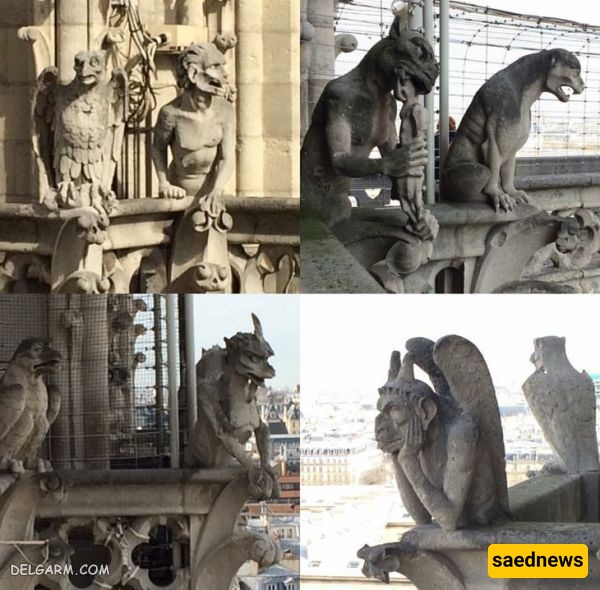
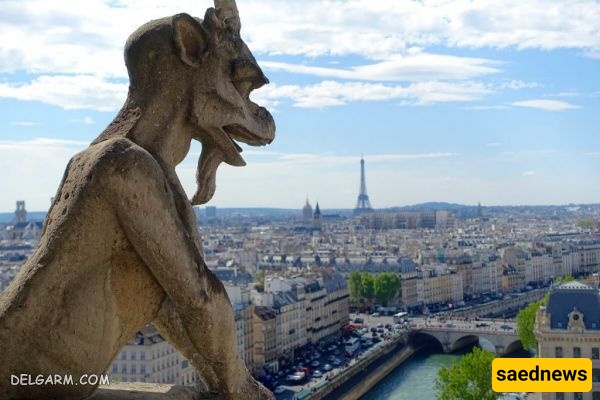
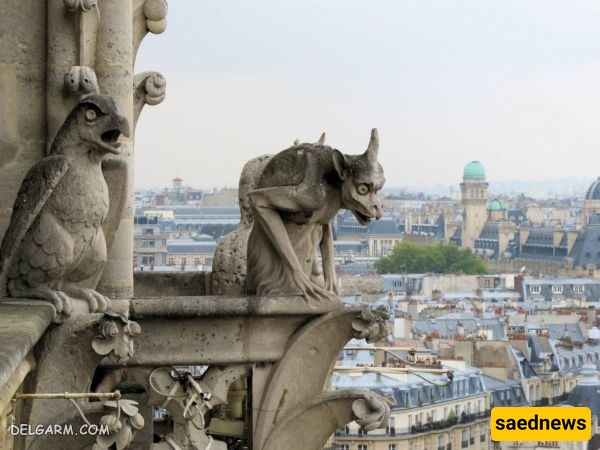
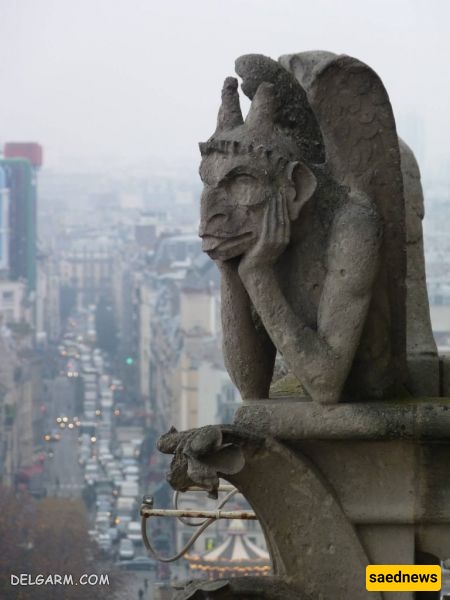
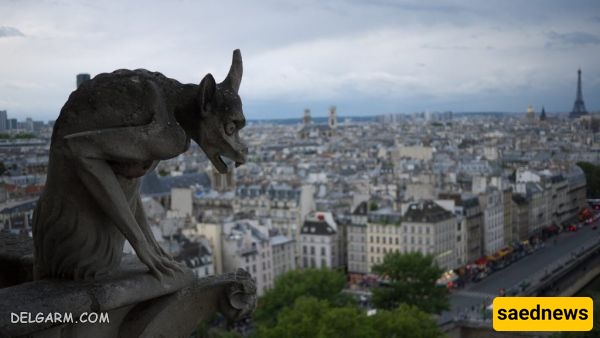
Chimeras (chimères) are fantastical sculptures representing strange creatures, often combining features of different animals. They were primarily decorative.
One of the most famous is La Stryge, sometimes called the “Screeching Owl” or “Strix.” It has a human-like body, horns, wings, and a distinctive pose with its chin resting on its hands and its tongue protruding. From its position above the cathedral, the creature appears to watch over the city.
Another group of sculptures is known as gargoyles (gargouilles). These figures are generally grotesque or fantastical creatures incorporated into the drainage system of the building. Besides their decorative role, they were traditionally associated with the protection of the church from evil.
Many of the famous chimeras were added during the 19th-century restoration and were not part of the original medieval cathedral.
Second Level
The second level consists of a series of parallel vertical columns and decorative architectural elements.
Third Level: The Rose Window
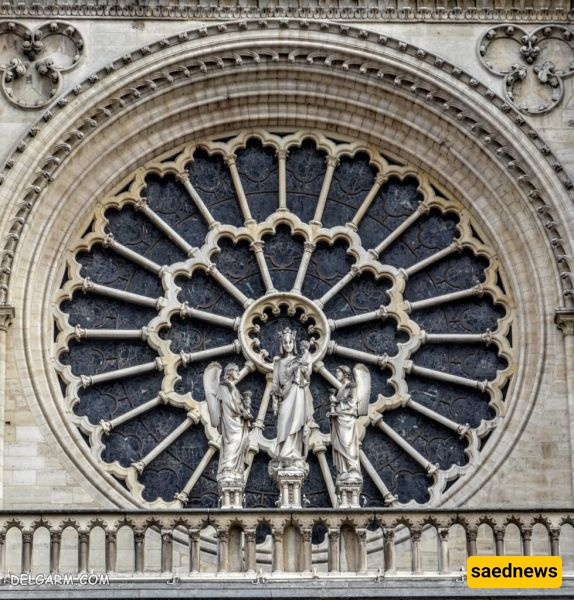
At the center of the third level is the great rose window, which dates back to the 13th century and has survived for approximately 800 years.
The surrounding decoration includes trefoil shapes, which are associated with the Christian concept of the Trinity.
In front of the rose window, on the Gallery of the Virgin, stands a statue of the Virgin Mary holding the infant Jesus, accompanied by two angels.
Statues representing Adam and Eve are positioned on either side.
Fourth Level: The Gallery of Kings
This level is known as the Gallery of Kings. It contains 28 statues representing the kings of Judah and ancestors of Jesus, including figures such as Jacob and Solomon.
During the French Revolution, the statues were mistakenly believed to represent French kings. As a result, their heads were removed.
The sculptures were reconstructed during the mid-19th century, and some of the original heads that were recovered are now preserved in museums.
Fifth Level: The Three Portals
The lowest level of the western façade contains the three monumental entrance portals, which are among the most heavily sculpted parts of the cathedral.
From right to left, they are:
The Portal of Saint Anne
The Portal of the Last Judgment
The Portal of the Virgin
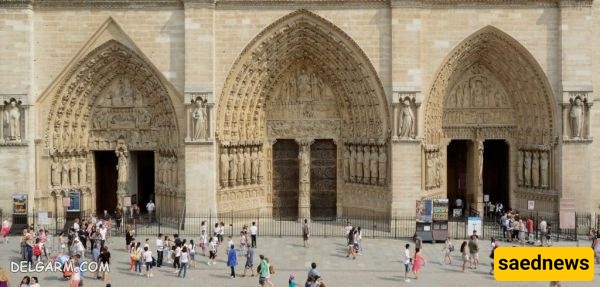
The Last Judgment Portal
At the center of the portal, on the column between the two doors, is a statue of Christ as a teacher, holding a book in one hand and preaching with the other.
Above the side columns are two smaller doors, one closed and one open, symbolizing the gates of Hell and Heaven.
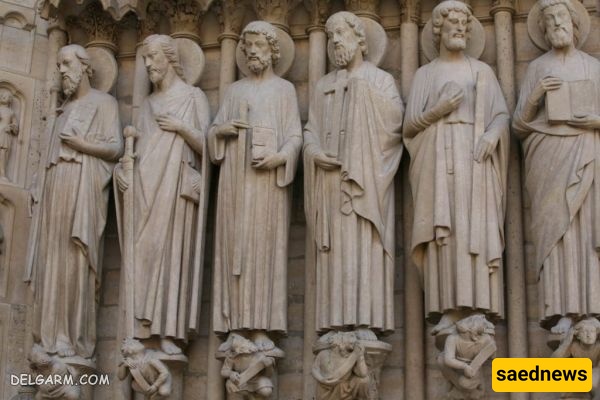
On either side of the portal are statues representing the twelve Apostles.
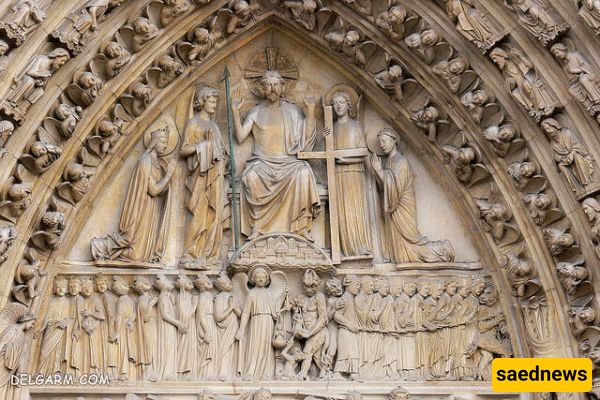
Above the entrance is a scene depicting the resurrection of the dead. The deceased rise from their graves as angels sound their trumpets.
In the level above, the Archangel Michael weighs the souls of the resurrected. The blessed are guided toward Heaven, while the condemned are chained and led toward Hell.
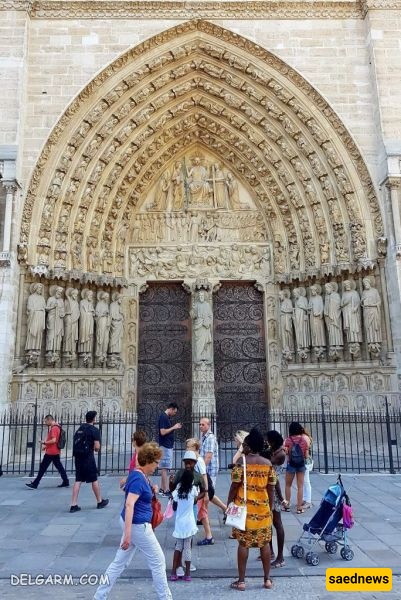
Above this scene, Christ sits on the throne of judgment, with the wounds of the Crucifixion visible on his hands and feet. Two angels beside him carry symbols of the Passion, including the Cross, the nails, and the spear.
The Virgin Mary and Saint John appear beside the angels, praying for those rising from their graves.
Within the pointed arch above the scene are numerous sculptures of saints, angels, religious figures, prophets, martyrs, and virtuous women, depicted as witnesses to the divine judgment.
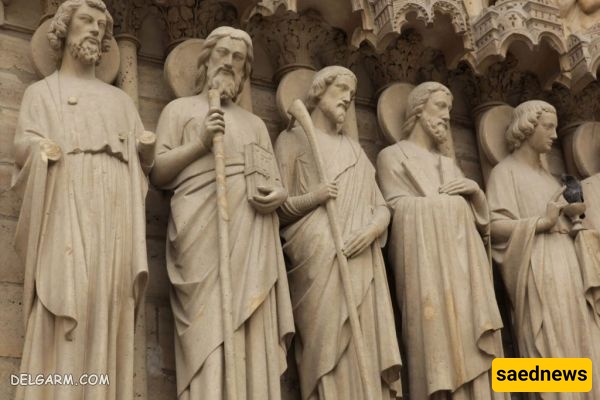
The Portal of the Virgin
At the center of the Portal of the Virgin is a statue of the Virgin Mary holding the infant Jesus.
Below the statue is a relief depicting the Fall of Adam and Eve.
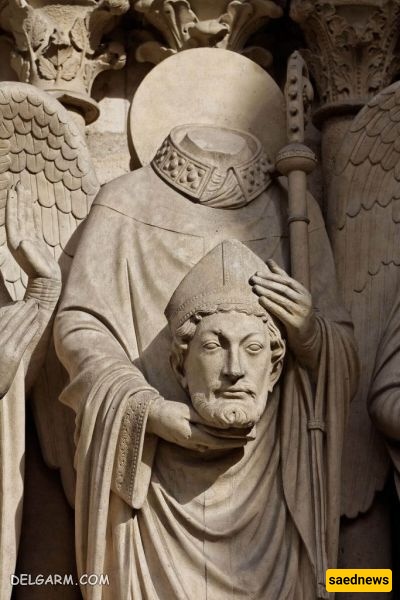
On the right are four statues associated with John the Baptist, two saints, and Pope Saint Sylvester. On the left are statues representing Emperor Constantine, two angels, and Saint Denis, who is depicted holding his severed head.
Saint Denis was among the early Christian missionaries associated with Paris. According to tradition, he was beheaded while preaching Christianity and then picked up his own head and continued walking. The story became part of the religious tradition surrounding him.
Above the entrance are statues of three prophets and three kings from the Old Testament, depicted as announcing the coming of Christ.
Higher up, a sculptural group depicts Christ and the twelve Apostles above the lifeless body of the Virgin Mary, who is shown being taken into Heaven by two angels.
The upper section depicts the Coronation of the Virgin, with Mary being crowned as Queen of Heaven alongside Christ.
Above this scene are angels and saints witnessing the coronation.
The Portal of Saint Anne
The right-hand portal is known as the Portal of Saint Anne.
Saint Anne is traditionally regarded as the mother of the Virgin Mary.
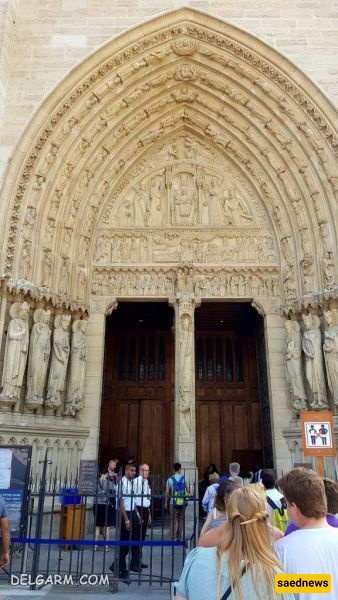
At the center is a statue of Saint Marcel, a fifth-century bishop of Paris, depicted striking a dragon with his staff.
On the right are statues associated with Saint Paul, King David, and another king. On the left are figures representing a king, a queen, Solomon, and Saint Peter.
Above them, the Virgin Mary sits at the center while the infant Jesus, holding a book representing divine law, sits on her lap. Two angels stand on either side, accompanied by figures representing the Bishop of Paris and the King of France.
The level below contains reliefs depicting scenes from the life of Jesus.
The lowest section contains scenes associated with the marriage of Mary and Joseph, as well as the marriage of Saint Anne and Mary's father.
The Western Rose Window
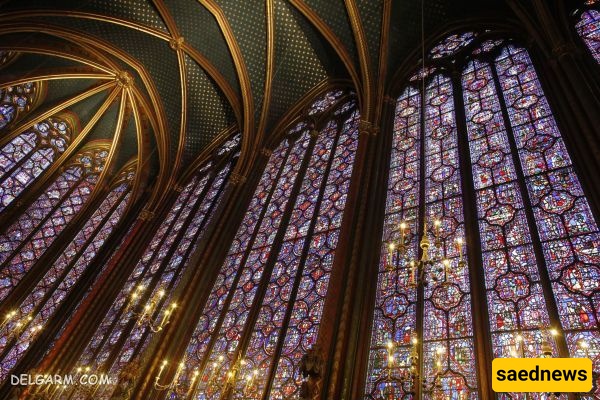
The western rose window features the Virgin Mary in a composition dominated by beautiful blue and red colors.
Visiting Notre-Dame Cathedral
Notre-Dame is located on the Île de la Cité in the Seine River in central Paris.
Historically, entry to the cathedral itself was free, while access to certain areas, such as the towers, treasury, and exhibitions, required separate arrangements or tickets.
The cathedral is conveniently located near many other major Paris attractions and can be reached by walking, Metro, or the RER.
6 Parvis Notre-Dame – Place Jean-Paul II
75004 Paris, France
RER Line B: Saint-Michel–Notre-Dame
RER Line C: Saint-Michel–Notre-Dame
Metro Line 4: Cité or Saint-Michel
Metro Lines 1 and 11: Hôtel de Ville
Metro Line 10: Maubert–Mutualité or Cluny–La Sorbonne
Metro Lines 7, 11 and 14: Châtelet
Opening hours and access arrangements can change, so visitors should check the cathedral's official website before planning a visit.
Official Notre-Dame Website
For current opening hours, visitor information, restoration updates, and the latest news, visitors can consult the official website of Notre-Dame Cathedral of Paris.
Notre-Dame Cathedral Photo Gallery
Notre-Dame de Paris has been photographed extensively, documenting its medieval architecture, western façade, towers, rose windows, sculptures, gargoyles, chimeras, interior spaces, and the damage caused by the 2019 fire.