SAEDNEWS: France has many cities, each offering numerous tourist attractions that draw travelers from around the world. Although Paris is by far the most famous city in France, other destinations have their own unique charm and appeal. Did you know that Marseille...
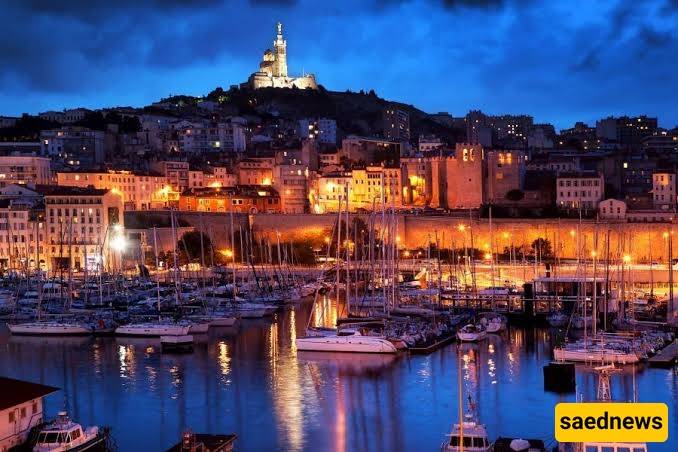
According to Saednews, Marseille is the oldest city in France, located approximately 862 kilometers southeast of Paris and 350 kilometers southeast of Lyon.
Covering an area of around 240 square kilometers, Marseille is the third-largest city in France, after Paris and Lyon.
The city was founded by the Greeks and is now divided into 16 districts, with a population of approximately one million people.
In ancient times, Marseille was often referred to by the Greeks and Romans as Massalia. It was an important center of trade and commerce in the Mediterranean.
Between 218 and 201 BC, the city allied itself with the Romans during the Second Punic War against Carthage. The Romans eventually won the war, and Marseille benefited from its alliance with Rome by gaining greater commercial and trading independence along the western Mediterranean coast.
Marseille is one of France’s and Europe’s best-known port cities and has served as an important center for maritime trade for centuries.
Today, the city’s economy still relies heavily on trade through its ports, which support around 45,000 jobs.
The Port of Marseille is one of the busiest ports in Europe, handling millions of tons of goods and cargo every year.
Marseille’s gross domestic product is estimated at around $60.3 billion. It is also one of France’s most dynamic cities, with more than 7,000 companies having been established there since 2000.
Beyond its importance as a major port, Marseille is also one of France’s popular coastal destinations. The city is home to numerous restaurants, cafés, hotels, and both public and private beaches.
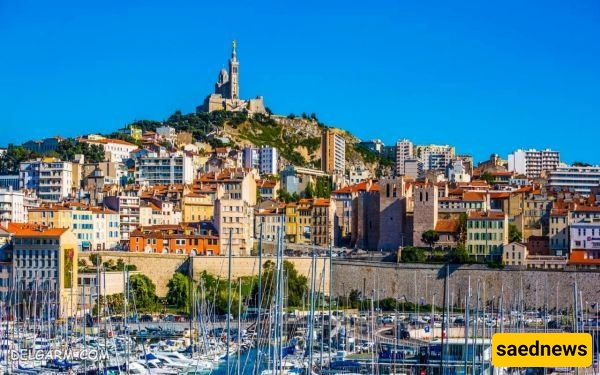
As mentioned above, Marseille is not only an important commercial city but also an attractive destination for leisure and tourism.
The port city enjoys warm and sunny weather for much of the year, making it a popular destination for beach activities and enjoying the Mediterranean coastline.
Marseille attracts visitors from across France, the United Kingdom, and many other parts of the world. Its combination of history, architecture, beaches, culture, and cuisine gives travelers plenty of reasons to visit.
The port receives around 2.4 million tourists annually, while approximately 1.7 million additional visitors travel to Marseille by other means.
The city also offers excellent facilities for conferences and business events, helping establish Marseille as an international destination for business tourism.
Old Port | Vieux-Port
Marseille itself is a major tourist attraction. Its historic neighborhoods, together with its old and modern ports, create a distinctive atmosphere that blends history with Mediterranean life.
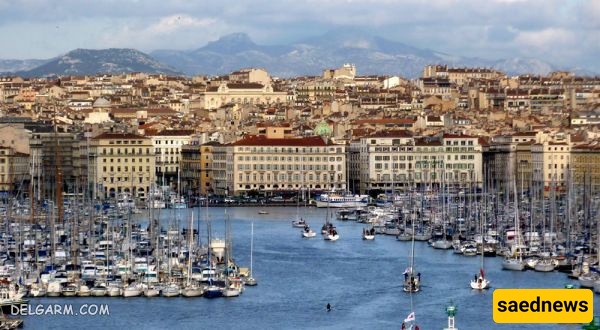
One of the city’s most fascinating areas is the Old Port, known in French as Vieux-Port. This is considered the birthplace of Marseille.
The city began developing as a Greek settlement around 600 BC in the area surrounding today’s Old Port.
Located in western Marseille near La Canebière, the Old Port is surrounded by the deep blue waters of the Mediterranean and offers a quintessentially coastal atmosphere.
Walking along the harbor allows visitors to experience the city’s Mediterranean character. The lively waterfront is particularly popular with tourists and is widely regarded as one of the best places to try Marseille’s famous fish soup, bouillabaisse.
At Quai des Belges, on the eastern side of the harbor, fresh fish is sold at the city’s traditional fish market every morning.
Once an important commercial harbor, the Old Port is now used mainly by fishing boats and recreational vessels.
It is also a departure point for ferries traveling to two popular attractions: Château d’If and Calanques National Park.
Old Town | Le Panier
Marseille is known as France’s oldest city, so it is no surprise that one of its most fascinating areas is its historic center.
The old quarter, known in French as Le Panier, sits above the Old Port and is considered the historic and cultural heart of Marseille.
Le Panier is the oldest neighborhood in the city and has been inhabited since the foundation of Marseille around 600 BC.
Built on a hillside, the neighborhood is characterized by steep, narrow streets and winding alleyways. Walking through Le Panier offers visitors an authentic glimpse into Marseille’s historic character.
Today, the neighborhood is a fascinating blend of cultures, adding to its distinctive appeal.
Visitors can find Algerian restaurants, local handicraft boutiques, and modern art galleries alongside one another.
The traditional façades, wooden shutters, and clotheslines hanging between buildings create a charming old-world atmosphere that reflects the neighborhood’s local character.
Château d’If
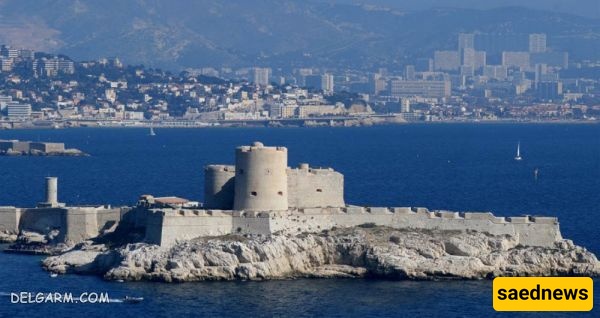
One of Marseille’s most famous historical attractions is Château d’If, a fortress renowned for both its history and its dramatic location in the middle of the sea.
Visitors can reach the fortress by passenger boat from the Old Port in a relatively short journey.
Château d’If stands on the island of If, part of the Frioul archipelago, an area known for its protected natural environment.
The surrounding area features beautiful caves, bright turquoise waters, secluded beaches, and striking rocky landscapes.
The fortress was built in the 16th century under the reign of King Francis I of France. It was later converted into a prison.
Château d’If is also famous in literature, as Alexandre Dumas featured the fortress in his celebrated novel The Count of Monte Cristo.
Marseille is a Mediterranean port city, and its location on the Mediterranean coast gives it a characteristic Mediterranean climate.
Spring and autumn are generally mild, with spring tending to be somewhat drier than autumn.
Winters in Marseille are generally not particularly cold, while even during the hottest days of summer, temperatures typically remain relatively moderate compared with many other destinations.
Rainfall can be variable and difficult to predict, but overall, Marseille enjoys a relatively mild climate.
This pleasant weather makes the city suitable for visitors throughout much of the year, allowing travelers to explore its historic sites, coastline, and neighborhoods in different seasons.
Marseille has something to offer in every season. Thanks to its mild and generally pleasant climate, there is no strict limitation on when to visit.
For travelers looking for particularly favorable conditions, April to June and September to November are often suitable periods to explore the city.
During these months, visitors can enjoy Marseille’s attractions and Mediterranean scenery while experiencing generally comfortable weather.