SAEDNEWS: Amber Fort in Jaipur, India, renowned for its magnificent Rajput-Mughal architecture, is one of the city’s most visited tourist attractions and a UNESCO World Heritage Site.
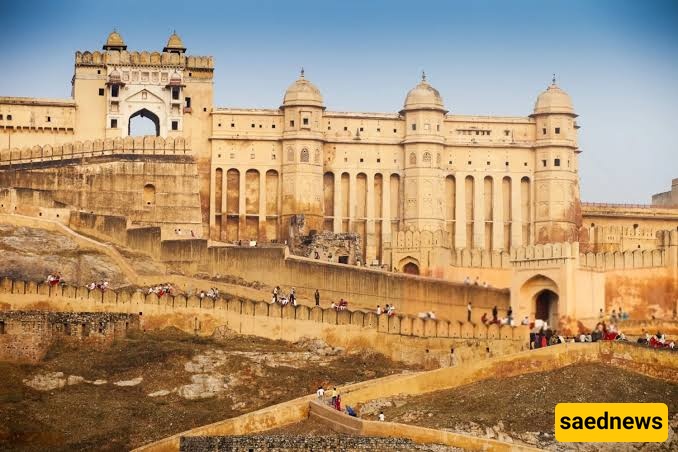
According to Saednews, In the heart of India’s colorful Rajasthan, just 11 kilometers from the Pink City of Jaipur, stands a magnificent and legendary fortress whose name is closely associated with Rajput grandeur, power, and architectural artistry. Amber Fort Jaipur, also known as Amer Fort, is one of India’s most prominent and widely visited tourist attractions. Listed as a UNESCO World Heritage Site in 2013, this vast fortress is not only a symbol of the power and wealth of Rajput rulers but also an extraordinary blend of Hindu and Mughal architectural traditions.
Originally known as “Amber,” the fort is believed to have taken its name from the goddess Amba, one of the forms of the Hindu goddess Durga. The history of the site dates back to the 10th century, although much of the fort seen today was developed during the reign of Raja Man Singh I in the 16th century. A trusted commander of the Mughal emperor Akbar, Raja Man Singh I began construction of the present fort in 1592, while later generations continued to expand and complete the complex.
Before the capital was moved to Jaipur in 1727 by Sawai Jai Singh II, Amber served as the capital of the Kachwaha Rajputs for more than six centuries. Over the centuries, the fort witnessed wars, periods of peace, court intrigues, and royal romances. Its stone walls preserve countless stories of power, ambition, and glory.
One of the most notable historical developments associated with the fort was Raja Man Singh I’s marriage to a Mughal princess, reflecting the close diplomatic and political ties that developed between the Rajputs and the Mughal Empire during that period.
Amber Fort Jaipur is an outstanding example of Rajput architecture enriched with Mughal influences. The enormous complex was constructed primarily from red sandstone and white marble and rises across four levels on a rocky hill. Each level contains its own courtyard, with a network of stairways and corridors connecting the different sections of the palace complex.
The architecture of Amber Fort combines Hindu and Mughal traditions. Arched gateways, onion-shaped domes, and delicate marble ornamentation demonstrate Mughal influence, while geometric patterns, Hindu deity motifs, and spacious courtyards reflect traditional Rajput design.
This artistic combination has made Amber Fort one of the finest surviving examples of Indian architecture from the post-medieval period.
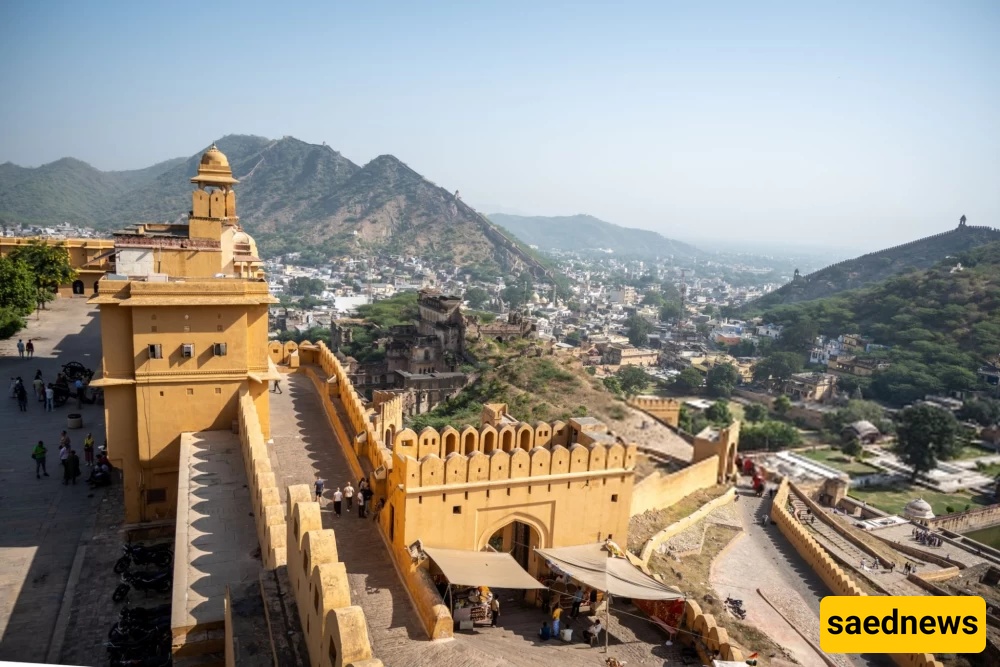
Suraj Pol, meaning “Sun Gate,” is the principal entrance to the fort. Facing east toward the rising sun, this monumental gateway features beautiful paintings and decorative details and leads visitors into the first courtyard.
Passing through Suraj Pol feels like stepping back in time into the world of Rajput royalty, power, and grandeur.
After passing through Suraj Pol, visitors arrive at the spacious Jaleb Chowk courtyard. Historically, this area was used by soldiers for gatherings and military parades. The courtyard also contains royal stables and guard rooms.
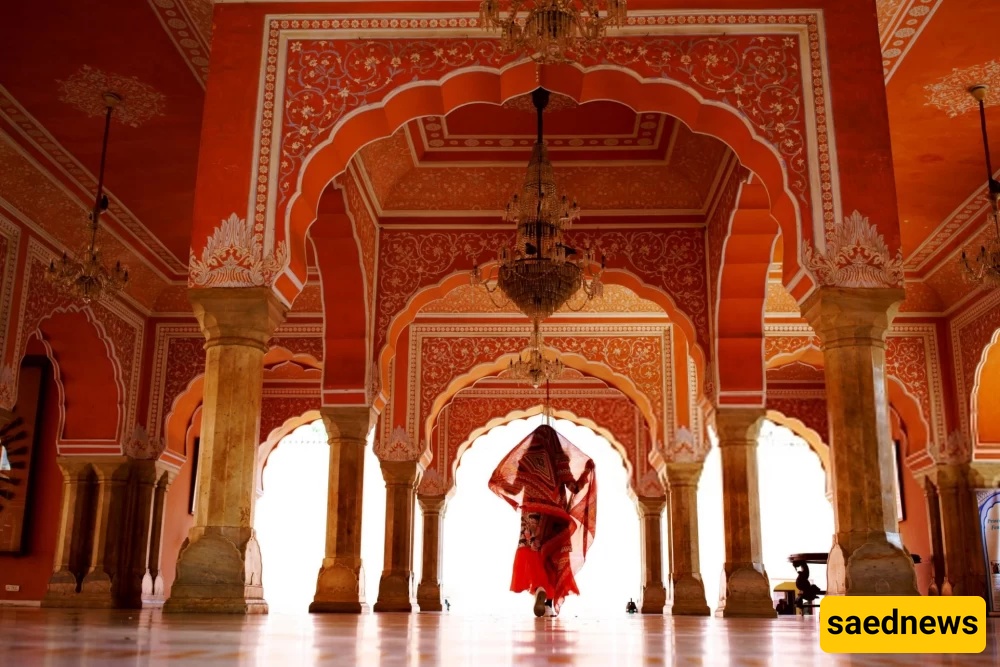
The Diwan-e-Aam, or Hall of Public Audience, was where the ruler listened to petitions and addressed matters brought forward by his subjects.
The hall features 40 elegant marble columns and an open pavilion with a flat roof. At its center was the royal throne, decorated with intricate carvings and floral motifs.
The Diwan-e-Khas, or Hall of Private Audience, provided a more intimate setting where the ruler could meet distinguished guests and foreign ambassadors.
With its impressive mirror work and marble decoration, it is considered one of the most beautiful spaces within the fort.
Without a doubt, the Sheesh Mahal, or Palace of Mirrors, is one of the most famous and spectacular sections of Amber Fort Jaipur.
This relatively small yet magnificent palace is decorated with thousands of pieces of mirrored glass and colored glasswork. The ingenious arrangement of the mirrors was designed so that even the light of a single candle could illuminate the room, creating the impression of countless sparkling stars.
According to popular legends, the palace was built for the queens, allowing them to admire their beauty by candlelight at night.
Sukh Niwas, meaning “Residence of Pleasure,” is a remarkable example of traditional passive cooling. Water channels were incorporated into the palace walls, allowing water from the surrounding gardens to flow through the structure and create a cooler and more comfortable environment.
This ingenious design demonstrates the advanced architectural knowledge of the Rajputs, particularly their understanding of climate-sensitive construction.
The beautiful Charbagh gardens are located behind the main palace and reflect the Persian-Mughal garden tradition. Water pools, fountains, and paved pathways create a peaceful setting for relaxation and contemplation.
Located near Amber Fort, Jaigarh Fort served primarily as a military stronghold and weapons storage facility. The two forts are traditionally associated with an underground passage connecting them.
Jaigarh Fort is particularly famous for Jaivana, one of the world's largest wheeled cannons. Visiting both forts in a single day provides a broader understanding of Rajasthan’s military history, royal traditions, and defensive architecture.
The ideal time to visit Amber Fort is during the winter season, from October through March. Temperatures are generally more comfortable during these months, making it easier to explore the extensive complex without the intense summer heat.
Early morning or late afternoon is particularly pleasant, helping visitors avoid both the midday heat and some of the busiest periods.
Visitors can reach Amber Fort by taxi, tourist bus, or auto-rickshaw. The fort is approximately 11 kilometers from central Jaipur.
Elephant rides have historically been associated with visits to the fort, particularly for climbing the steep approach. However, due to growing concerns about animal welfare, this option has become less widely recommended.
Entrance fees can vary depending on visitor category and ticket type. Foreign visitors generally pay more than Indian visitors, and combination tickets covering several Jaipur attractions may offer better value for travelers planning to explore multiple historical sites.
Allow at least three to four hours to explore Amber Fort properly and appreciate its courtyards, palaces, decorative details, and viewpoints.
If you plan to visit Jaigarh Fort as well, setting aside an entire day will allow you to explore both sites at a more relaxed pace.
Amber Fort is surrounded by numerous legends, romantic stories, and tales of bravery. One popular story concerns Raja Man Singh and his queen, Rani Padmini. According to local traditions, the queen used underground passages within the fort to remain hidden from enemies.
Another popular legend surrounding the Sheesh Mahal claims that on moonlit nights, the reflection of moonlight across the mirrors could transform the entire room into a shimmering silver chamber.
Whether historical fact or legend, these stories add another layer of fascination to the fort’s already remarkable atmosphere.
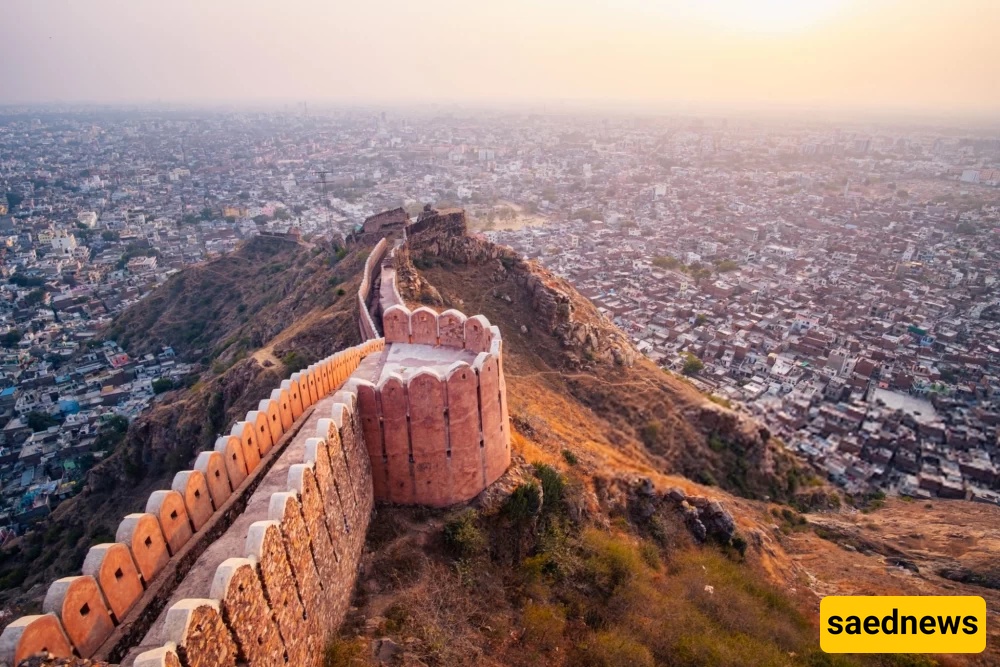
Amber Fort is far more than a historic monument. It represents an important part of Rajasthan’s cultural and historical identity and attracts visitors from around the world every year.
The fort and the surrounding region also host cultural celebrations, artistic events, and traditional performances. In 2013, Amber Fort became part of the UNESCO World Heritage listing covering the Hill Forts of Rajasthan, together with five other major forts in the state, recognizing their outstanding global cultural significance.
Wear comfortable shoes, as exploring the fort involves considerable walking.
Carry drinking water and light snacks, although shops are available in and around the complex.
Consider hiring a knowledgeable local guide to learn more about the fort’s history, architecture, and legends.
Bring a camera, as the fort offers numerous impressive architectural details and scenic views.
Respect local customs and regulations, and avoid entering restricted areas.
Plan your visit around the weather, particularly during the hotter months.
Amber Fort Jaipur is far more than a historic building. It is a journey into the history, culture, engineering, and artistic traditions of Rajasthan.
From the dazzling mirrors of Sheesh Mahal and the elegant marble halls to the peaceful Charbagh gardens and the legends surrounding the royal palace, almost every corner of the fort tells a story.
A visit to this architectural masterpiece offers more than an introduction to India’s rich history. It provides an unforgettable glimpse into the sophistication, ambition, and grandeur of Rajput civilization.
If Jaipur is on your travel itinerary, make Amber Fort one of your priorities. Rising proudly above the surrounding hills, this extraordinary fortress continues to capture the imagination of visitors with its architecture, history, legends, and royal atmosphere.
Amber Fort Jaipur remains one of Rajasthan’s most remarkable architectural treasures—a place where history comes alive among stone walls, marble halls, mirrored chambers, and panoramic views.