SAEDNEWS: Bir Tawil | The Untouched Land That Belongs to No Country
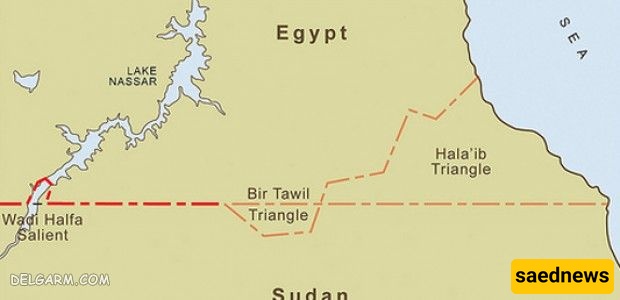
According to Saednews, Bir Tawil, also known as Bi'r Tawil, is a 2,060-square-kilometre area located along the border between Egypt and Sudan. It is not officially claimed by either country. Despite its roughly quadrilateral shape, it is sometimes referred to as the “Bir Tawil Triangle.”
Because of its proximity to the traditional homeland of the Ababda tribe in Egypt’s Aswan region, Bir Tawil was placed under Egyptian administration in 1902. At the same time, the Hala'ib Triangle, located to the north and northeast of Bir Tawil, was placed under Sudanese administration because the tribes living there were associated with Sudan.
The two territories share a small quadrilateral border area. Although Egypt continues to administer Bir Tawil, the territory is not shown as part of Egypt on official Egyptian maps.
Almost every person dreams of having something in this world named after them. Countries are no different. Governments have historically sought to expand their territories and strengthen their control over land. Yet, remarkably, there is one place on Earth that neither Egypt nor Sudan is willing to officially claim.
It may sound strange, but this unusual situation is real.
Bir Tawil is a 2,060-square-kilometre desert territory in northeastern Africa, located between Egypt and Sudan. It has no internationally recognized sovereign government claiming it as its own and is roughly quadrilateral in shape. Despite this, it is sometimes called the Bir Tawil Triangle.
Egypt continues to exercise some administrative influence over the area, but Bir Tawil is not officially represented as Egyptian territory on government maps. This makes it one of the world’s rare examples of land that is not formally claimed by a sovereign state.
So, what is the current status of Bir Tawil? Has anyone ever officially taken ownership of it?
For someone who loves nature, deserts and remote landscapes, the idea of owning such a vast, untouched piece of wilderness might sound like a dream. Imagine spending your days surrounded by nothing but desert, silence and solitude, far away from the noise of modern life.
But for most people, that remains nothing more than a fantasy.
Interestingly, public attention to Bir Tawil’s unusual status grew significantly in 2014, when its position as an unclaimed territory attracted international attention.
Throughout history, different governments have had reasons to seek control over the region, but the complicated territorial dispute between Egypt and Sudan has prevented either country from formally claiming Bir Tawil while maintaining its claim to the Hala'ib Triangle.
This unusual situation has made Bir Tawil one of the most fascinating pieces of disputed or unclaimed land on Earth—a remote desert with no permanent military presence and no conventional national government.
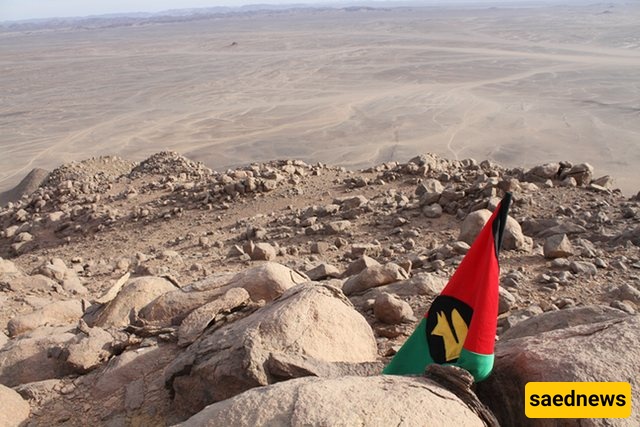
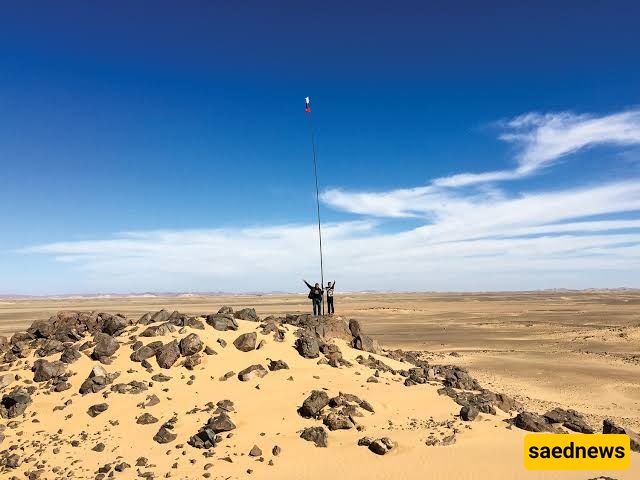
The story became even more unusual when an American man traveled to Bir Tawil and planted a flag there that he had created with his children. He then declared the territory an independent kingdom and proclaimed his daughter the queen of Bir Tawil.
In doing so, the father and daughter appeared to have achieved something extraordinary without a war, political campaign or bloodshed: the little girl was declared the queen of a territory that, at least in popular accounts, had no recognized sovereign.
The man explained that his motivation was simply to make his daughter happy. According to him, his daughter had always dreamed of becoming the queen of a country, so he wanted to make that dream come true.
Whether such a declaration has any legal validity is another matter entirely. But the story of Bir Tawil remains one of the strangest territorial tales in the modern world—and a fascinating reminder that even in an increasingly mapped and divided planet, there are still places surrounded by extraordinary political and geographical mysteries.