SAEDNEWS: Spinas Mountain (Espinas or Espine) is the highest mountain in the geography of the Astara region in Gilan Province, rising to an elevation of 2,105 meters (6,906 feet) above sea level.
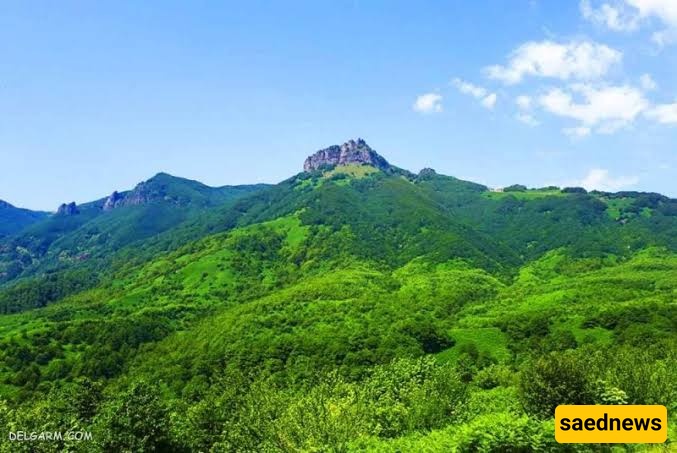
Spinas Mountain is located about 10 kilometers east of Astara, and Laton Waterfall originates from its slopes.
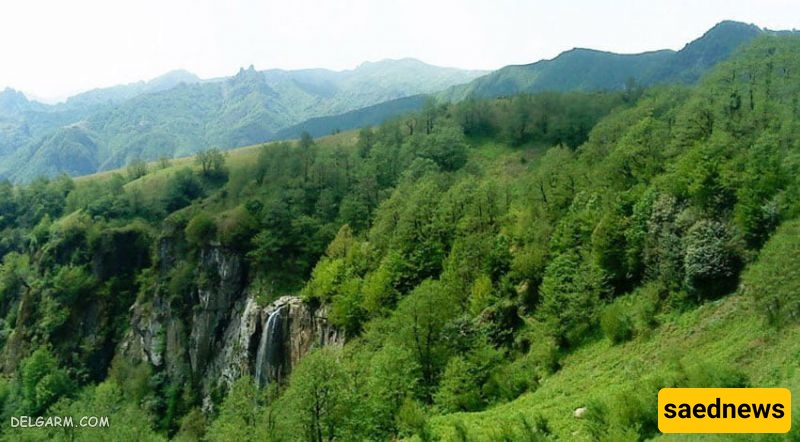
At 105 meters high, Laton Waterfall is considered one of the tallest waterfalls in Iran. The hiking route to the waterfall begins in the village of Kouteh-Koumeh and takes approximately four hours on foot.
Along the trail, hikers can enjoy forested hills and a river fed by the Laton Waterfall. Together, these landscapes form one of the most scenic natural areas around Astara.
The peak is also known as Spinas or Espineh, a name traditionally interpreted as meaning “Horse Mountain.” The historic Shindan Castle, also known as Sandan Castle, stands on the mountain. Located near the border between Iran and the Republic of Azerbaijan, the fortress occupies a highly strategic position and offers extensive views of the surrounding landscape.
Spinas Mountain lies behind Estil Lagoon in the western part of the Alborz mountain range. With its dense and lush vegetation, it has become a popular destination for nature lovers, hikers, and mountaineers exploring northern Iran.
The name Shindan is said to mean “place of light.” According to local accounts, the residents of the fortress once maintained round-the-clock watch over a fire temple located there.
The castle was constructed using stone and traditional Sarooj mortar. Over the centuries, it witnessed numerous historical events. One notable episode occurred during the reign of Shah Abbas Safavid, when Hamzeh Khan Taleshi, the ruler of Astara, rebelled. The governor of Ardabil besieged the fortress for nine months, after which Hamzeh Khan escaped by ship to Shirvan.
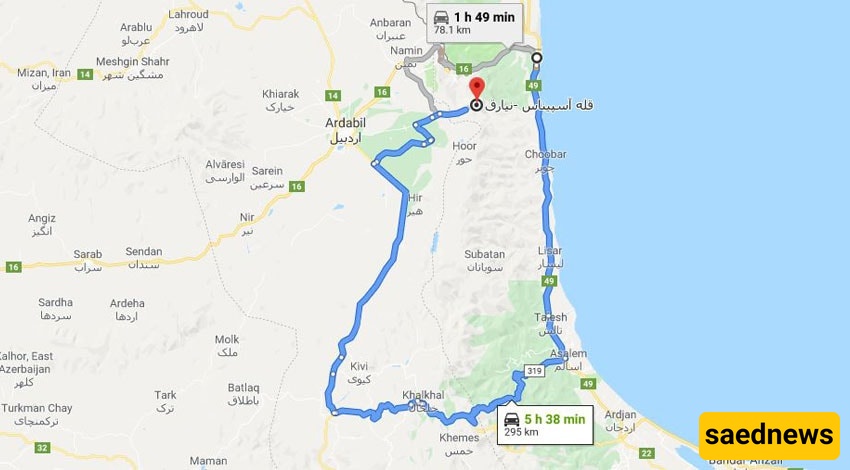
Spinas Mountain is located in Gilan Province, within Astara County, approximately 17 kilometers east of Lavandevil. There are two main routes to reach the summit, allowing hikers to choose according to their travel plans and level of experience.
The first route begins in Lavandevil, Astara. From there, travelers head approximately 10 kilometers south toward the village of Kouteh-Koumeh.
The village has a hot spring and swimming facilities where visitors can rest before continuing their journey. From Kouteh-Koumeh, the trail continues toward the summit for roughly another 10 kilometers.
Compared with the alternative route, the Astara approach has relatively gentle slopes. The elevation gain is around 650 meters and occurs gradually along the trail.
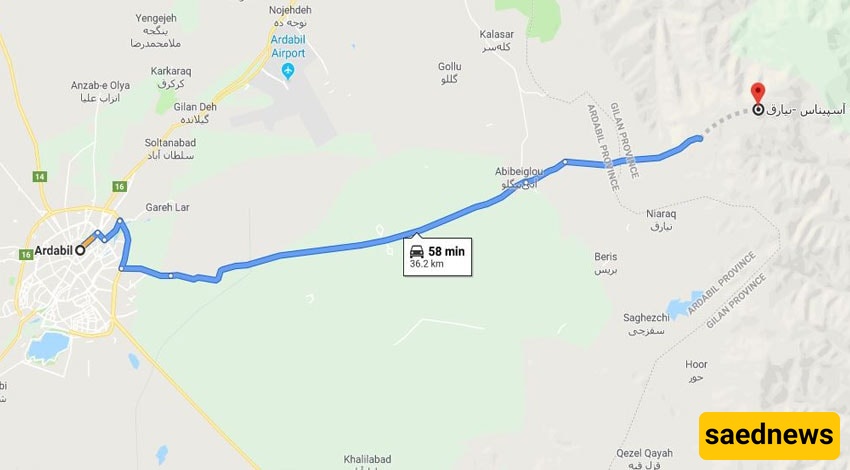
The second route approaches the mountain from the Ardabil side, passing through the village of Soha. This is a longer and more demanding hiking route, with steeper slopes and more challenging sections. The trail is approximately 17 kilometers long.
Although it requires greater physical endurance and hiking ability, the route rewards visitors with remarkable natural diversity. Hikers encounter varied vegetation and wildlife, attractive rock formations, and trails winding through forests and hazelnut orchards.
Reports from hikers who have climbed Spinas describe the route as particularly impressive. Small streams, fruit orchards, and wild trees appear throughout the journey, creating constantly changing scenery.
There are also several places to stop and rest along the way. After passing the village of Asio Shavan, hikers can visit Nourmohammad Teahouse. Uncle Yadollah's cabin near the waterfall also provides food and hospitality for visitors.
Spinas Mountain can be climbed during all four seasons. However, late winter and early spring are generally more comfortable because temperatures are mild and humidity is more manageable.
Since reaching the summit involves a long and relatively strenuous hike, traveling during the cooler months can make the experience considerably more enjoyable.
Autumn is another appealing season to visit. As the leaves change from green to vivid shades of red and yellow, the landscape takes on a completely different character.
The combination of open skies, mountains, dense forests, and waterfalls creates striking scenery that can make the journey especially memorable.
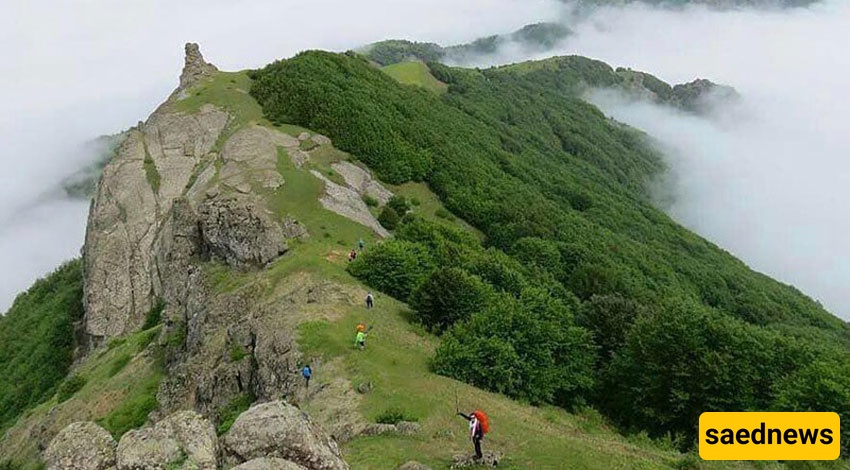
For nature enthusiasts, the trail to Spinas offers an impressive variety of plants and landscapes. However, the route is not considered easy, so it is advisable to avoid taking young children or elderly travelers on the more demanding sections.
Proper equipment is essential. A lightweight, comfortable backpack is one of the most important items for the climb. During colder seasons, hikers should carry synthetic-fiber sleeping bags, as down sleeping bags are less suitable in the area's humid conditions.
Water-resistant hiking boots are also highly recommended.
Depending on your itinerary, it is a good idea to arrange accommodation in advance so that you can rest properly before continuing your travels. Visitors planning to explore Astara may prefer accommodation close to the city's main attractions.
For those who do not plan to stay in a hotel or spend time exploring the city, camping or staying in rural homes can be an alternative.
Essential equipment for the Spinas hike includes:
Drinking water
Medication and a first-aid kit
Meals or ingredients for cooking
Cooking equipment
Flashlight and headlamp
Hiking poles
Warm clothing
Poncho or rain jacket
Sleeping mat
Waterproof hiking tent
Trash bags
Cash
Mobile phone
Because parts of the trail require crossing rivers, carrying a sturdy pair of suitable sandals can also be useful.
With the right preparation and equipment, the journey to Spinas Mountain can become an unforgettable outdoor experience.
Astara is surrounded by numerous natural attractions, and Spinas Mountain is among the area's most rewarding destinations for outdoor enthusiasts. Long walks through forests, mountains, streams, and waterfalls can provide a refreshing break from the routine of modern urban life.
For travelers seeking a combination of hiking, scenery, local culture, and historical heritage, a journey to Spinas Mountain and Laton Waterfall offers an opportunity to experience one of northern Iran's remarkable landscapes.