SAEDNEWS: Yivli Minaret Mosque is one of Antalya’s most popular historical landmarks and tourist attractions, visited by travelers exploring Antalya, Turkey.
According to Saednews, Antalya is one of Turkey’s most beautiful and popular tourist destinations. In addition to offering a wide range of modern and exciting activities for visitors, the city is rich in cultural and historical attractions that draw travelers from around the world. Antalya has a long history, dating back to around 300 BC, which reflects the city’s remarkable heritage and historical significance.
If you travel to Antalya, try to explore as much of the city as possible. The variety of attractions and activities available means that some visitors spend their entire trip discovering Antalya and its surrounding areas without having enough time to explore other Turkish cities. This is one of the interesting aspects of traveling in Turkey, as many cities have their own distinctive character, history, and attractions.
Antalya’s long history has also left the city with numerous archaeological and historical sites. Visiting these monuments offers an opportunity to learn more about the different periods Antalya has experienced. Historical buildings are particularly fascinating because they demonstrate the architectural skills and creativity of people who lived centuries ago.
People in the past had far fewer construction tools and technologies than we have today. Nevertheless, they managed to create impressive structures that continue to amaze visitors. One of Antalya’s most remarkable historical monuments is the Yivli Minaret Mosque, a building that represents an important part of the city’s architectural heritage.
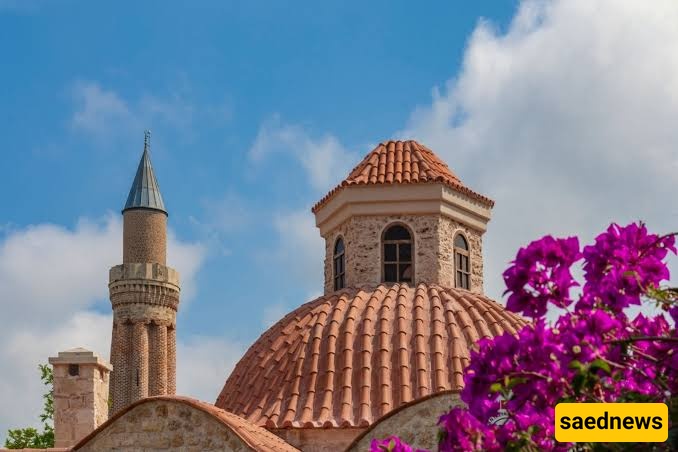
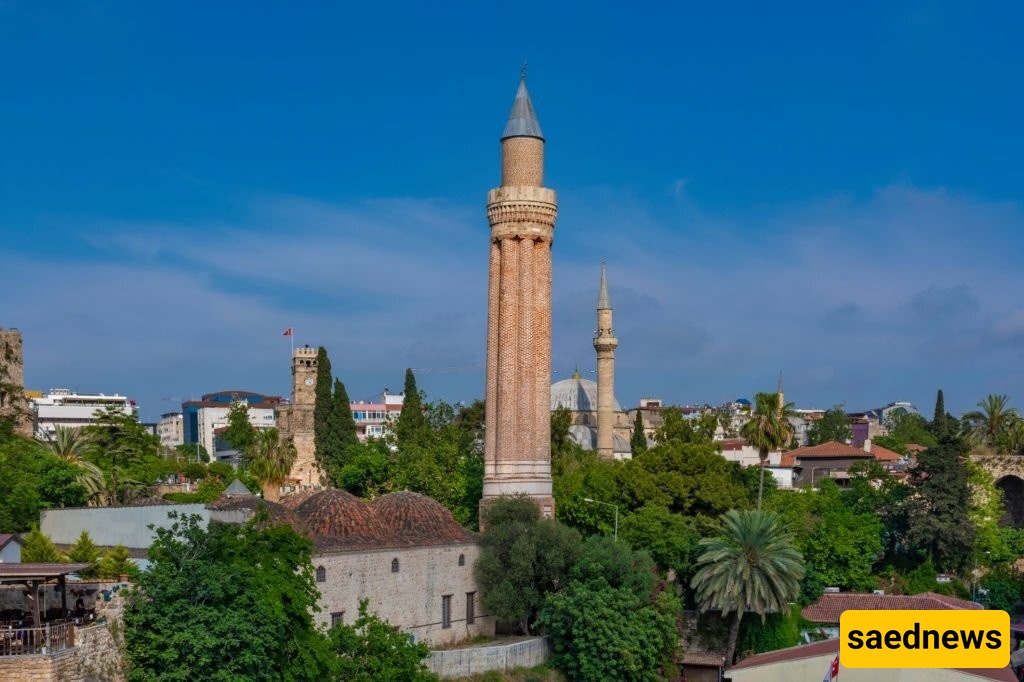
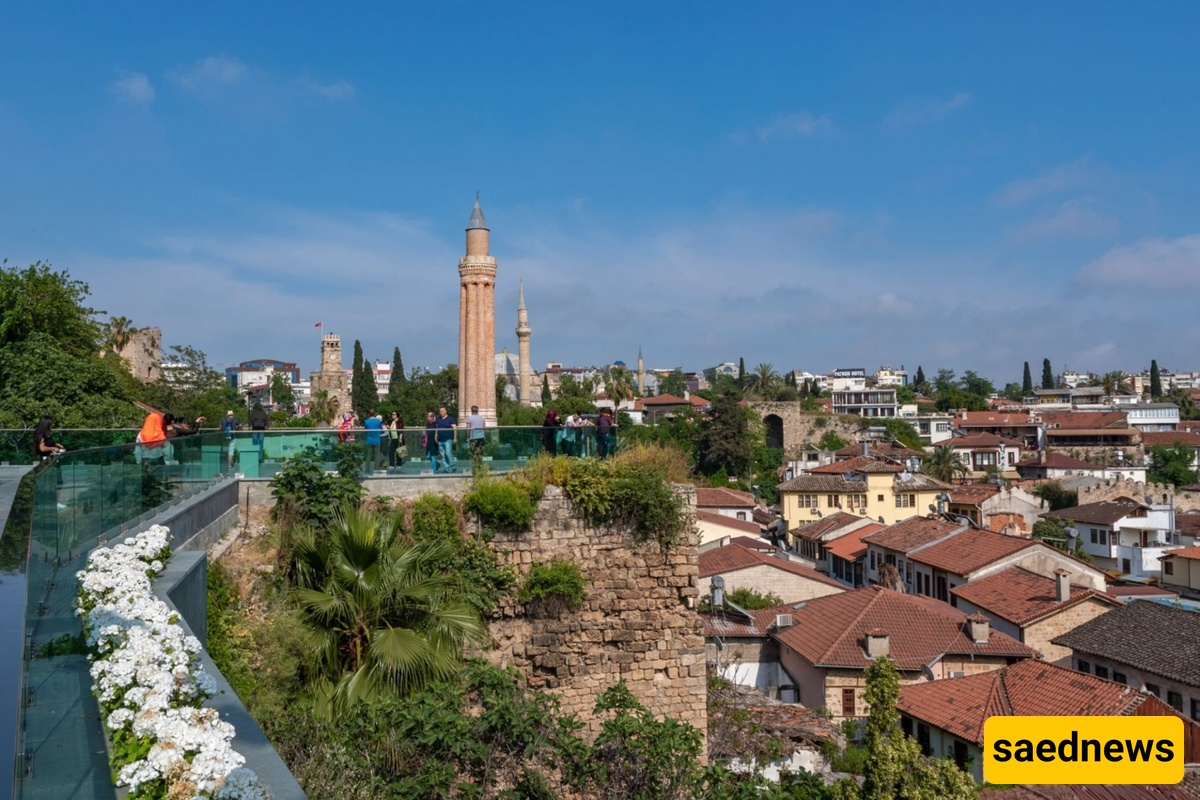
Yivli Minaret Mosque is one of the oldest mosques in Antalya. It was built between 1219 and 1236 and is located in the Kaleiçi district of the city. Its distinctive fluted minaret has made it one of Antalya’s most recognizable landmarks and a popular attraction for visitors.
The mosque has six domes and is also known as Alaeddin Mosque or the Fluted Minaret Mosque. It was constructed on the remains of an earlier church and was later restored in 1373. Because of this restoration, some people mistakenly believe that the mosque was originally built in 1373, although its history dates back much further.
The name “Yivli,” meaning “fluted,” refers to the distinctive grooves running along the surface of the minaret. When viewed from outside, several vertical grooves can clearly be seen on the structure, giving it its characteristic appearance.
The mosque continues to serve as a place of worship. The minaret’s function was changed in 1974, when it became part of a cultural and educational complex. Visitors cannot enter the mosque while prayers are taking place, but it can generally be visited at other times. Visitors should also dress appropriately and respectfully, particularly when entering the mosque.
One of the mosque’s most notable features is its colorful minaret, located on the eastern side of the complex. Colorful tiles and ceramics decorate its exterior, giving the structure a distinctive and attractive appearance.
The Yivli Minaret is approximately 38 meters high. Visitors who wish to reach the upper part of the minaret must climb around 90 steps. From the top, they can enjoy impressive views of the Mediterranean and the surrounding area.
The combination of the minaret’s unique appearance, the climb to its upper levels, and the panoramic views makes the site particularly appealing to visitors interested in Antalya’s history and architecture.
The base of the minaret has a square design and was constructed using red and blue bricks. An octagonal structure rises above this square base, with the characteristic fluted section of the minaret built on top of it. Strong stone materials were used in its construction, helping the monument withstand difficult weather conditions and preserve its appearance for centuries.
The Yivli Minaret Mosque is surrounded by several other historic structures that are also worth exploring. Visitors who come to see the mosque can take the opportunity to discover these buildings as well.
The Gıyaseddin Keyhüsrev Madrasa features distinctive architecture and is another notable structure near the mosque. The madrasa has four iwans, each enclosed on three sides and opening toward the central courtyard on the fourth side.
The building has a rectangular layout and an elaborately carved stone entrance gate, which is one of its most striking architectural details.
The Seljuk Dervish Lodge is another historic structure in the area. It has a domed design with several rooms arranged around the central building.
The Seljuk Bathhouse is a relatively small historic structure located next to the Seljuk Dervish Lodge. Although modest in size, it forms part of the historical complex surrounding the Yivli Minaret Mosque.
The Tombs of Nigar Hatun and Mehmet Bey consist of two separate structures. One is an octagonal tomb belonging to Mehmet Bey, while the other has a hexagonal design and contains the tomb of Nigar Hatun.
Together, these monuments form an important historical complex in Antalya and provide visitors with a closer look at the city’s Seljuk-era architectural heritage.